


Note: We are sharing this article without a paywall. Please subscribe or donate to support our work – the kind that, as you’ll see below, is needed now more than ever.
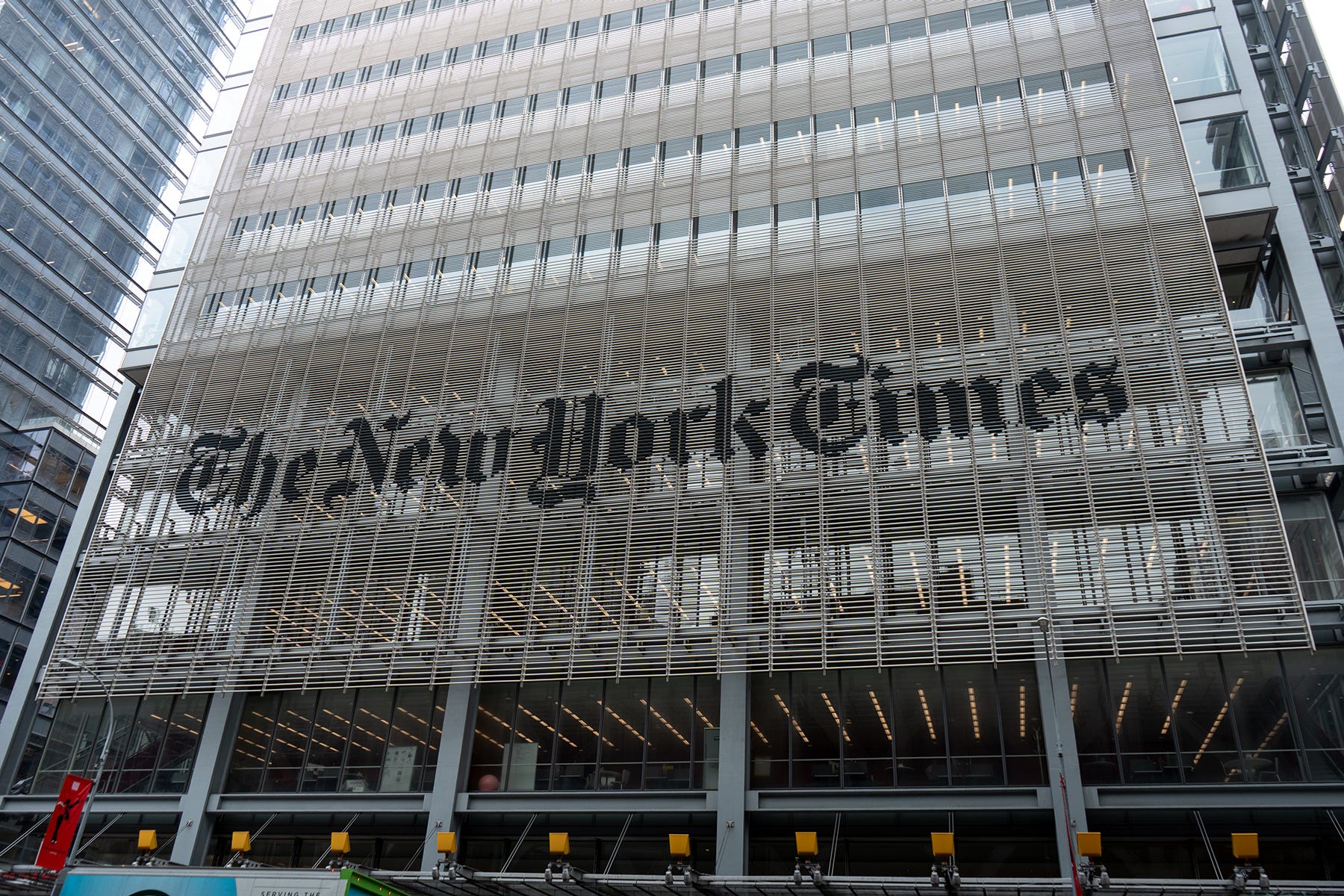
“NBC Pulls an Ad That Some Described as Antisemitic.”
That is how the New York Times headlined a story about NBC pulling a 30-second ad illustrating the horrific human cost of U.S. support for Israel’s genocide in Gaza – a decision made in response to a concentrated outrage campaign led by some pro-Israel groups.
The ad, paid for by the Institute for Middle East Understanding Policy Project, aired during a ‘Saturday Night Live’ special this past Wednesday. The 30-second-clip shows a beaming little girl saving $400 to buy a new bike. It then flashes to the image of a young Palestinian girl who is missing a leg, surrounded by rubble. “Every three seconds, our government sends $400 of taxpayer money to Israel to do this,” a voiceover says.
There is nothing particularly inaccurate or defamatory about the ad – it is a simple summation of the financial and moral cost of U.S. foreign policy. The U.S. provides Israel with $3.8 billion in aid every year. Dividing that over the course of the year equals roughly $361 every three seconds.
Yet the backlash erupted – from the Anti-Defamation League and the Israeli government, to Trump Department of Justice official Leo Terrell and the zealously pro-Israel actor Michael Rapaport.
NBC then reportedly decided to not run the ad again, announcing it would evaluate its ad review process more broadly. Mind you, this all for ad that apparently passed the network’s ad review process the first time; but, the ensuing outrage from pro-Israel groups was apparently enough for the company to decide to overhaul its standard processes.
And in response to the episode, the New York Times evidently took the cue, framing its story about corporate media suppressing speech critical of Israel instead as a story about antisemitism. This frame, as media critic Assal Rad pointed out, was not inevitable – scores of other news outlets framed the story more clearly.
Rad had even suggested her own reframe: “NBC Pulls an Ad Criticizing U.S. Military Aid to Israel.”
While the New York Times certainly weathers frequent criticisms about its coverage, it does not always respond to said criticism. The paper did, however, feel compelled to respond to Rad.
“This article and its headline present a clear and well-labeled report on the reaction to the ad,” the Times’s communications and public relations department wrote. “It’s factually accurate and the sources are clearly identified. Our job is to report the facts, independent of any predetermined narrative or outcome,” encouraging Rad to “read it for yourself.”
Is it accurate to say the Times’s story was reported without “any predetermined narrative or outcome”?
The ad in question criticized U.S. aid that has supported Israel’s life-changing attacks on Palestinian children.
NBC’s journalists have highlighted Israel’s horrific violence against Palestinian kids.
It is a fact that U.S. aid to Israel maims and kills children.
In no way did the ad discuss Jewish people.
And the little Palestinian girl actually depicted in the ad? Her name is Meral al-Babli. She lost her leg in a U.S.-backed Israeli bombing that killed her mother and grandmother. Actual journalists highlighted her plight more than a year ago. The footage of al-Babli used in the ad can be licensed through Getty Images, via a Turkish news agency; it shows her being transported for medical care, and her leg badly injured before it was amputated.
“Her grandfather, Mohammed, said the poor girl bled for six hours, but he could not take her to the hospital; he felt utterly helpless when he could do nothing to save his most beloved one as she was close to death,” the Turkish news agency said. “When they finally reached a hospital, doctors gave him two choices: either lose her leg or lose her life.”
The child’s story was separately chronicled in an Egyptian news site’s story on “Gaza’s child amputees.”
Would a Times reader be introduced to any of those fundamental facts if they had only read the headline: “NBC Pulls an Ad That Some Described as Antisemitic”?
No. The Times didn’t even bother to name the girl – the real center of the story – nor did it point out virtually any of these details.
But then, if one watched the ad itself, he or she might be left scratching their heads about where the antisemitism supposedly begins, or how such an ad could be spiked off the air, or why claims of antisemitism were the primary “fact” centered in a news story about the whole debacle in the first place.
Even if you were to take the Times PR team at its word, and accept that one of its journalists was simply reporting on how “some” people thought this fair and factual ad was antisemitic, when was the last time you saw a New York Times headline focus on how “some” people describe Israeli officials as modern-day Nazis? And to be clear: It would be entirely reasonable for “some” to reach that conclusion, given that Israel has flattened much of Gaza, and some of the most powerful officials in Israel are calling for its military to fully flatten Gaza, or ethnically cleanse and even mass exterminate Palestinians!
But let’s even put that aside. As media critic Adam Johnson noted, the Times’s headline violates basic journalistic standards; as he put it, the paper “used a textbook weasel phrase in the headline (‘some described as’) – something you’re taught in Journalism 101 not to do, as it is used executively to smuggle in a writer/editor’s own opinion.”
Would the paper do this on any other topic?
Would the New York Times, in a story about the planet, center “some” people who think it’s flat?
Would the New York Times, in a story about ponds, center “some” people who think the government is turning the frogs inside gay?
Would the Times, in a story about birds, center “some” people who think birds aren’t real?
Obviously not!
And the Times would almost certainly never center a story around “some” people who believe that top Israeli officials behave like modern-day Nazis.
But for some reason, the Times think it’s reasonable to center “some” people who perceive any criticism of Israel as antisemitic – a decision that looks even more ridiculous given everything else that’s unfolding all at the same time.
Israeli forces bombed a Doctors Without Borders clinic on Friday, killing two staff.
“This is a direct hit on MSF, bringing the total number of MSF colleagues killed in Gaza to 17,” the organization said in a statement. “Our premises were clearly marked with MSF logos, and their location had been communicated to and was known by the Israeli military.”
One day earlier, several Israeli strikes and a shooting killed 10 Palestinians across Gaza.
That same day, we learned that the Public Committee Against Torture found Israel “officially sanctions” torture of Palestinian prisoners to extract confessions.
Also this week, reports have detailed how Israeli soldiers have used Palestinians, even children, as human shields.
And it was earlier this month that Israeli forces committed several other high-profile atrocities. They killed a Palestinian child in a “proactive operational activity” due to him being in an “area where stones have recently been thrown” (read: Israel pre-emptively killed a kid, with no semblance of legal process). They also have overseen conditions that led to three more children and their mother being killed when a sand dune collapsed on their displacement tent, and another baby to die from hypothermia.
And the incessant violence continues despite the faux-“ceasefire” Israel is supposedly party to. That Israel continues to break the ceasefire with not even an ounce of abandon is a malevolent reality that outlets like the Times simply metabolize as, apparently, just another day.
It is within this context that the New York Times nevertheless believes that it is entirely reasonable to center “some” people who erupted in outrage over an ad criticizing U.S. support for this very behavior.
None of this behavior is an aberration – of establishment media generally, and specifically of the New York Times.
After all, the so-called paper of record’s brass famously instructed its reporters to avoid words like “genocide,” and “ethnic cleansing,” and “occupied territory” when discussing Israel and Palestine, even though these words and phrases technically apply.
And repeated media analysis has shown how the Times and other corporate outlets drastically skew their coverage toward pro-Israel narratives.
But what’s remarkable is both how deeply-embedded these biases are, and how they are so stubbornly present even after tens of thousands of murders in Palestine caused by U.S.-funded Israeli violence.
Israeli forces have killed at least 74,793 people since Oct. 7, 2023, and displaced at least 1.9 million, some multiple times, all in Gaza alone.
We are now into year four of Israel’s ongoing campaign of horror in Palestine – and the old media guard is still apparently dead-set on tolerating, if not encouraging, that reality.
For far too long, we have been served a sinister form of self-serious, power-serving “journalism.” I promise you that we are working day and night here at Zeteo to give you a journalism that respects your common sense and decency – and reflects the actual realities that surround us.
Have a tip for Prem? Send via Signal to premthakker.35.
Check out more from Zeteo:


"It is a fact that U.S. aid to Israel maims and kills children."
"OH, what is the poor NYT to do?"...BS! They are afraid of 💩head, their advertisers & their subscribers! Not reporting on Gaza & Palestine is anti-Arab. Anti-Muslim, Anti-Christian, Anti-child. Facts are facts, NYT! Palestians are being killed by Israelis - THAT is FACT!
FREE 🇵🇸 🇵🇸 🇵🇸 🇵🇸 🇵🇸 🇵🇸 🇵🇸