


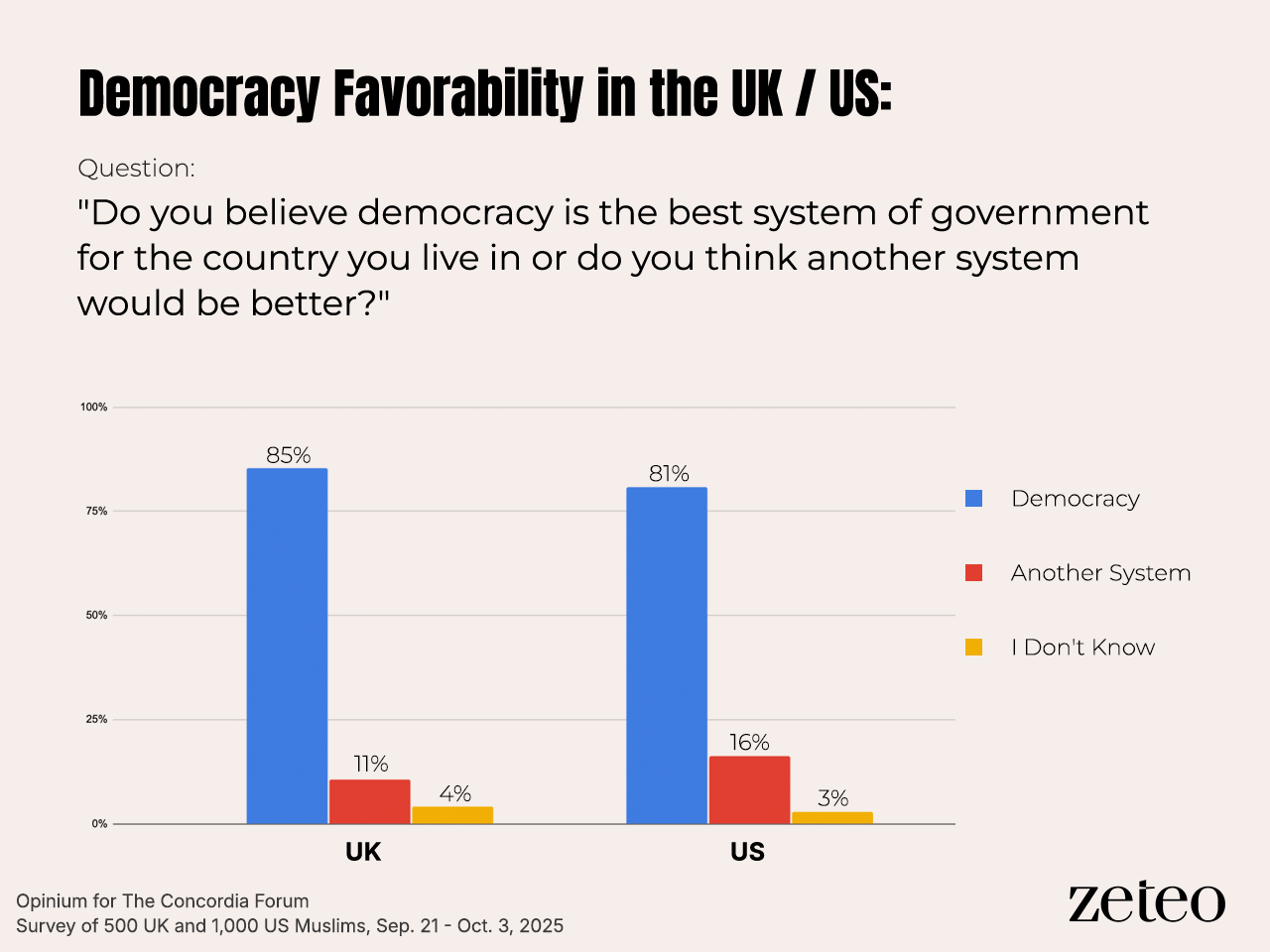
Muslims in the US and the UK overwhelmingly favor democracy and equality, but most do not believe they are always treated fairly under the law, according to a new poll shared exclusively with Zeteo.
The survey of 1,000 American Muslims and 500 British Muslims, conducted by Opinium for the Concordia Forum, a transatlantic thinktank and networking group, in October 2025, measured views on democracy, equality, and the intersection of religion and country. The results dispel tired tropes about Muslims amplified by politicians and the mainstream media that have triggered a rise in Islamophobia.
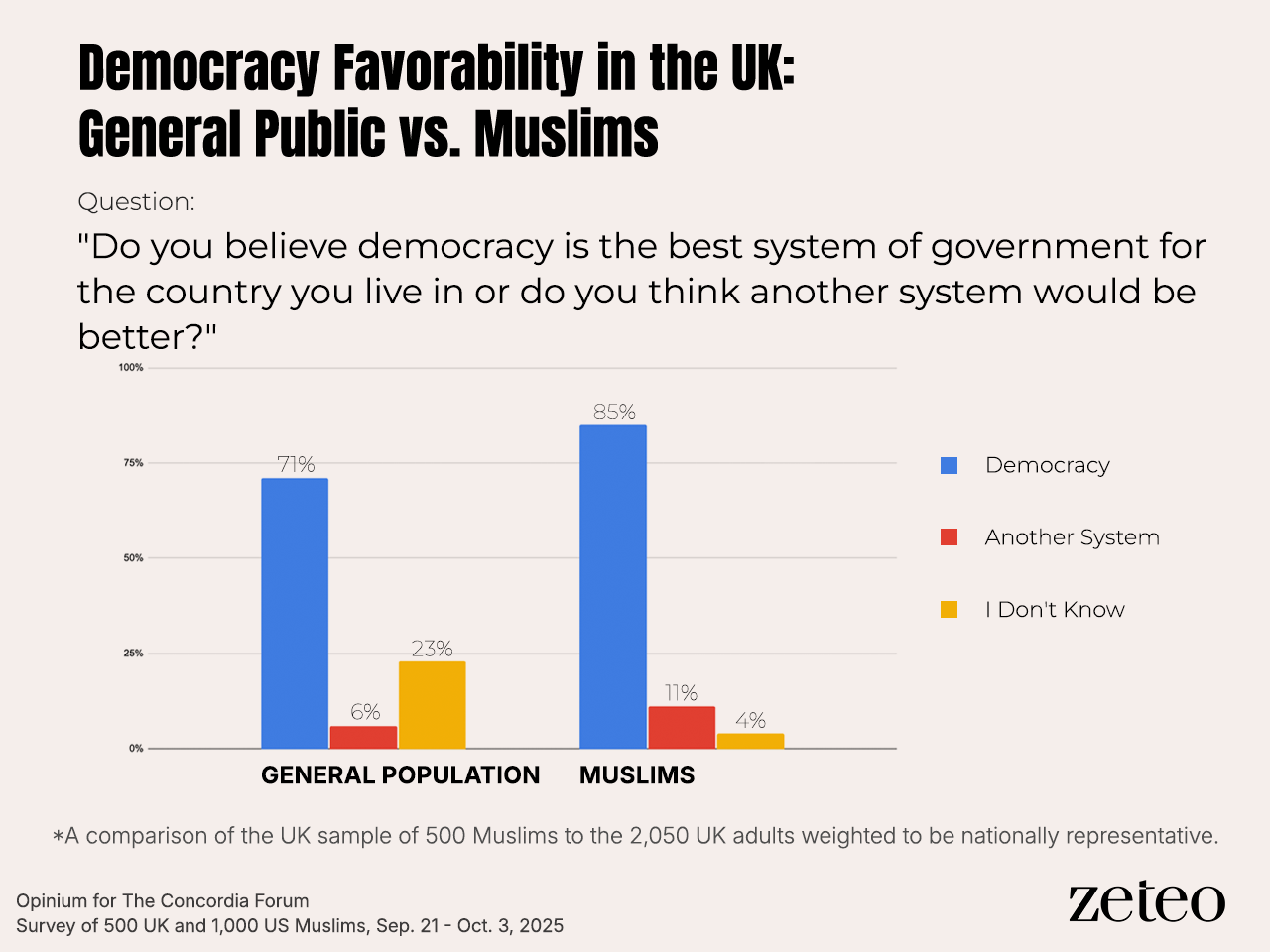
In the UK, the Opinium poll surveyed both Muslims and the general population on some key questions and found that 71% of the country believes democracy is the best system of government, compared to 85% of Muslims, who account for about 6% of the population in England and Wales. Support is highest among UK Muslims who are 55 and older.
About 7 in 10 Muslims in the UK say they are completely or mostly loyal to their country, compared to about half among the general public.
In the US, the survey found 81% of American Muslims favor democracy, and those in the Midwest are most supportive. A Gallup-Kettering Foundation poll last year found that 67% of American adults say democracy is the best form of government.
About three-quarters of Muslims across both the UK and the US say their faith is broadly compatible with democratic principles such as freedom of religion or gender equality, while a smaller majority believe that their elected officials effectively represent the views and interests of Muslims in their respective countries. The survey also found that about 9 in 10 Muslims across both countries said taking a stand against all bigotry, including antisemitism and Islamophobia, is important.
But more than half of Muslims in the UK and nearly half in the US are frequently more concerned about anti-Muslim hate or violence now than a year ago. That has impacted how people have lived their lives, with more than 39% of Muslims in the US and over 32% in the UK saying they have often or always changed their routines to avoid places due to their concerns.
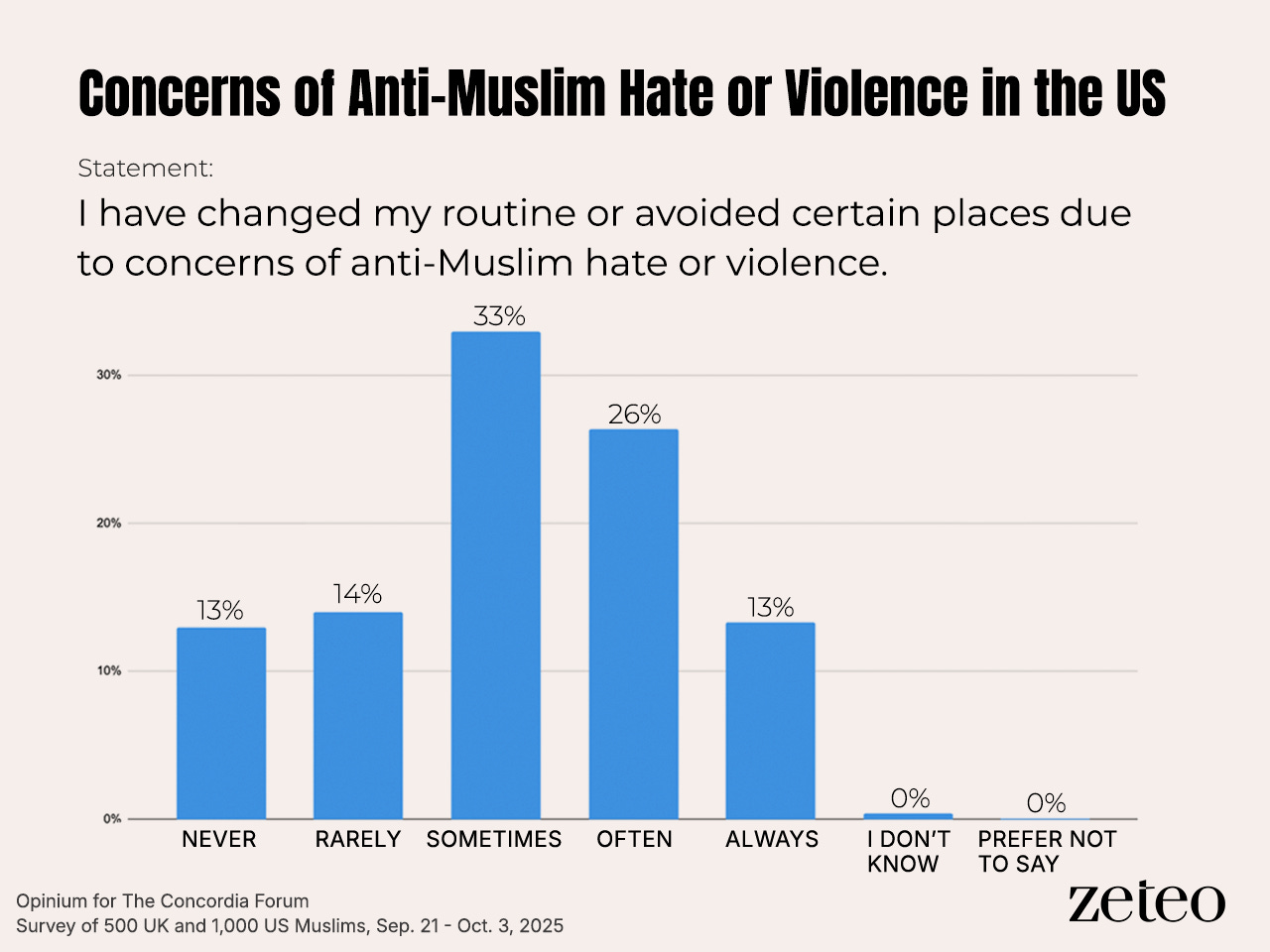
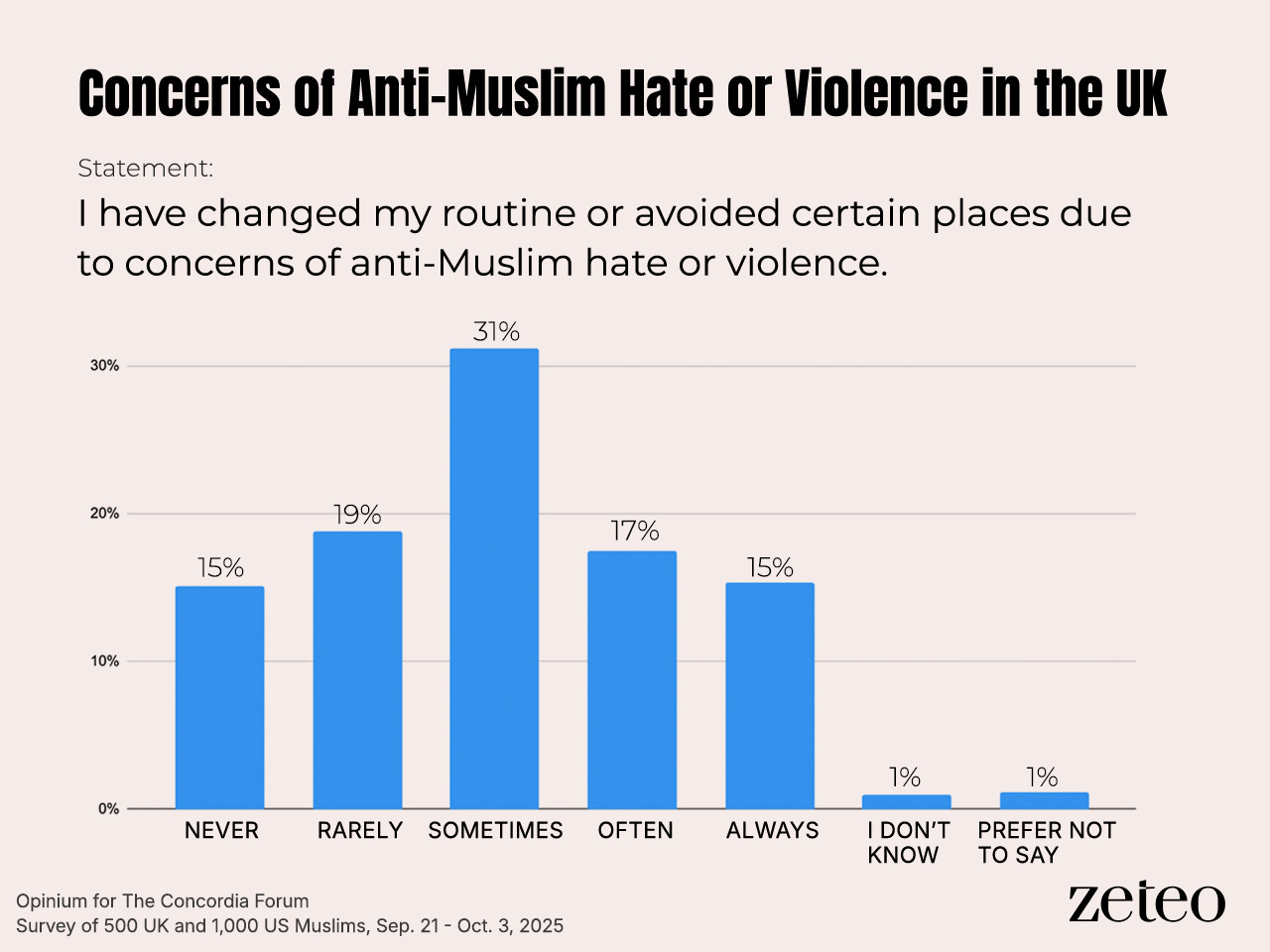
Meanwhile, 45% of Muslims in each country say they are often or always worried that they or someone close to them will be affected by anti-Muslim violence.
The survey results reflect the rising anti-Muslim sentiment seen in both the US and UK since the Oct. 7, 2023, and after Donald Trump’s return to office. According to the Institute for Social Policy and Understanding, a research organization focused on American Muslims, Islamophobia increased sharply from 2022 to 2025.
In one of the most horrific anti-Muslim attacks, Joseph Czuba, an Illinois landlord who stabbed 6-year-old Wadee Alfayoumi 26 times and attacked his mother, as he said, “You, as a Muslim, must die.” Czuba had been friendly with Wadee up until the October 2023 Hamas attacks and the start of Israel’s genocide in Gaza. Prosecutors said Czuba, who was convicted of murder last year and later died in prison, had been deeply interested in the conflict and was listening to conservative talk radio.
Islamophobia has also been normalized on Capitol Hill. Just last Sunday, Rep. Randy Fine posted on X: “If they force us to choose, the choice between dogs and Muslims is not a difficult one.”
Fine, who has a history of making racist and Islamophobic comments, including against Reps. Ilhan Omar and Rashida Tlaib, has never been censured.
Shattering Misconceptions
Opinium researchers found that misconceptions about Muslims generally fall into three themes that “shape public opinion and create friction”: most frequent is the conflation of Islam with violence and terrorism, followed by the generalization of all Muslims as a monolith, and a misconception that Muslim women are universally oppressed – a belief often linked to hijab.
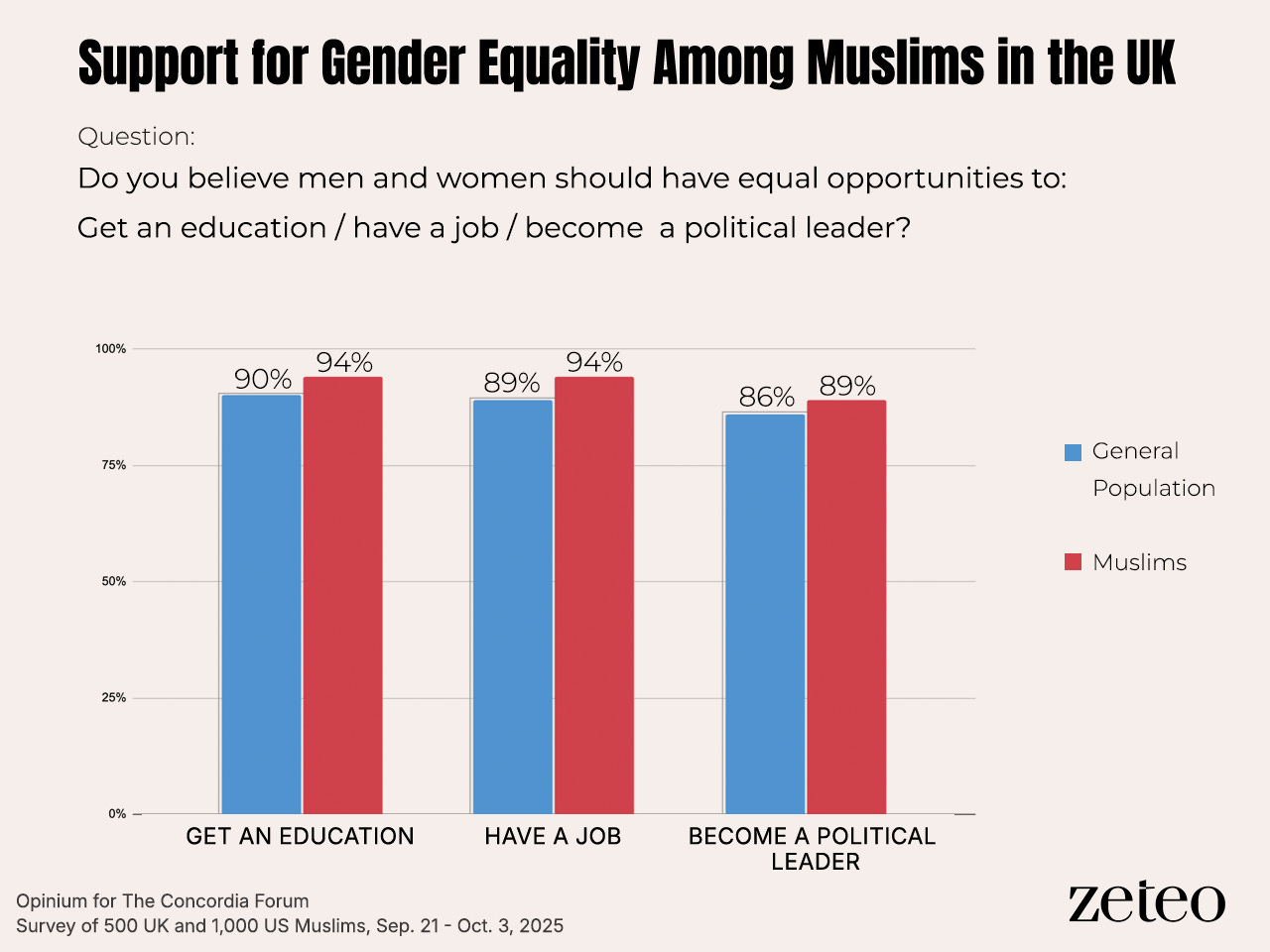
But according to the poll, Muslims in the UK are more likely to support equal access for women to get an education, get a job, and work in political leadership than the general population. And an overwhelming majority – 91% – of Muslims across the US and UK agree that women should have the right to choose whether to wear hijab.
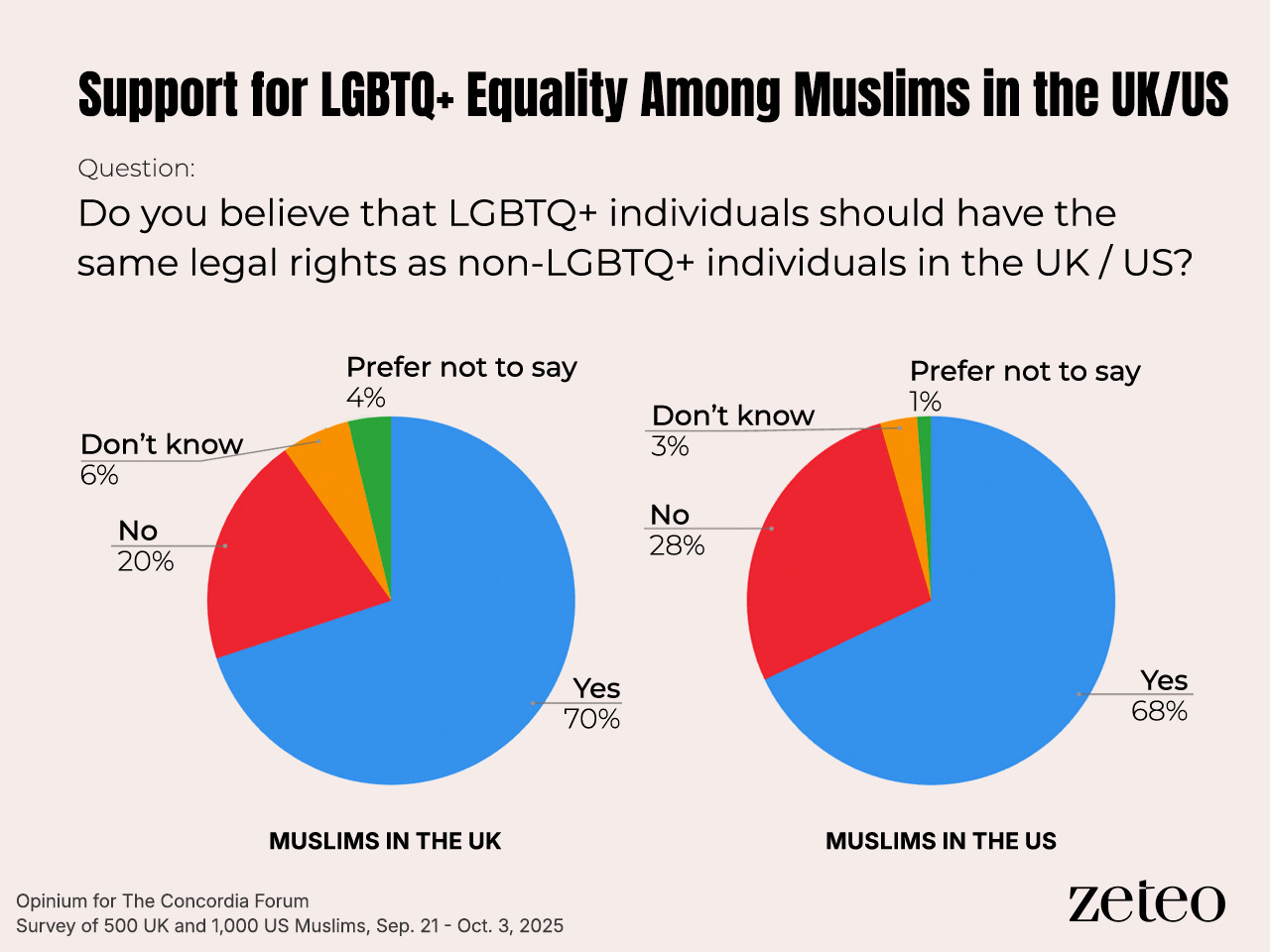
The poll also showed 70% of Muslims say LGBTQ+ people should have equal legal rights. Support is higher among older Muslims in both countries, and in the US, women are more supportive of LGBTQ+ equality than men.
And 94% of Muslims in the UK say everyone should be treated equally under the law regardless of faith, compared to 80% of the general population. About a third of both Muslims and the general population in the UK support banning criticism of religion if it incites violence, while Muslims are more likely to support a blanket ban.
Nearly half of Muslims across both countries also say they would personally be in favor of Islamic law becoming the basis of the legal system, and about three-quarters believe their faith is compatible with Western values. (Islamic law can refer to personal and civil issues such as Islamic marriage contracts, as well as inheritance and dietary laws.)
While only about 1 in 5 Muslims across both countries says they are always treated equally under the law, half remain hopeful that the next generation will fare better than them.
Mohammed Abdelbary contributed to this piece.
Check out more from Zeteo:



In other words, Muslims have the principles that are often missing with others.
Women were given Right to Vote over 1400 years by Islam. Whereas in the West this right was given with lots of struggles by the women it only happend few decades ago.
Islam promotes democracy. However people get confused as we have dictatorship virtually in every Muslim land, because the despot rulers in all of the Arab regimes were imposed by the Western colonials as they do not want democracy to grow in the Islamic lands, as they know that if the Muslims free themselves from their Western imposed despot rulers, the democracy will flourish and with it the end of colonial rule in the Islamic world.