

Note from our Editor-in-Chief:
As inequality persists at extreme levels worldwide, we are excited to welcome Gabriel Zucman as Zeteo’s newest contributor. Gabriel, who teaches at Berkeley, is one of the leading economists and researchers on wealth inequality, taxation, and tax avoidance. His latest book, ‘We Need To Tax Billionaires,’ presents one of the clearest and most accessible arguments for a wealth tax I’ve read. Check out an exclusive excerpt from the book below, and watch out for more from Gabriel in Zeteo in the coming months! And please do support Zeteo’s ongoing expansion by becoming a paid subscriber and/or donor. A free press isn’t free! - Mehdi
Sometimes what is right in front of us is the last thing we see.
For more than 15 years, I have studied the world’s wealthiest people and analyzed the tactics they use, from Luxembourg to the British Virgin Islands, to eschew taxation.
At the age of 21, I was poring over Swiss bank archives and dissecting international balances of payments to determine how much money was hidden in offshore tax havens. When this historically obscure issue was brought to light in the Panama Papers in the mid-2010s, it finally started making headlines.
I then turned my attention to multinational corporations and their financial records. I found these entities’ Byzantine accounting methods fascinating. I now knew that profits made in France or Germany were ending up in Singapore or Bermuda, at a staggering cost to society.
This kind of global tax evasion has been one of the linchpins of rising inequality and growing government debt worldwide. It has also led many to lose hope in the very possibility of a fairer society, creating a breeding ground for the reactionary political movements that are thriving today.
But the real battleground, it turns out, is not in Switzerland or in the Cayman Islands. It is not in some faraway alpine hideaway or island enclave that our fundamental principles of justice are trickling away, but right here in the United Kingdom, in France, in the United States, and in other countries where most of the ultra-wealthy live.
By funneling their income into holding companies – most often located on our shores – those at the very top of the wealth distribution chain pay virtually no income tax.
The end game defies all logic. If all France’s billionaires were to flee to the Cayman Islands tomorrow, the loss of tax revenue to the country would be insignificant: around 0.03%. And the same is true throughout Europe, and indeed globally: the super-rich have not yet entered the realm of national solidarity.
It is time to finish what we started with income tax – a major advance for democracy– in the late 19th and early 20th centuries. It is time finally to bring billionaires, who have never really been subject to income tax, into the fold.
Carrying this unfinished revolution to completion is imperative if we wish to live by our most fundamental principles of equality before the law.
This is why I am advocating for a wealth tax on ultra-high-net-worth individuals. The battle is likely to be difficult, but I believe it is one worth fighting.
***
In a sense, it is not all that surprising that it has taken so long for a clear picture of billionaires’ small contributions to national tax revenue to emerge.
Statistical institutes produce little or no information on their countries’ largest fortunes. The press – magazines like Challenges in France, The Sunday Times in the UK and Forbes in the U.S. – have been attempting to fill this information gap by investigating publicly available documents such as corporate financial statements and disclosures to financial market authorities.
Using these sources, they come up with estimates of billionaires’ net worth. But what their reporting hasn’t told us is how much tax billionaires pay. This information has remained shrouded in secrecy.
It was not until the 2020s that an international academic research project began to lift the veil. In 2019, my Berkeley colleague Emmanuel Saez and I attempted to estimate U.S. billionaires’ effective tax rates. The data was incomplete, so our findings could not be considered definitive at the time, but the results were later confirmed.
In the meantime, other researchers took notice. A body of work began to grow in countries including France, Brazil, the Nordic countries, the Netherlands, and Italy.
None of this would have been possible without a major development: the possibility for researchers, working in partnership with tax administrations, to access the holy grail – the tax returns of the super-rich and of the companies they own.
***
As researchers, we stand on the shoulders of giants. The collaborative and cumulative effort to shed light on taxation began nearly a century ago with the work of economists Gerhard Colm and Helen Tarasov.
In the United States in the 1940s, they were the first to attempt to answer a seemingly simple question: Who pays taxes?
Their research aimed to establish the distribution of the tax burden across different income brackets.
In today’s high-income democracies, where between 30% and 50% of national income goes to taxes, this information is undoubtedly one of the cornerstones of public debate.
The conceptual framework and statistical techniques needed to answer this question in any meaningful way were developed by Colm and Tarasov, and dozens of other economists who have since followed in their footsteps.
Until the early 2020s, however, there was no way to include billionaires in this type of analysis.
We now have the missing information needed to paint a comprehensive picture of taxation—one that includes the super-rich.
***
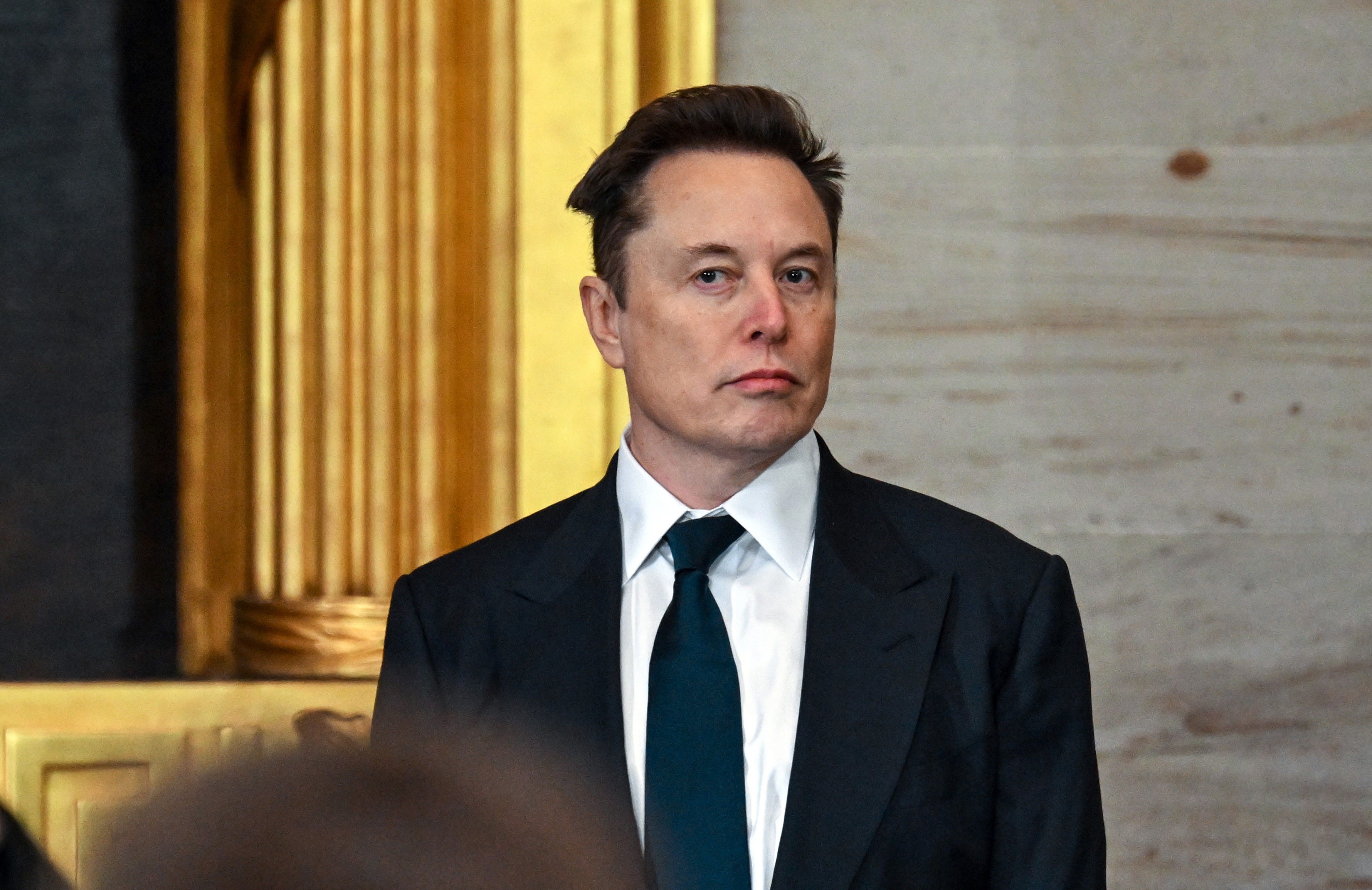
In 2021, ProPublica revealed that U.S. billionaires such as Elon Musk and Jeff Bezos in some years paid barely any individual income tax.
In one year, Bezos declared so little personal income that he claimed – and received – a tax credit for his children. As CEO of Amazon, he paid himself only a small wage; Amazon didn’t distribute dividends; and he didn’t sell shares in the company and hence did not realize any capital gains.
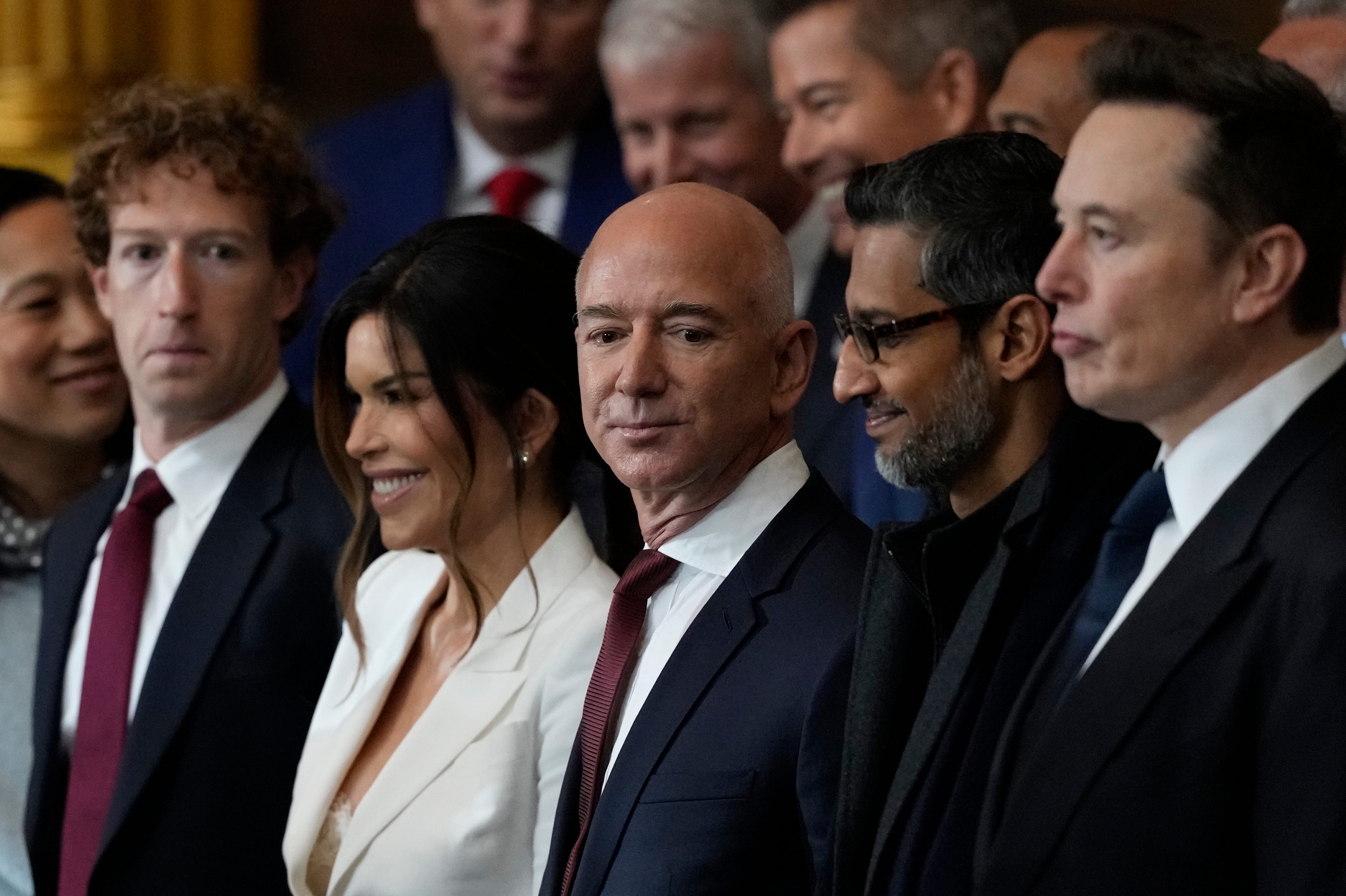
Even though he was one of the wealthiest people in the world, his taxable personal income was very small.
What the international research effort described in this book has revealed since then is that Bezos and Musk are not isolated cases, but instances of a more general global phenomenon.
While ordinary taxpayers must pay income tax, the truly rich have ample opportunities to avoid it: For them, income tax is optional.
***
One of the most surprising results to emerge from this body of work is that the problem appears to be even more severe in Europe than in the United States.
This is due to the widespread use of a specific tax-planning strategy in Europe: setting up holding companies to siphon off taxable individual income.
In practical terms, European billionaires direct their earnings—mainly in the form of dividends—to their personal holding companies. Because no actual person is receiving the income directly, no personal income tax is paid.
Virtually no corporate tax is paid either.
This is how a billionaire who owns a lot of shares in a luxury-goods behemoth can earn €3 billion (about $3.5 billion) in dividends without generating any significant tax liability.
While ordinary shareholders pay 30% tax on their dividends, billionaires can pay just 1.25% in France.
Individual income tax is designed to be progressive: the higher a taxpayer’s income, the higher the tax rate. But for those at the top of the pyramid, income is swallowed up by holding companies, where any individual income-tax liability all but vanishes.
More than a century after income tax was created – in 1914 in France and in the late nineteenth and early twentieth centuries in most other wealthy nations – the revolution remains unfinished.
Billionaires have still not opted into the system.
***
Why is this problematic?
In simple terms, it is a fundamental violation of the principle that all citizens are equal before the law – a pillar of the social contract in all democratic nations.
In France, Article 13 of the Declaration of the Rights of Man and of the Citizen of 1789 states that contributions to common expenditure must be divided among members of the community according to their ability to pay.
At the very least, this can be interpreted to mean that taxes cannot be regressive: The wealthiest people should not be allowed to pay a smaller proportion of their income than the less fortunate.
And yet, any way you slice it, this is exactly what is happening today.
The budgetary consequences of this situation, moreover, can no longer be ignored.
In the United Kingdom, the 200 wealthiest families identified by The Sunday Times owned wealth equivalent to nearly 20% of Britain’s GDP in 2025, compared with 6% in 1994.
In the United States, according to Forbes, the wealth of the 400 richest households grew from the equivalent of 2% of U.S. GDP in 1982 to more than 20% in 2025.
In the state of California, where voters will soon vote on a trailblazing billionaire tax – Proposition 40 – the 250 billionaires of the Golden State own wealth equivalent to 50% of GDP.
You read this correctly: 50% of GDP.
Let’s be clear about what these statistics tell us. At 6% of GDP, the wealth of the ultra-rich, if taxed at 2%, would generate around 0.1% of GDP in additional tax revenue. In budgetary terms, the impact would be negligible.
At 20% of GDP, however, the same 2% tax would generate around 0.4% of GDP in additional tax revenue.
And at 50% of GDP, as in California, the revenue potential reaches 1% of GDP – coming from 250 families – per year. This becomes a matter of the first order.
***
And then there is the question of inequality.
Most people can only save after they pay their taxes. The ultra-rich, once again, are playing a different game: they can save nearly all their income, largely unburdened by taxation.
This creates a self-perpetuating cycle: The less tax you pay, the easier it is to accumulate wealth. This snowball effect has been a major driver of the rise in wealth concentration globally.
And this spiral risks causing irreparable damage to democratic ideals.
It is, of course, difficult to know where the tipping point lies – the point past which democracy becomes oligarchy. Is it when the wealth of the ultra-rich exceeds 50% of GDP? 100%? 200%?
Is it when billionaires own not 80% of privately held media, as in France, but 100%? Or perhaps when they finally get their hands on public media? Is it when they own not only entire Paris streets, but entire neighborhoods?
Nobody knows the exact concentration of wealth at which the kinds of plutocratic collapse we have seen in history become inevitable. The point of no return is anyone’s guess.
The best we can do is study history and keep a close eye on developments around the globe in order to form an opinion.
Adapted from Gabriel Zucman’s ‘We Need To Tax Billionaires,’ out now from Basic Books UK.
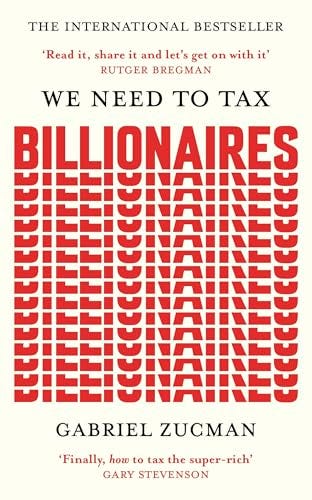
Gabriel Zucman is an economist at the Paris School of Economics and Summer Research Professor of Economics at the University of California, Berkeley.
The views expressed in this article are the author’s own and do not necessarily reflect those of Zeteo.
Check out more from Zeteo:


Love the idea, but why do we set our sights so low? Why do we hope to get something approaching parity of rates for the ultra wealthy instead of progressively higher rates (e.g. 2% for 100M, 3% for $1B, 5% for 10B, 10% for 100B, etc).
Also, another simple change would go a long way - whenever they "borrow" money against their shares/companies, this should be a taxable event (in effect treated the same as selling and resetting the cost-basis). Right now, the ultra rich, just "borrow" billions and never pay back to fund their yachts, homes, etc, which lets them realize all their gains tax free. Its obscene.
What a wonderful and maddening article. Holy cash cows!!🐮 💔🇺🇸