


This post was originally published by Grace Blakeley on her Substack. Zeteo is republishing it with her permission.
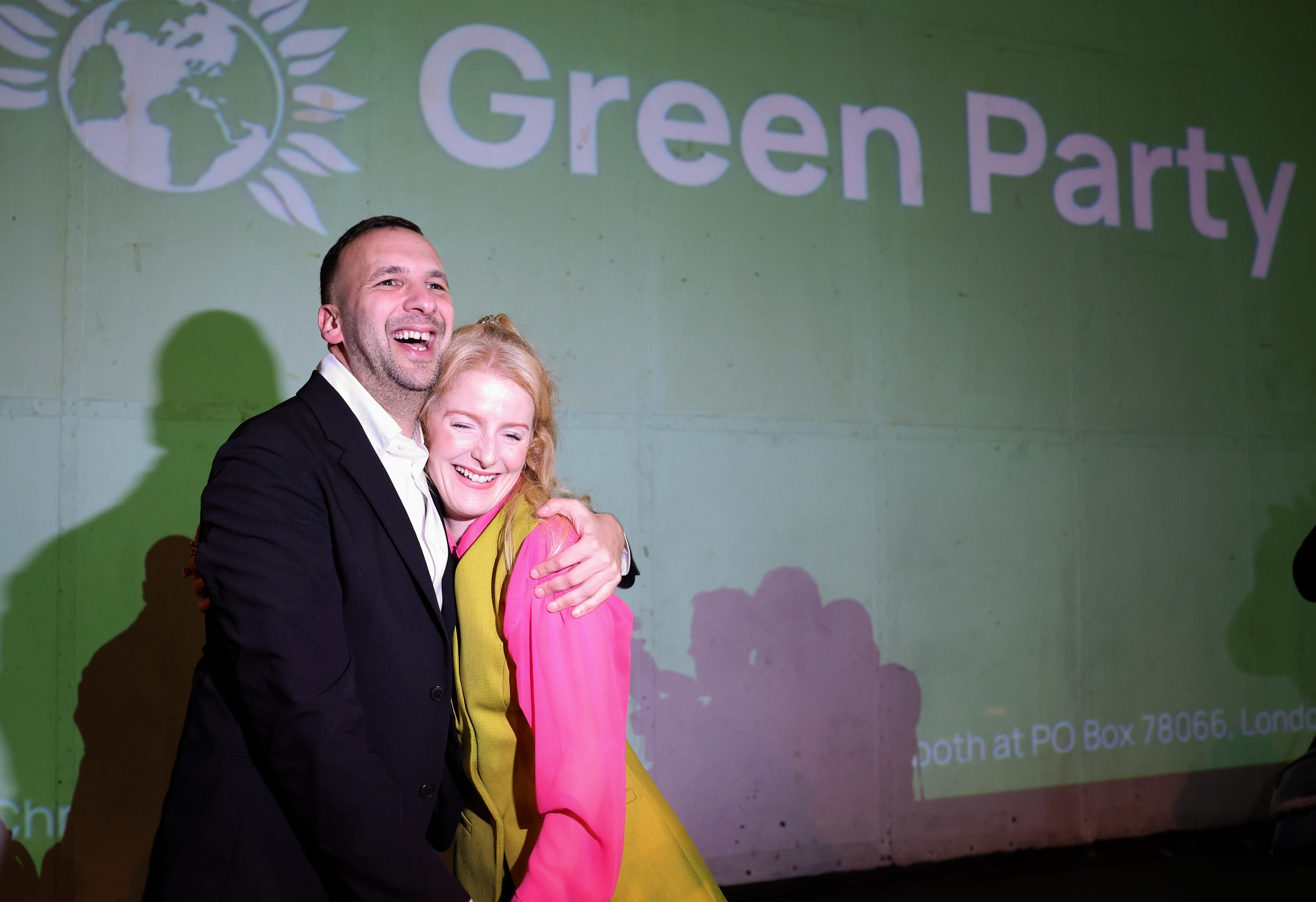
In a stunning and historic victory, the UK’s Green Party won in the Gorton and Denton parliamentary by-election on Thursday – the latest blow to Keir Starmer’s centrist Labour Party, which, after holding the seat for years, finished third behind the Greens and Nigel Farage’s hard-right Reform UK party.
The Greens won the same way they are going to keep winning – by organizing.
Hannah Spencer won in Gorton and Denton through thousands of conversations on doorsteps, in community centers, outside schools, and on high streets. She won because volunteers showed up, week after week, motivated not by careerism, but by a stubborn, collective belief that real change is possible.
You’re not going to hear this argument anywhere in the mainstream press. They’ll accuse Hannah Spencer of stoking up ‘sectarianism’ by appealing to people’s anger about the genocide in Gaza, or blame tactical voting websites for her victory. Gaza and tactical voting were important here – but the Greens were selected as the tactical voting choice because they’d already put in so much work building support locally.
The reason you won’t hear about grassroots organizing in the commentary about this campaign is that the received wisdom in Westminster is that it doesn’t work. Politicians in most major parties see the ‘ground game’ as a nice-to-have – a bit of democratic theater to keep the membership busy while the real work happens on television screens and in carefully managed press hits. Serious politics, we are told, happens at the level of message discipline, broadcast reach, and leader performance.
But this view belongs to a political era that is now dead – one in which voters still felt some baseline trust in politicians and the media. Now, trust is much harder to come by. And the only way to win it is by listening.
Politics in the Post-Trust Era
As poll after poll has shown, trust in political elites is at an all-time low. People are skeptical of polished messaging delivered from Westminster studios. They are tired of being addressed as demographic segments rather than human beings. When a politician appears on television promising to fix everything, many voters quite reasonably switch off.
In this context, real-world conversations cut through much more than TV interviews, or even social media clips. These conversations provide people with something remarkably scarce in daily life in a capitalist society: respect and recognition. The simple but increasingly rare experience of being asked, face to face, what is actually going wrong in your community.
The Greens understand that politics has changed, and they put that understanding into practice in Gorton and Denton. Their campaign did not treat voters as passive recipients of messaging but as participants in a shared political project. Volunteers were not just delivering literature; they were building relationships. They were listening as much as they were talking.
There’s another reason the ground game matters more than ever: British politics has fractured. We are no longer living in a stable two-party system where elections swing on broad national tides. Now, there are at least three meaningful political blocs competing in many constituencies – sometimes more.
In a first-past-the-post system, fragmentation creates volatility. It produces tight, volatile local contests, in which outcomes hinge on small numbers of votes. Under these conditions, the difference between winning and losing is often not a national media moment but whether you managed to identify supporters, persuade the wavering, and actually get your voters to the polling station.
These are the conditions in which a good ground game can make all the difference. Door knocking is slow, labor-intensive, and deeply unfashionable – and in close races it is brutally effective.
Most of the big parties still treat the ground game as peripheral. They continue to see politics as a top-down, one-to-many process, in which they preach to voters from on high. Local organizing is frequently under-resourced and undervalued, folded into campaign plans almost as an afterthought. And it’s extremely rare to see them listen to what local voters actually want – at best, they’ll rely on a few focus groups asked questions carefully designed to elicit the ‘right’ answer.
The Greens are moving in the opposite direction – in part out of conviction, and in part out of necessity. Without the financial firepower of the larger parties and without guaranteed media attention, they have built what they could control: a motivated, disciplined volunteer base. That base is now their greatest political asset.
Why the Greens Will Keep Winning
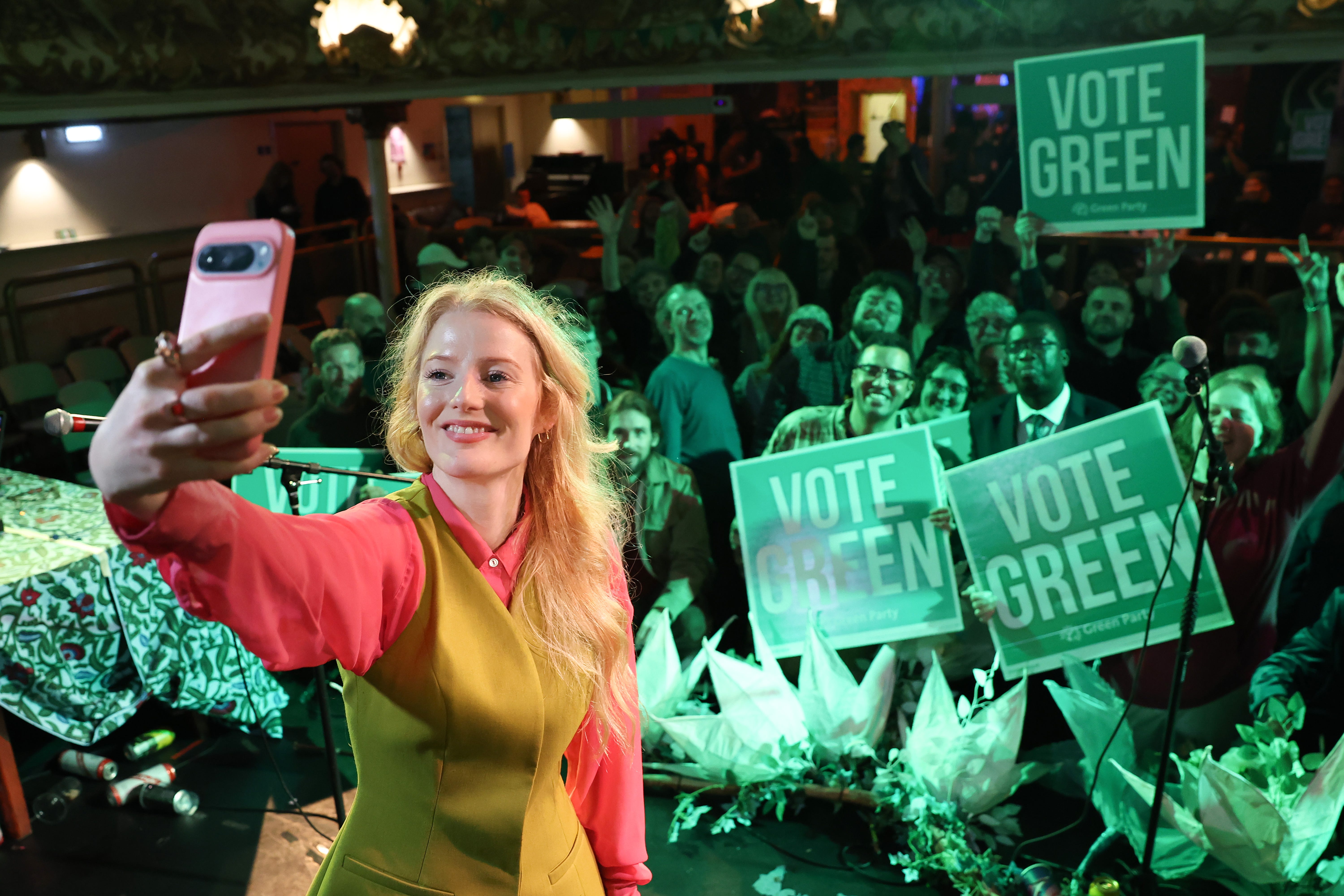
In Gorton and Denton, thousands of people were willing to spend evenings knocking on doors in the rain. This gave the campaign access to a vital source of information that other parties lacked – they knew which issues were landing because they had actually spoken to residents. It also allowed them to build trust with local people – something that no politician can take for granted anymore.
Why were so many people willing to show up and fight for a Green victory? Because there is an organized, passionate, and committed minority of people in this country who know that change is possible – and are willing to fight for it. Contests like this don’t just give us hope – they make us feel like we’re part of something bigger than ourselves.
That sense of community and solidarity is missing in so many of our lives. By design, we live in atomized, individualistic societies in which people are taught they have to compete with one another for survival. Neoliberal politicians like Margaret Thatcher and Tony Blair sought to destroy the mass movements that transformed politics in the 20th century so they could rule from the center, unopposed.
They killed the era of mass politics, and replaced it with an elitist, professionalised politics, in which member participation was denigrated. As a result, party membership sank, and engagement fell even further. At the same time, many of the other movements people once used to demand political change withered – or were destroyed. We were left with isolated, lonely societies, in which it was harder than ever to organise for change.
The Greens are offering a new kind of politics – one that provides people with a sense of solidarity, camaraderie, and agency.
The next general election is likely to produce hundreds of tight three-way contests. In this context, the party able to mobilize the most committed volunteers, sustain the most persistent local presence, and build the strongest voter relationships will have an advantage.
Right now, that party is the Greens. At a time when trust is lacking and fear is plentiful, Green politicians and organizers are meeting voters where they are, and listening to them. That’s why they won in Gorton and Denton – and it’s why they’ll keep winning, all over the country.
Grace Blakeley is the author of Zeteo’s ‘Billions’ column. She is a British economic commentator and the author of the book Vulture Capitalism. Subscribe to her Substack for more of her writing, and make sure you’re signed up to receive her Zeteo column, ‘Billions.’
The views expressed in this article are the author’s own and do not necessarily reflect those of Zeteo.
Check out more from Zeteo:


This is fabulous news. Wonderful! I was born and raised in Britain, lived most of my life in New York City. As an oldish person of 87 I look back on the huge influence of growing up in a society where "of course" the government worked for the people, not vice versa. Universal health care, widows' pensions (women were in dire straits at the end of WWI), unemployment insurance, and build, build, build new housing. Of course Thatcher despoiled that by selling off council housing. But the original is an essential for a decent society. Zohran Mamdani, mayor of New York City is setting out to build 12,000 new houses and if the federal government comes through it may well happen. Labour has been horrible. I always voted Labour when I lived in the UK, but was grateful I can't vote there when I saw Starmer on the rise. May there be more Green party victories--they speak to actual human beings, not TV images.
Great article Grace. It reminds me of Mamdani's win in New York for the mayoral race. People will vote if their issues are listened to! If they know their opinion matters. I predict that Starmer will call a General Election because he knows he doesn't have the votes now and will have even less in 3 + years. I've put up my name to volunteer for the Greens and I'm 77 next month! So all you oldies like me that have seen politicians come and go whilst never representing THE PEOPLE then we have to step up and let the Labour and Reform parties know we don't want what they've been selling us for all our lives. We love our neighbours no matter where they come from and we want a better world for the grandchildren. No more division, no more trump style politics that just make the rich richer because they won't share the wealth when it's our sweat that makes them wealthy! The Greens have proved it can be done!