

5 Reasons Why Trump’s Blockade in the Strait of Hormuz Won’t Work
Iran’s leaders are fighting for survival – and don’t have to worry about midterms, former US army major and defense intel analyst Harrison Mann writes.

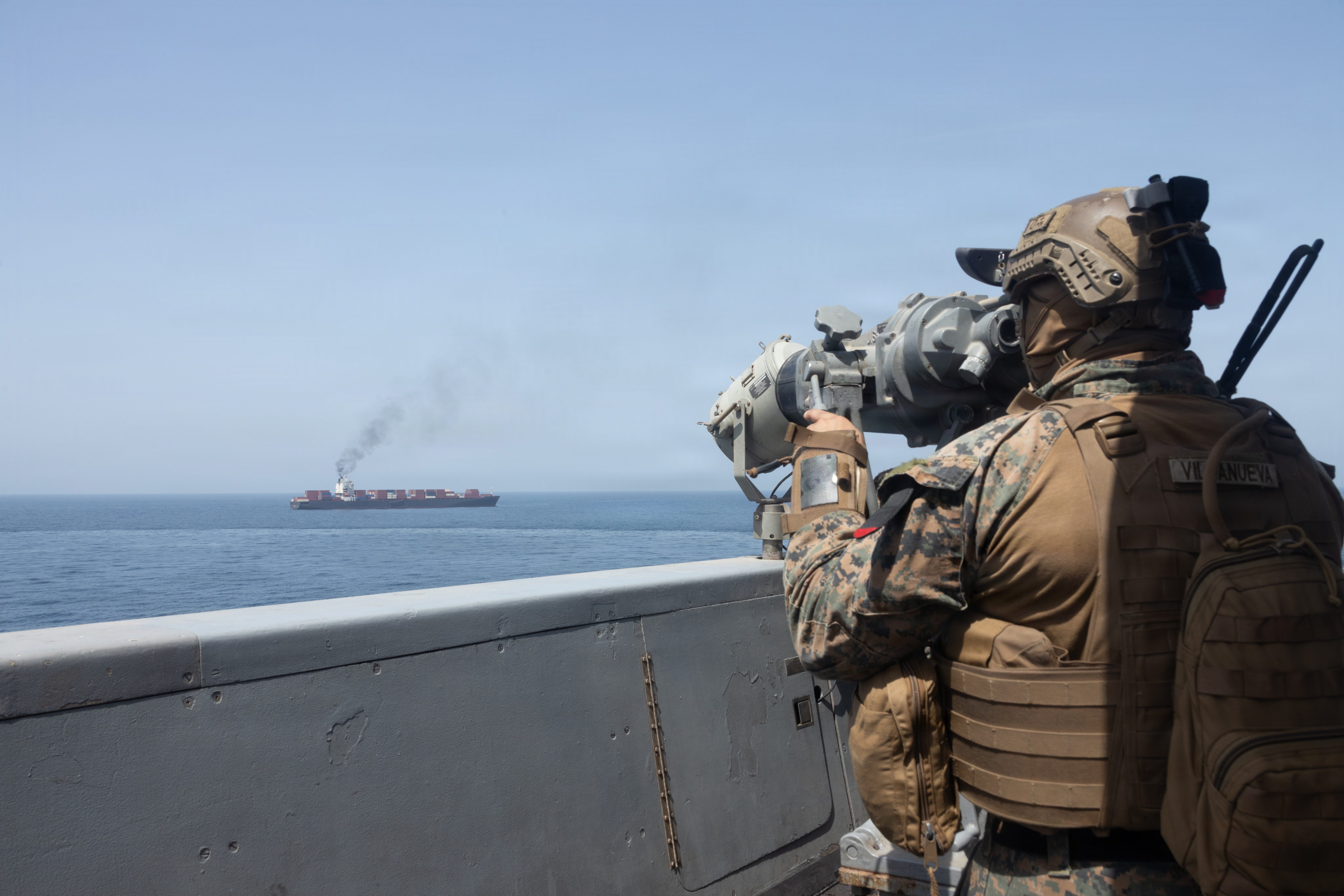
Donald Trump, a president who increasingly struggles to distinguish between fiction and reality, may well have been inspired by the iconic line from ‘Pirates of the Caribbean’ when he ordered a blockade of Iranian ports two weeks ago:
Trump is the worst pirate you’ve ever heard of. But you have heard of him.
The spirit of Jack Sparrow lives on in a ship-chasing operation that has been aggressively publicized – through countless Truth Social posts, Department of Defense action reels, and braggadocious media feuding from the increasingly politicized CENTCOM public affairs office – but is unlikely to achieve its goals. Plus, firing your own Navy secretary right after launching a worldwide naval operation does have an undeniable “mad captain” flair.
Trump thinks broadcasting the blockade will reassure audiences – the skeptical American public, his stalwart MAGA base, and maybe himself – that he’s in control of events, despite mounting evidence to the contrary. Like Trump’s other recent escalations, it’s unclear if Trump genuinely believes he can pressure Tehran, or if he just hopes to create that perception so he feels comfortable making concessions. Either way, the US Navy has to carry out the same mission. Here are five reasons why the blockade won’t work – and won’t last:
1. Trump’s blockade isn’t stopping Iran from selling oil.
Per Trump, the blockade is supposed to cut off Iran’s oil and gas exports, collapsing its economy and forcing the Iranian government to accept Trump’s maximalist, if ever-shifting, demands. The first problem is that the US Navy, which is attempting to both block Iranian ports and hunt down Iranian ships around the world, is unable to intercept all of the hundreds of ships in Iran’s “ghost fleet,” which have extensive practice falsifying their location signals and transferring cargo at sea to circumvent sanctions. While the US Navy has boarded several ships and turned back many more, over two dozen Iranian ships may have escaped the blockade in the past 10 days.
Add to that tankers laden with at least 140 million barrels of oil that Tehran sent out to sea before the blockade as “floating storage,” which puts about a month’s worth of exports outside the reach of the main US blockade, and it’s not hard to see how Iran was still selling the same amount of oil last week as it was at the beginning of the year, pre-war.
2. An effective blockade wouldn’t make Tehran fold any time soon.
As I wrote last month, when the Trump administration was more vocally considering invading Kharg Island in a scheme to cut off Iran’s oil exports, impoverishing the country wouldn’t defang key elements of the Iranian war effort. Soldiers whose homeland is under bombardment won’t lay down their arms just because they got a pay cut, and even if every factory in Iran shut down tomorrow, Iran’s military still has stockpiles of thousands of missiles and drones it can use to keep the Strait of Hormuz closed. But the factories are unlikely to shut down. Iran’s government has weathered economic warfare from the United States for decades, including the “Maximum Pressure” campaign from Trump’s first term, has developed a mostly self-sufficient defense industry out of necessity, and has likely long planned to defend itself on a shoestring budget.
An effective blockade – again, still a hypothetical – would eventually force Tehran to stop pumping oil, which could irreparably limit Iran’s production capacity. But that could take as long as two months – time Trump doesn’t have – and still doesn’t promise Iran will run out of savings.
3. Tehran can weather economic warfare, but by summer, most Americans – and Republicans who aspire to reelection – will be feeling a squeeze Trump can’t ignore.
Despite rising gas prices, the American consumer is still largely insulated from the multifaceted global economic crisis precipitated by Iran’s blockade of the Strait of Hormuz, now exacerbated by the US blockade. But time is running out. A veteran energy market analyst I spoke to said that within 45-60 days, he expected to see a new American affordability crisis that would be impossible to ignore.
The United States is a net energy exporter and will not experience literal shortages like countries in Asia or Europe that depend on exports out of the now-double-blocked Strait of Hormuz. But as refineries dry up in Asia and Europe, countries there are increasingly turning to US oil and gas, which, as Trump has bragged, is a boon for the US hydrocarbon industry. However, that means US consumers are essentially bidding against Asian and European buyers when they fill up at the pump. JP Morgan has warned that oil prices could still go up another 30%, and gas will blow past $5 per gallon. The global supply shock will collide with elevated US demand in June when Americans start summer vacation travel.
Add to that a fertilizer shortage – American farmers do rely on Gulf chemical exports – gradually driving up grocery prices, plus a global aluminum shortage – yep, also a Gulf export – that will touch everything from beer cans to Ford F-150s. While consumer pain may not trouble Trump personally, senior Republicans, including Senate Majority Leader John Thune, have openly voiced concern over Iranflation.
Yes, Iran’s economy is also suffering a crisis that will take years to recover from. But Iran’s authoritarian government isn’t up for election anytime soon, and by their calculation, austerity and privation are small prices to pay for Iranian sovereignty.
4. Instead of compelling Tehran to negotiate, Trump’s blockade is convincing Iranian leaders that there’s no point in negotiating with him.
Trump hoped his blockade would force Tehran to the table, or at least allow him to take credit for negotiations the Iranian government was going to join anyway – that’s probably why the US Navy didn’t start boarding ships until right before Trump expected negotiations to resume on Tuesday. But Trump was foiled by his own pathological inability to take “yes” for an answer. Last Friday, Iran’s foreign minister announced Tehran was lifting its blockade of the Strait of Hormuz, apparently expecting Trump would reciprocate and the two sides would resume talks. Instead, Trump rejected Tehran’s olive branch and said his blockade would continue, proving to Iranian leaders that there was no point in making concessions, and the IRGC announced the Strait was closed again. The will-they-won’t-they negotiations in Islamabad announced for this weekend between Steve Witkoff, Jared Kushner, and Iranian foreign minister Abbas Aragchi are missing major decision-makers on both sides, representing a step backward for US-Iranian diplomacy.
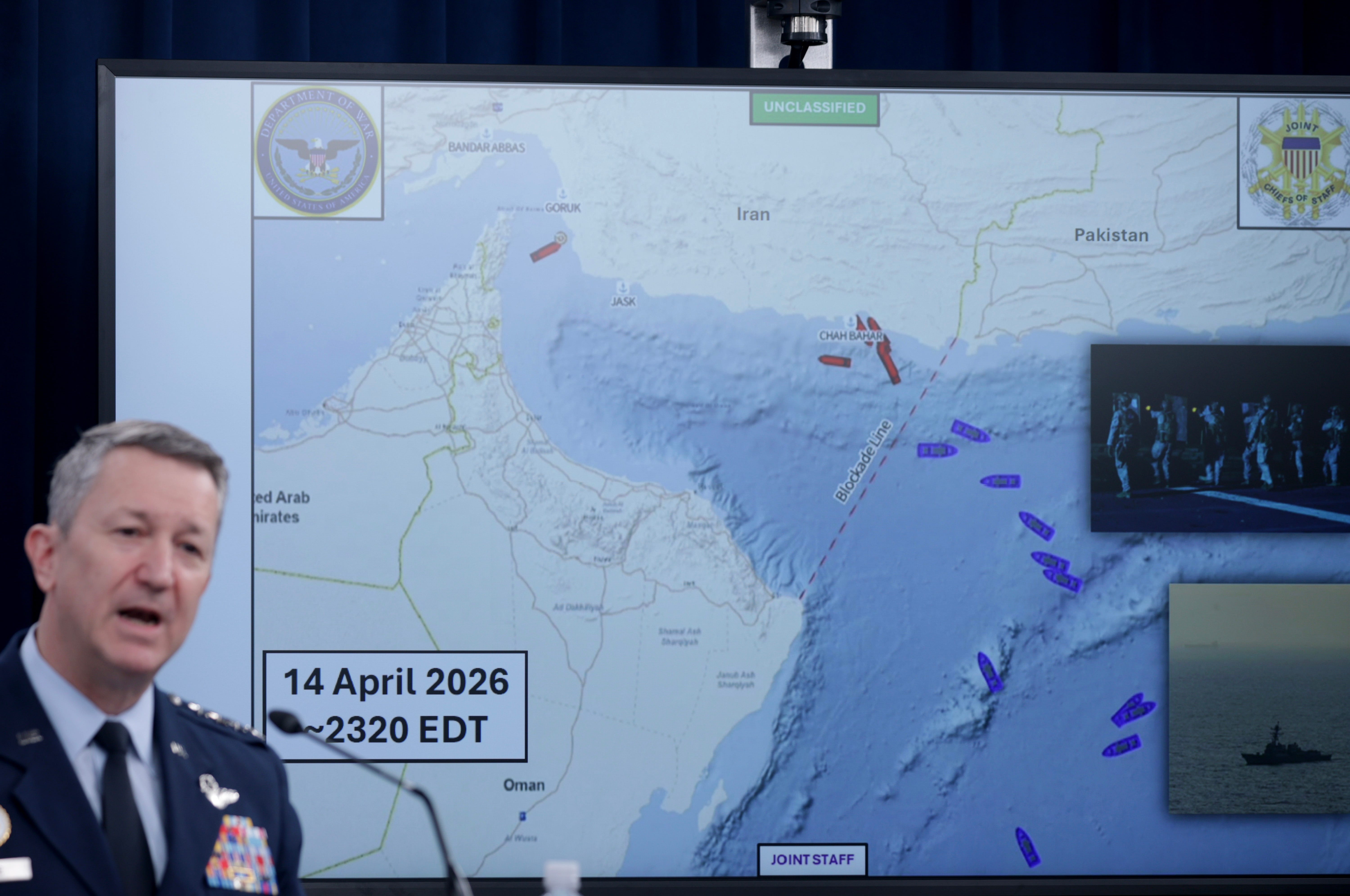
5. A blockade is an act of war that risks blowing up the ceasefire – putting Trump right back where he started.
A naval blockade is officially an act of war, though Tehran isn’t treating it as such, choosing to retaliate with ship seizures of its own instead of resuming attacks on US forces. But hostile boardings are inherently risky, and resistance from a ship’s crew, miscommunications, or accidents could lead to the deaths of US Marines or sailors and renewed escalation. Conversely, if Trump’s blockade was somehow effective enough that Iran’s leadership felt existentially threatened, it could carry out threats to pummel Gulf energy infrastructure and have Yemen’s Houthis block Red Sea shipping, putting the final nail in the coffin of Gulf exports and accelerating global supply shocks. Trump would be in an even worse position than he was before the ceasefire: in a shooting war with an enemy that won’t give in to military pressure, but now with an economic crisis looming closer over his head, a half-depleted stockpile of ballistic missile defense interceptors, and an adversary that’s had weeks to reposition and rearm its forces.
In short, Trump has launched a blockade that hasn’t blocked Iran from selling oil, to pressure an Iranian government that won’t succumb to economic pressure, that supports Iran’s strategy of inflicting pain on US markets and consumers, and that is derailing the very negotiations he hoped to restart. Worst pirate we’ve ever heard of, indeed.
Harrison Mann is a former US Army major and executive officer of the Defense Intelligence Agency’s Middle East/Africa Regional Center who resigned in protest of his office’s support for Israel’s war in Gaza under the Biden administration. He is currently with the group Win Without War and recently became a Zeteo contributor.
The views expressed in this article are the author’s own and do not necessarily reflect those of Zeteo.
Check out more from Zeteo:


Another factor, that I think I have read about in Zeteo also, is Iran's oil trade with Russia and other countries via the Caspian Sea, which is out of reach of US ships.
Yeah, dumb isn't even the word for this.
I'd argue that after killing Iranian leaders while they were negotiating might put a crimp in any possible deal...