


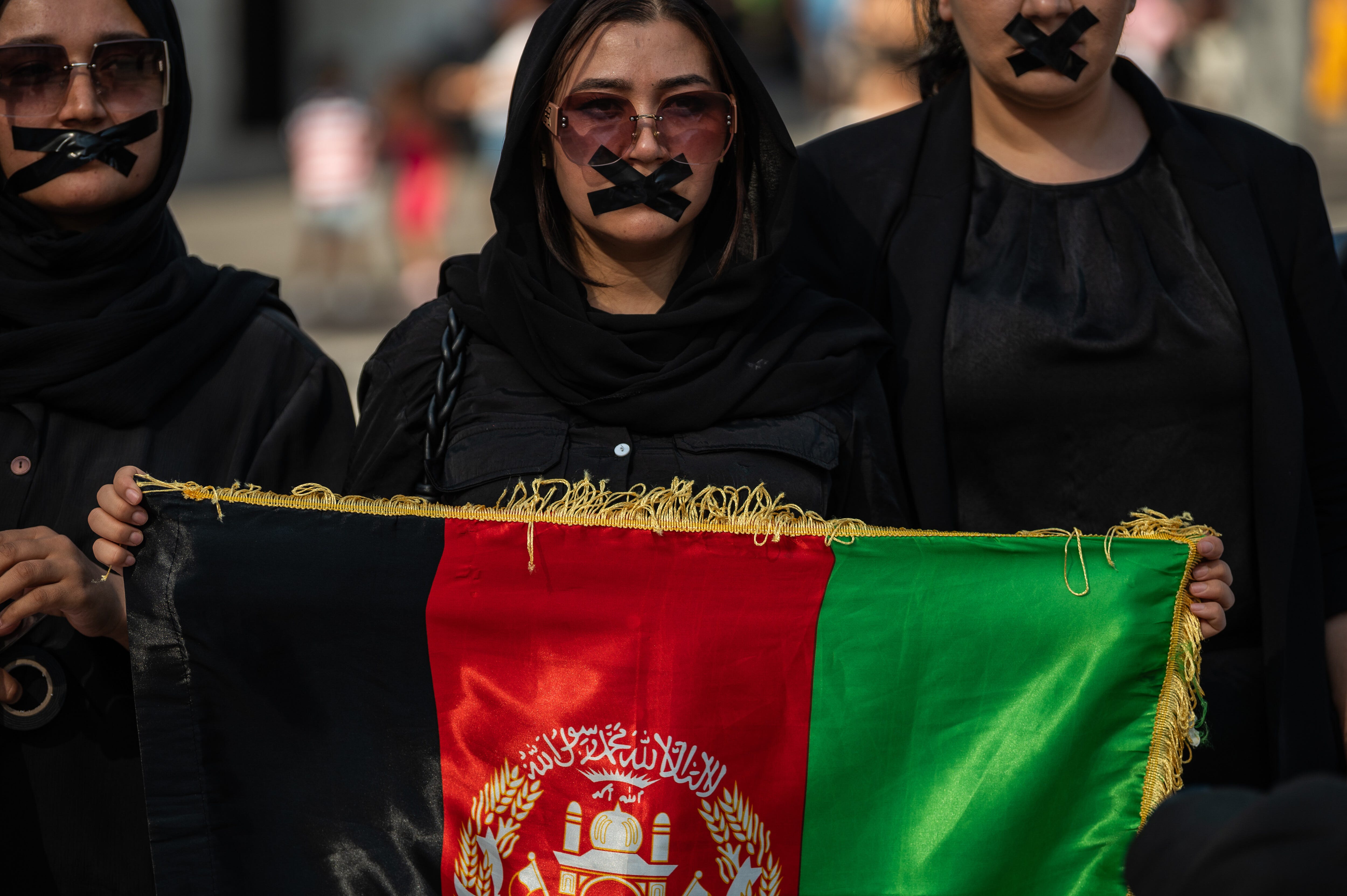
After months of listening to and gathering testimony from Afghan women, the People’s Tribunal for the Women of Afghanistan in The Hague determined that the Taliban’s system built to dominate and segregate women and girls based on their gender, deny their basic humanity, and remove them from public life should be recognized for what it is: the crime against humanity of gender apartheid.
For Afghan women, this judgment, made earlier this month, is simply a formal recognition of the erasure they have lived every day. It also underscores why it’s so urgent for governments around the world to codify into international law what Afghan women and girls have endured and named from the beginning.
People’s tribunals have always mattered most when states refuse to act. The Russell Tribunal on Vietnam confronted truths that powerful governments preferred to ignore, including the scale of US bombing raids in Vietnam and their devastating impact on civilians. The Women’s Court for Bosnia recognized forms of violence that no international court was ready to acknowledge, especially the use of sexual violence as a weapon of war. These tribunals speak when official structures fall silent. They tell the truth so that power can match the urgency they reveal with action.
This month’s judgment on Afghanistan stands in that tradition. It is not a solution to the country’s crisis; it is a reckoning. And it forces us to confront an uncomfortable truth about how this system came to be, and why the world has struggled to confront it.
From Partners to Bargaining Chips
The Taliban did not emerge in isolation. Over decades, borders drawn by colonial administrators fractured communities and laid the foundations for cycles of conflict. During the Cold War, global powers including the United States, Britain, and Pakistan fuelled proxy wars that reshaped the country’s political landscape. After 2001, women’s rights became both a moral justification for intervention and a symbol of progress in international discourse. Afghan women rebuilt institutions, founded newspapers, and shaped public life. They also endured displacement, airstrikes, and a peace process that excluded them entirely.
By the time the United States negotiated the withdrawal agreement that cleared the path for the Taliban’s return in 2021, Afghan women had been transformed from partners into bargaining chips. Their rights, once held up as a reason for war, became negotiable. When the Taliban entered Kabul, they dismantled the spaces where women had become most visible. This was ideological, but it was also symbolic. It was a way of erasing the last two decades and punishing the vision of Afghanistan that the occupiers had built on the image of women. Today, Afghan women and girls are banned from education beyond primary school, excluded from most employment, prevented from moving freely, and systematically removed from public life. This is not a collection of isolated restrictions, but a coordinated, coherent system of exclusion.
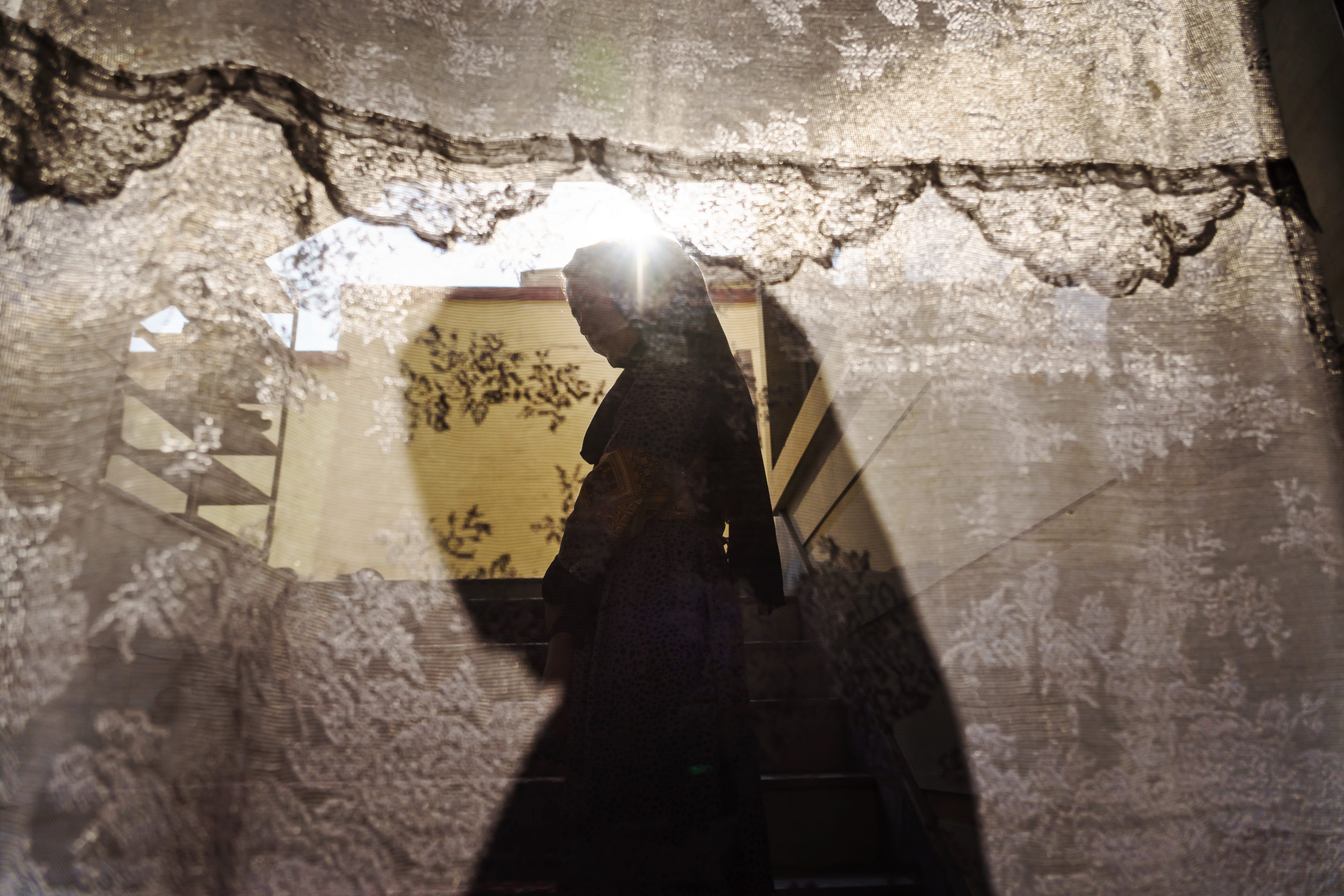
This is the context in which the tribunal’s judgment must be understood. It clearly names the system under which Afghan women and girls live. It also exposes the failures of the international system itself. To call this gender apartheid is not only to describe a crime; it is to describe a world willing to tolerate it.
Some governments have shown principled leadership, even if in different arenas. We have seen governments show political courage on the international stage – South Africa, Spain, and several others have taken principled positions on accountability for Gaza, insisting that international law cannot be applied selectively. Mexico and The Gambia pushed forward the proposal to resume UN negotiations on the Crimes Against Humanity treaty, a process that could finally recognize gender apartheid under international law – and it is exactly this kind of cross-regional principled leadership that should be expanded and deepened to champion human rights for everyone.
Evolving to Meet the Moment
From Kabul to Gaza, international law is invoked more often than it is upheld, and the people who depend on it most are the first to be abandoned by powerful governments that reliably prioritize their own interests. The governments that once championed women’s rights in Afghanistan, like the US, are the very same that negotiated the Taliban’s return, excluded Afghan women from diplomacy, and continue to ignore international law in crises far beyond Afghanistan. This judgment is not a plea to them. It is an indictment of them.
This moment matters because civil society, global liberation movements, legal advocates, and Afghan women themselves demanded legal recognition to capture the brutality they have been forced to endure. It matters because the findings leave no room for doubt and force clarity where political convenience prefers ambiguity. The judgment also offers something rare in a moment defined by political paralysis: it provides a roadmap.
In the coming year, governments will return to negotiations on a new UN Crimes Against Humanity Treaty, the first major update to international criminal law in decades. For the first time, governments have an opportunity to recognize gender apartheid explicitly and to close the legal gap that has allowed systems like the Taliban’s to operate without consequence. The Tribunal’s findings give shape to what that recognition should look like and offer policymakers a clear framework grounded in evidence and testimony.
Naming this system gender apartheid does not change it on its own, but it ends the argument over what we are looking at. It ensures that a deliberate project of erasure cannot be disguised as cultural practice. It gives journalists, policymakers, and the public a vocabulary equal to the scale of the crime. And it strengthens the effort to ensure that gender apartheid becomes recognised in international law so that no regime can hide behind claims of sovereignty when it excludes women from every part of life.
Afghan women and girls have carried this struggle from the beginning. They were the first to document abuses, to protest, to build coalitions, and to both name and demand accountability for gender apartheid when the rest of the world was ready to move on. This month’s judgment validates their truth. It also underlines the urgency of global responsibility to stand with them.
What happens next will not be a test of Afghanistan’s future alone. It will be a test of whether the international system can evolve to meet the moment. For Afghan women and girls, this is not an abstract question. It is their lives, their futures, and their right to exist freely in their own country. In this way, they are holding the line for women and girls everywhere.
Sahar Halaimzai is a writer, human rights advocate and currently the Snr Director of Policy & Advocacy at Malala Fund.
The views expressed in this article are the author’s own and do not necessarily reflect those of Zeteo.
Check out more from Zeteo:


There was a piece done ages ago (if not a decade ago) by a now defunct news group that interviewed an Afghan woman ( who was no longer living in Afghanistan ) and they also showed photos of women in Afghanistan in the 1970's , I believe, and now.. those pictures side by side need to be sent around the world...it's our future in this country if the likes of Nick Fuentes get's his way... chilling, depressing ( my proof reading is horrendous apologies )
Thank the United States for the Taliban and every oppressive regime in the Middle East if not the world. Who propped up fanatical Muslims in the Middle East? The United States and its Allies. Stop with the fake outrage.