


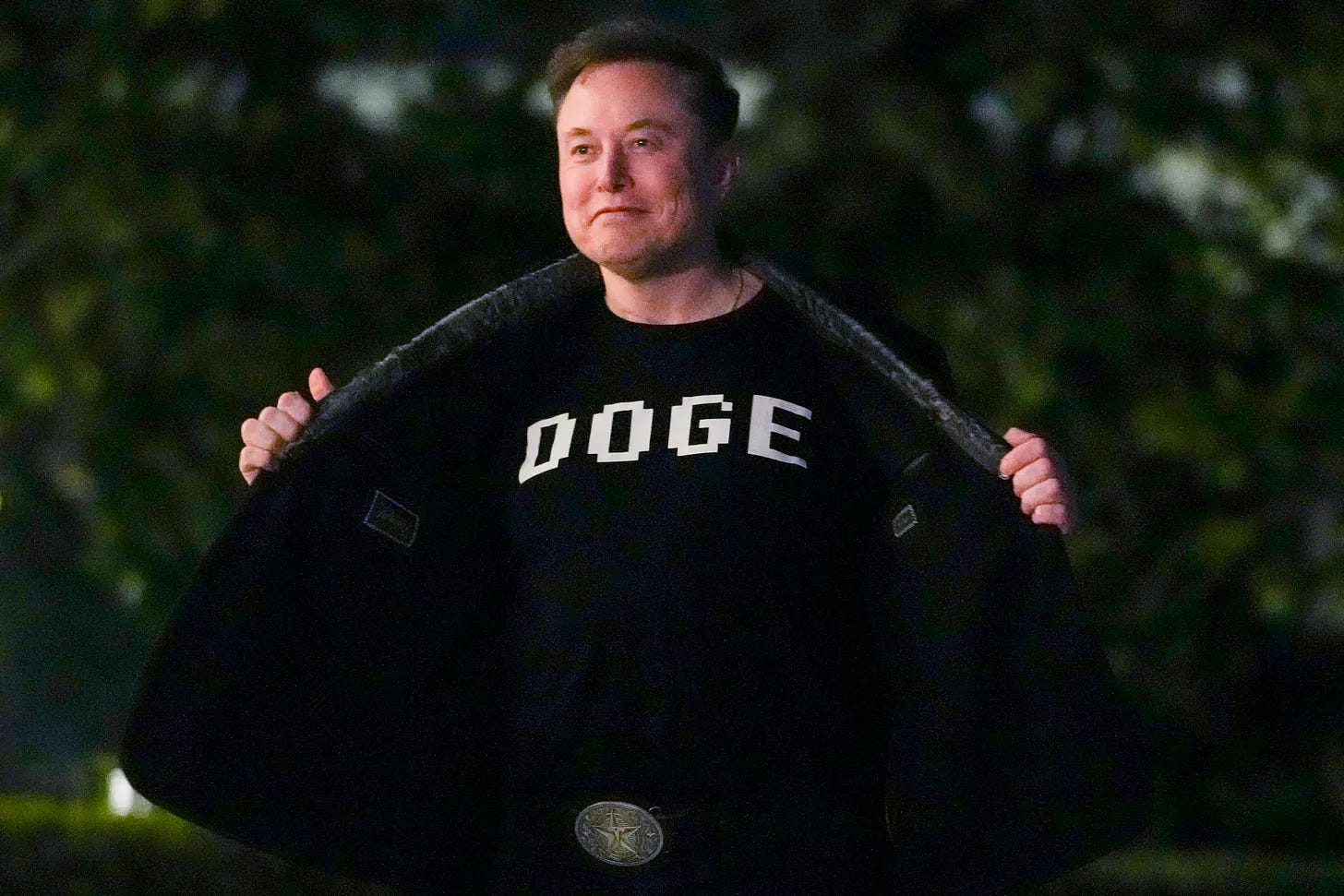
When he hasn’t been busy obsessing over ‘The Odyssey’ or making outlandish predictions of looming civil war in the UK, Elon Musk has spent much of the summer in a prolonged Twitter crash-out over his equally absurd claims that no one has died and nothing important was shut down as a result of his DOGE team’s dismantling of the U.S. Agency for International Development (USAID).
Yet at the height of his manic attack on USAID last year, Musk admitted to firing the agency’s Ebola team…in the middle of an active Ebola outbreak in Uganda. At the time, even he seemed to realize this went too far – sheepishly (albeit falsely) claiming in a White House meeting that he had restored the team. Fortunately, Uganda managed to contain that small outbreak even with the U.S. largely missing in action (although years of prior U.S. investment certainly helped). But Musk’s cavalier recklessness about who and what DOGE was destroying was a preview of coming disasters.
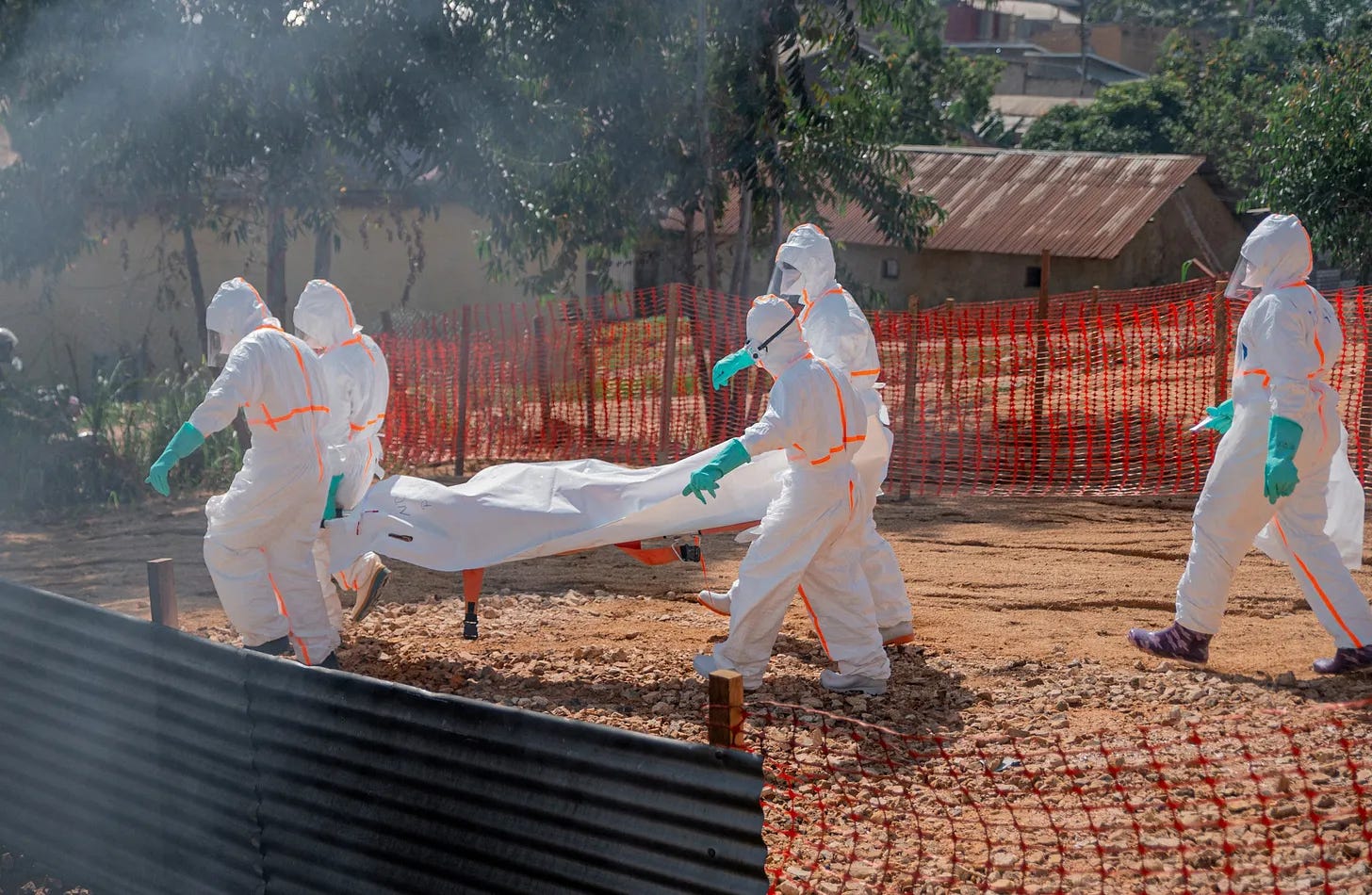
The massive new Ebola outbreak now spreading across conflict-ridden eastern Congo is a grim object lesson on just how vital USAID was. The outbreak was declared in May after an unusually long delay in detecting and identifying the virus, by which point it had already spread at an enormous scale. It is the most worrying resurgence of Ebola since the famously huge 2014 outbreak in West Africa – and will likely match, if not exceed, that scale. Case rates over the first two months of this outbreak are vastly outstripping those of any prior Ebola outbreak. More than 3,200 cases have been registered and over 1,400 deaths reported, in Congo as of Tuesday. But the World Health Organization has said that actual case numbers may be two to four times higher, because so many cases are going undetected by an under-powered global response.
The destruction of USAID is a major reason why things have gotten so badly out of hand. Musk, of course, has continued to maintain the DOGE cuts have caused “zero” deaths. Last month, Musk threatened to sue Rep. Ro Khanna for saying Musk needs to answer for the millions of children “he possibly sentenced to death by dismantling” USAID.
When it comes to the current Ebola crisis, the Trump administration points to other factors – a rare species of Ebola that was not detectable by initial rapid tests, emerging in areas of eastern Congo plagued by decades of violence and insecurity. Those are indeed complicating factors – but they don’t come close to explaining the delayed detection and slow scale-up of the response effort.
The absence of USAID meant that this new outbreak was able to gain frightening momentum before being uncovered, and continues to outpace attempts to contain it.
Late Detection
Congo has long been a known hotspot for many novel viruses. Before DOGE came along, Congo was one of 50 countries in which USAID had a dedicated outbreak preparedness officer, tasked with watching for signs of new outbreaks and managing programs to ensure rapid response. USAID had a large portfolio of outbreak-related programming geared towards exactly that risk, as well as extensive humanitarian programming throughout the conflict areas in the country’s eastern provinces.
Most of that is now gone – and it is no coincidence that this outbreak managed to fester undetected for months just as that infrastructure imploded.
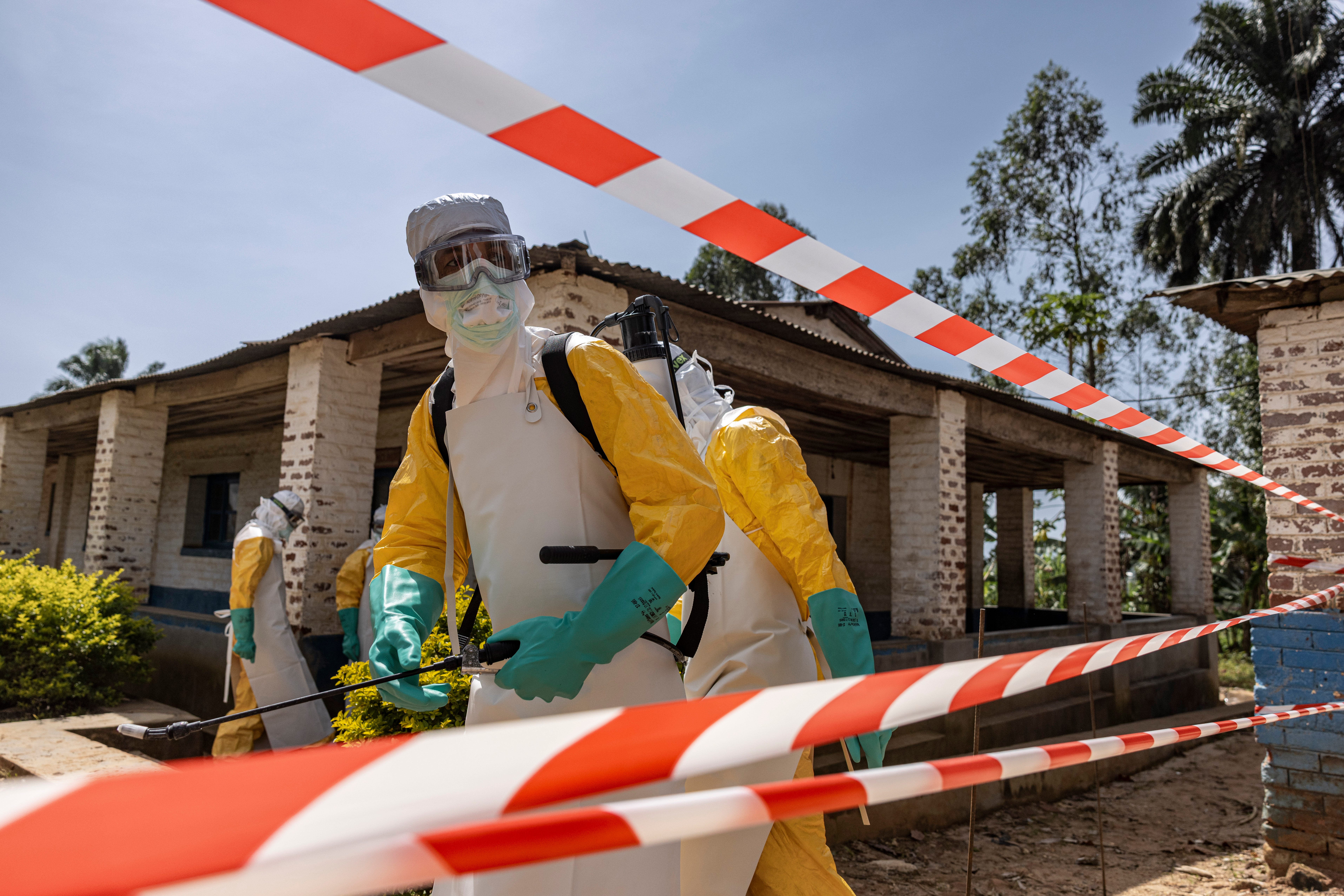
The virus could have been confirmed much earlier: health officials now assess that it has been circulating in the region at least since February, yet it was only identified in May. Health workers and NGOs operating in eastern Congo had begun to realize earlier in the spring that an apparent viral hemorrhagic fever outbreak was underway; some NGO clinics had even preemptively activated Ebola operating procedures (PPE standards, specialized patient screening and triage, etc) weeks before the official declaration.
Yet no one connected the dots to determine that this was a new Ebola outbreak. USAID’s absence is a major reason why.
In the “before” times, this kind of scenario – clusters of unexplained viral hemorrhagic fever spreading in a war zone within a known virus hotspot like Congo – would have been a flashing red light prompting enormous urgency within the U.S. government. USAID’s disease surveillance networks would likely have flagged an unusual signal from Ituri. But even without that, the health office in USAID’s Congo Mission – which spoke routinely with partners via USAID’s deep relationship with Congolese health professionals across the country – would have gotten informal reports of something unusual brewing in the region. After the initial Ebola rapid tests in the field came back negative (because they were not geared for this species of Ebola), USAID’s programs to support lab sample transport would have worked with Congolese counterparts to expedite specimens from suspect cases to a higher-level lab that could test them more thoroughly. And as an extra backstop on those systems, USAID’s extensive network of humanitarian relief NGOs operating in the area would have picked up local reports of an unidentified disease, and relayed those back to their USAID program officers in Kinshasa and Washington.
As someone who would have fielded those reports in years past, there are few things that would have lit a fire under me faster than an unexplained Ebola-like disease spreading in eastern Congo. I would have been on the phone to the White House and CDC almost immediately, kicking U.S. government detection and response efforts into high gear.
This time, however, there was no one to make those calls, and no one to answer them. The USAID partners had been defunded. The USAID health office that managed relationships with Congolese health officials has been closed, along with the entire USAID presence and workforce in the country. Humanitarian relief and health programs that USAID oversaw in eastern Congo were suspended, disrupted, or fully ended. And the USAID personnel who managed global outbreak surveillance back in Washington were likewise purged.
So instead of connecting the dots early on, the U.S. government learned of this at the same time as the rest of the world – months after the outbreak had actually begun.
Delayed Response
That late detection of this outbreak gave the virus a massive head start. Two months on from the formal declaration of the outbreak, the response is still falling badly short and failing to keep pace with the virus. Some of that is beyond anyone’s control: Eastern Congo is an active conflict zone, and the species of Ebola has no proven vaccine. But once again, the destruction of USAID is a major factor.
Ebola is a disease that punishes delay: days and weeks matter, especially in the early phase of a new outbreak. The response has been set back by the drawdown of USAID’s partner infrastructure in Congo over the past year, and the destruction of the other tools and expertise that the agency would have brought to the table. And while the Trump administration has shown great urgency about issuing funding announcements, it has been slower to translate those into meaningful action on the ground.
DOGE destroyed a vast amount of capacity that would have been directly involved in the current outbreak response. In the last year of the Biden administration, USAID was funding 38 humanitarian organizations in the eastern provinces of Congo. Its outbreak preparedness and humanitarian relief programs had supported Ebola readiness; training healthcare professionals in infection control standards; strengthening global and regional supply chains to transport medical supplies; and supporting risk communication activities in communities.
Little of this capacity remains.
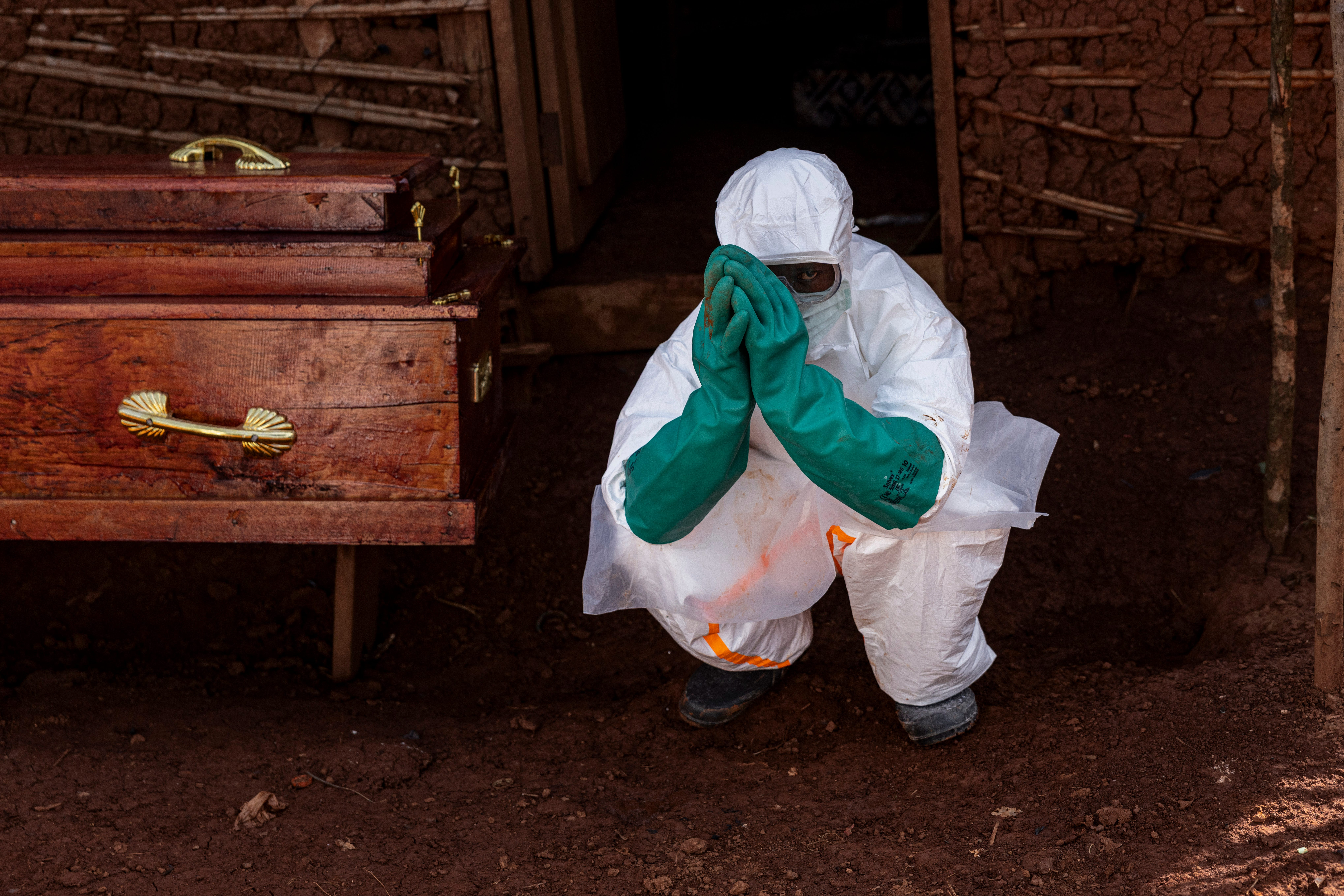
The $906 million in humanitarian resources that the United States spent on Congo’s humanitarian crisis in 2024 declined by 80% after DOGE’s cuts in 2025. Relief organizations suspended life-saving services, laid off staff, and closed health facilities, leaving the overall health system far less prepared for this catastrophic outbreak. As the Ebola response now ramps up, NGOs that 18 months ago could have immediately pivoted existing programs must instead try to reconstitute the capacity they were forced to shut down last year. And reserve stocks of personal protective equipment (PPE) and other Ebola-specific supplies – which USAID began keeping on standby in its global relief warehouses after the 2014 outbreak – were not replenished once DOGE closed the agency. So frontline health workers have been forced to respond with insufficient PPE, and some have already died.
What has also been lost is the leadership of the U.S. government on the ground. In West Africa, the Disaster Assistance Response Team (DART) that I oversaw from 2014-16 was in the thick of the response, meeting daily with national leaders, mobilizing hundreds of CDC and thousands of U.S. Department of Defense personnel, coordinating the work of NGOs, and working day-in, day-out to address and resolve the myriad problems that cropped up routinely to hamper the response. This time, the State Department has sent a small response team to Congo; but unlike USAID’s legendary Disaster Assistance Response Teams, it is woefully underpowered and remains stuck in the embassy in Kinshasa, over 1,000 miles from the outbreak zone on the other side of the country. The new response model under Secretary of State Marco Rubio is not a problem-solving DART; it is consigned to writing checks half a continent removed from the action. Other countries are sending staff to the epicenter of the response, but not the U.S.
The outcome of Musk’s aid cuts has been to degrade and dismantle the U.S. outbreak response capacity that was built in the wake of the 2014 Ebola outbreak. The world was caught off guard in 2014 as that outbreak ultimately grew 67 times larger than any prior Ebola outbreak. Back then, there was no precedent for such a black swan event; this time around, the playbook is far better established (not least because, after 2014, the U.S. government wrote an *actual playbook* for events like this). But that matters little when the lessons and innovations of that successful response have been actively un-learned, and the institutions that led it have been destroyed.
We don’t know how many lives this out-of-control outbreak will ultimately take – but we can say confidently that Elon Musk will bear responsibility for many of them.
Jeremy Konyndyk is the president of Refugees International. He served in senior roles at USAID under the Obama and Biden administrations, and oversaw USAID’s response to the 2014 Ebola outbreak in West Africa.
The views expressed in this article are the author’s own and do not necessarily reflect those of Zeteo.
Check out more from Zeteo:


There is no end to the carnage that Elon Musk has unleashed with his DOGE destruction.
It was intentional, as well. This isn't by accident. Elon and Trump are criminally responsible.