


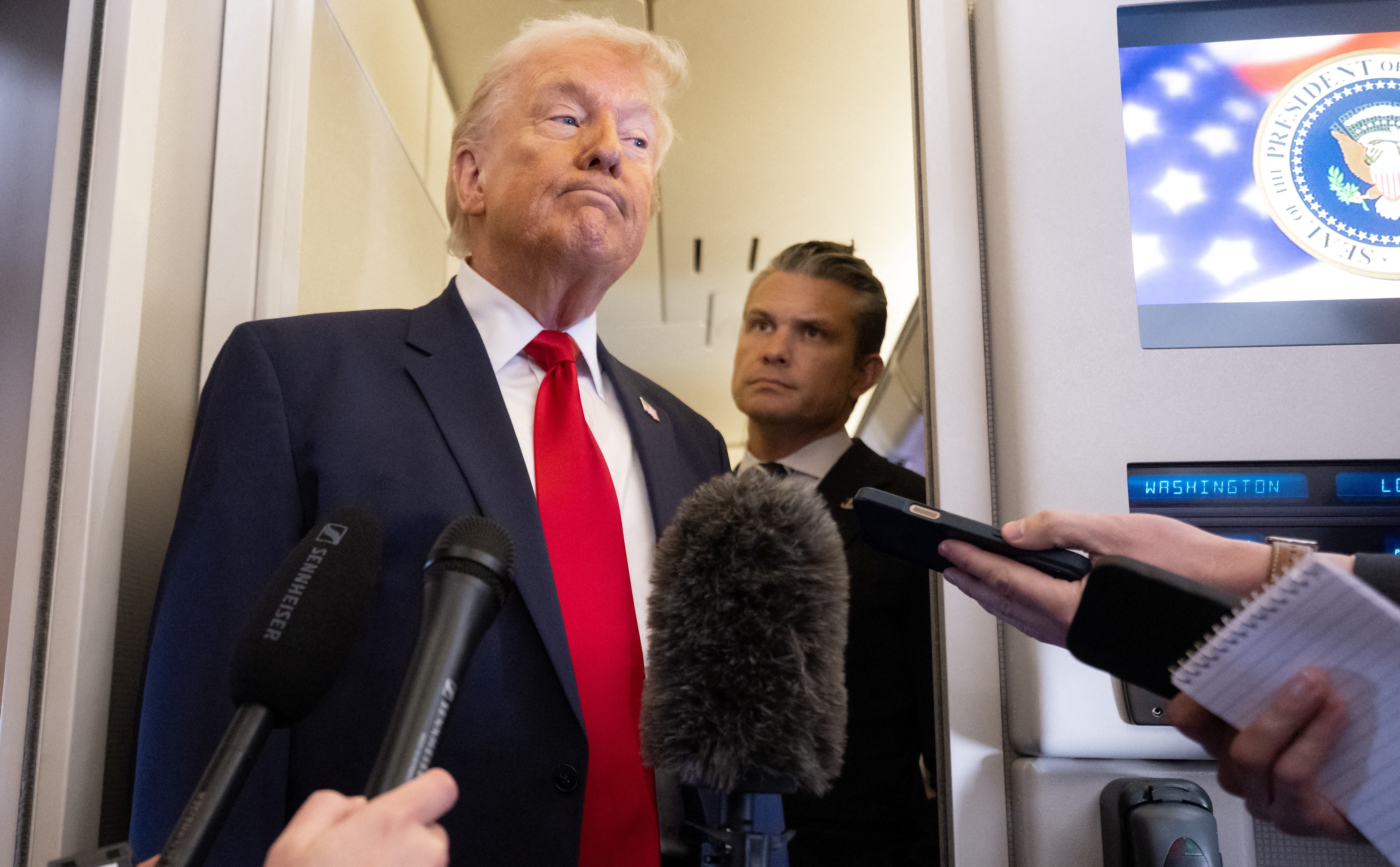
Donald Trump bombed Iran expecting an overnight victory. Instead, he got a 14-country war, at least seven dead US servicemembers, the worst US military civilian casualty incident in decades, and skyrocketing oil prices. Desperate for a win, he’s tried bombing Iran, bombing Iran, and even bombing Iran, and now he’s all out of ideas.
So it’s no surprise that Trump officials soft-pitched ground operations inside Iran to Axios over the weekend. If that sounds like an invasion to you, don’t worry, they would be “small special ops raids — not a big force,” per a reassuring unnamed Trump official.
Before evaluating the three “small” plans on the table, we need to understand three important factors for context:
First, for Iran hawks in Israel and the US, the longer the war, the better. Trapping Trump in a quagmire raises the odds of state collapse in Iran – a humanitarian catastrophe and the ideal outcome for Israeli Prime Minister Benjamin Netanyahu.
Second, Trump has plenty of troops at his disposal, even if he hasn’t put in the months it would take to assemble an Iraq-scale invasion force. He could deploy over 10,000 rapid-response troops in weeks if he wanted to – potentially enough to buy time for a larger invasion force.
Third, the closer US forces get to Iranian soil, the more US technological and firepower advantages are negated. The US military can bomb Iran at will, but that doesn’t protect a commando from stepping on an IED, or a landing helicopter from a concealed Iranian soldier with an RPG.
The three proposed ground operations reported – or pitched – in the media all have limited aims that sound more palatable than committing the US to a ruinous forever war in Iran. Here’s how they all risk ending up there anyway:
1. Commando raid on nuclear sites to secure Iran’s uranium
The plan: As Trump officials pitched in Axios, the US Delta Force could infiltrate Iranian nuclear facilities to confiscate or sabotage Iran’s supply of highly-enriched uranium, which would hamstring a potential future Iranian effort to develop nuclear weapons (note: as the International Atomic Energy Agency (IAEA) has confirmed, the Iranian government was not doing this before this war, but at this point its surviving leadership might conclude they have no other choice).
The problem: The US military has sophisticated techniques to stealthily infiltrate and rapidly exfiltrate commandos, but there’s no way to dig a big hole fast. The Iranian government has buried the tunnel entrances to the Isfahan nuclear site, where the enriched uranium is believed to be stored. Digging out the filled-in tunnels could take more than a day. How do you protect a small detachment, digging a hole for days on end, a few miles outside a large city in the middle of Iran? With thousands more troops, to fight a multi-day battle with an adversary who has plenty of time to react and reorganize.
Add to that, nobody knows for sure where all of the highly-enriched uranium, stored in scuba tank-sized canisters, actually is. It’s possible some or all of it was driven out of Isfahan after Trump bombed Iran’s nuclear facilities last June. Tracking it all down would require an even larger-scale invasion. That’s what Secretary of State Marco Rubio really means when he says “people are going to have to go and get” Iran’s uranium.
2. Seize Kharg Island to hold Iran’s oil exports hostage
The plan: Trump officials are also considering seizing Iran’s “oil lifeline,” a small island 15 miles off Iran’s coast that houses the oil terminal responsible for about 90% of Iran’s oil exports. Trump would hold Iran’s oil exports hostage in the hope he could force a surrender, because without oil revenue, Tehran’s economy would collapse and it wouldn’t be able to pay its troops.
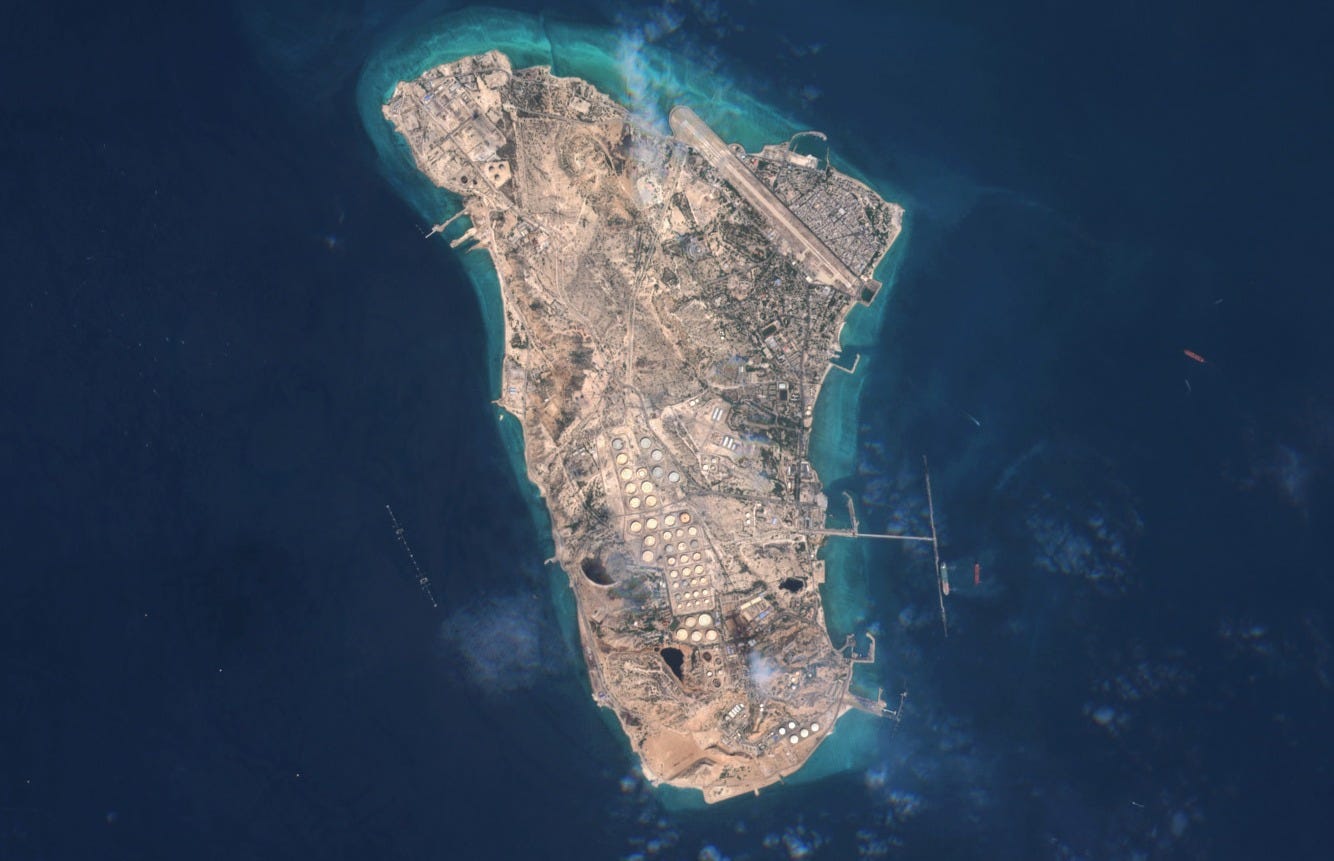
The problem: Dropping troops onto a little island that’s much closer to Iran than anywhere friendly might sound like a deathtrap. It’s also a hostage crisis in the making. Taking and indefinitely occupying a five-mile-long island means thousands of troops, not just a “small special ops” force. Parachuting in might be possible, but now they’re easy prey for drones, missiles, and artillery. Evacuation by sea (or an amphibious landing to begin with) may be even more dangerous than using aircraft; Iran’s military could saturate the area with sea mines, ambush with drone boats, and launch shore-based antiship cruise missiles from three directions at once, thanks to the shape of Iran’s coastline.
The strategic logic is off, too. Why would Iran’s leaders trade their sovereignty for a facility they already expect the Israeli air force to blow up over the course of the war? Likewise, Iranian troops whose families are being bombed probably won’t lay down their arms if they miss a paycheck. Iran’s defense industry is already largely self-sufficient thanks to US sanctions, and probably won’t lose access to components supplied by Beijing, which enjoys discounted Iranian oil.
This plan originated during Jimmy Carter's administration, and there are good reasons he never tried it.
3. Occupy Iran’s coast to reopen oil shipping lanes
The plan: The Trump administration is under pressure to get oil tankers moving through the Persian Gulf again after Iranian military attacks “closed” the Strait of Hormuz maritime chokepoint, sending gas prices skyrocketing. To protect oil tankers (plus the Navy ships he’s noncommittally offered as escorts) from shore-based anti-ship missiles, Trump could send troops to clear Iran’s coastline around the Strait. On Tuesday, Trump accused the Iranian military of mining the Strait, which could be true, or a pretense for military action there.
The problem: This mission combines the most dangerous aspects of the island seizure and nuclear site raid. An indefinite occupation – otherwise missile trucks could just get in position after US forces leave – but now on the Iranian mainland. Keeping missile trucks off of some 200 miles of Iranian coastline 24 hours a day would require a full-fledged invasion, possibly beyond even the 10,000 or so rapid-response forces at Trump’s disposal. This wouldn’t address the threat of drones, however, if the Strait of Hormuz is heavily mined, fully reopening shipping lanes could still take at least a month.
**
All of these ground operations risk high casualties while failing to accomplish their missions. That’s a feature, not a bug. Even if one of these operations met its objectives, troops in peril behind enemy lines demand resupply, evacuation, and revenge, which puts more troops in peril behind enemy lines, and so on. Keeping US troops engaged on the ground is the best way to ensure Trump can’t back out easily, which is exactly what Netanyahu, Lindsey Graham, and their ilk need to fracture Iran.
Bringing this war to an end requires recognizing it can still get much, much worse, refusing to fall for the promise of “small special ops raids,” and calling these courses of action what they are: a prelude to forever war.
Harrison Mann is a former US Army major and executive officer of the Defense Intelligence Agency’s Middle East/Africa Regional Center who resigned in protest of his office’s support for Israel’s war in Gaza under the Biden administration. He is currently with the group Win Without War.
The views expressed in this article are the author’s own and do not necessarily reflect those of Zeteo.
Check out more from Zeteo:


They never had an objective; strategy; contingency plan; possible outcomes. Jeezuz. Imbeciles running the country and putting all of humanity at risk. Who could have known? 🤦🏻♀️🤡👑
If the Iranians decide that they do need to get a nuclear bomb, who could blame them? Nuclear armed countries don't get invaded.