


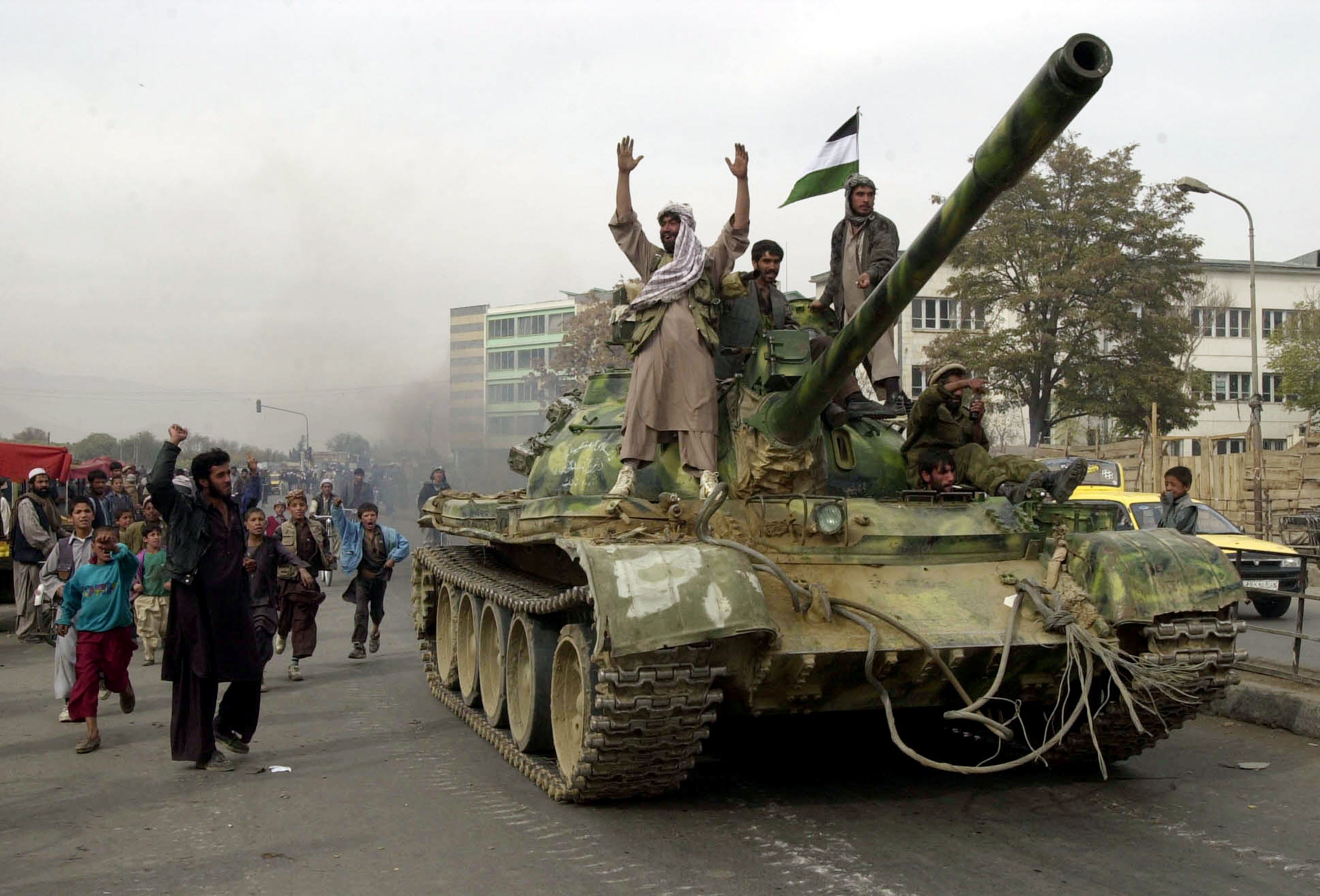
KABUL, Afghanistan – On the morning of Nov. 13, 2001, Abdul Maruf Ahmadi was a teenager standing on a street in Kabul, watching men shave off their beards. The Taliban had slipped out of the capital overnight after they were overthrown by the invading Americans and their Afghan allies. By dawn, the fighters of the so-called Northern Alliance were rolling in on pickup trucks, and music, banned for five years, was playing again from shopfronts. People cheered. Women who had been confined to their homes stepped outside and threw away their burqas.
“For many people, it was a relief. They have had enough of the repressions,” Ahmadi told me when I met him in Kabul this autumn. He is in his early 40s now, and he does not romanticize the Taliban, then or now. But he remembers how quickly the joy curdled.
Within days, Kabul and the rest of the country became a hunting ground. American aircraft dropped leaflets promising “wealth and power beyond your dreams” to anyone who handed over Taliban or al-Qaeda fighters. Men who had been nobody the week before picked up rifles and became bounty hunters. Anyone could be a “suspect”: a former Taliban conscript, a rival in a land dispute, a stranger with the wrong accent or the wrong beard. “Suddenly, everyone who spoke Pashto [the dominant language within the Taliban] became suspicious, also men who wore beards and turbans,” Ahmadi, a Tajik and native of Kabul, said.
A 2006 study by Seton Hall University’s law school of the Pentagon’s own records on Guantánamo detainees found that only a small fraction had been captured by U.S. forces. The large majority had been handed over by Pakistani authorities or the Northern Alliance, at a time when the US was paying bounties. In the north, forces loyal to the warlord Abdul Rashid Dostum packed surrendered Taliban prisoners into sealed shipping containers. Hundreds, perhaps thousands, suffocated or were shot on the way to Sheberghan prison, and were buried in the desert at Dasht-e-Leili.
This is the part of the story the anniversary leaves out. The fall of Kabul was sold as a liberation, and for many Kabulis that morning it felt like one. But Washington and its NATO allies did not hand Afghanistan to the people, to ordinary Afghans. It handed it back to the warlords whose civil war made the rise of the Taliban possible in the first place, and then spent two decades and well over $100 billion to keep them in power. What followed was a grim “War on Terror” that filled the dungeons of Bagram with the tortured and the innocent, an allegedly democratic state hollowed out by plunder, and a Taliban insurgency fed by both. Now the Taliban are back and the warlords are in exile, and many Afghans fear the same cycle of conquest and revenge is about to happen once more.