


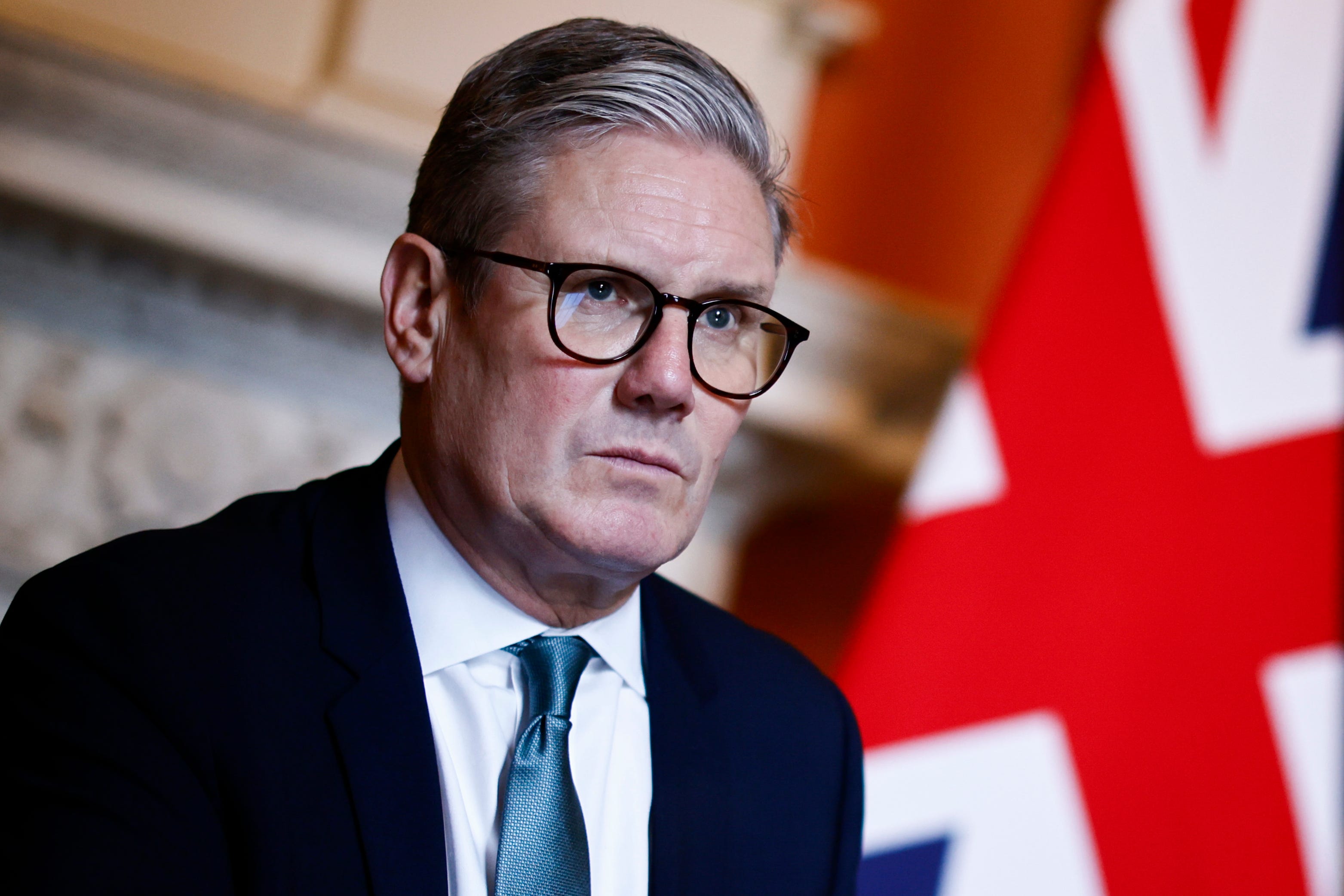
In July 2024, Sir Keir Starmer won a landslide victory as the leader of the UK’s Labour Party. His leadership returned the party to power for the first time in 14 years. His just-resigned chief of staff, Morgan McSweeney, was feted as a genius. McSweeney – correctly – was identified as the primary driving force and architect of both Starmer’s rise to power, first to win the leadership of the Labour Party, and then the country.
Their moment of triumph was, in fact, the moment it all began to fall apart. Their political project has been a disaster. Starmer is the least popular prime minister since polling began. The party is hemorrhaging support across the country and losing seats in areas it has held for over a hundred years. McSweeney has been forced out, made to carry the can for his role in recommending the appointment of the cartoon villain Peter Mandelson as the UK’s ambassador to the US despite overwhelming public evidence of Mandelson’s profound and long relationship with the late convicted sex offender Jeffrey Epstein. And just today, in a major blow, the High Court ruled that the Starmer government’s decision to proscribe Palestine Action as a terrorist group was unlawful.
It is just one of the many glaring ironies of the Starmer-McSweeney project that their momentary, historically contingent success has created a crisis so profound that it poses an existential threat to the viability of the Labour Party – a 100-year-old institution of working-class power that survived two world wars, and which somehow persisted despite the Tony Blair years of neoliberal capture and imperial misadventure. Starmer and McSweeney have achieved, in less than a decade, what a century of skullduggery on the part of organized capital could not.
Many pundits scratch their heads, confused at how it has come to this. Even dear old Mehdi (hi Mehdi!), while acknowledging Starmer’s woodenness, has pondered why Starmer is less popular than previous disastrous PMs like Liz Truss.
But there is no mystery, no riddle to unpick. The answer is straightforward: this project is hated – and is deeply vulnerable – because of the way it achieved power, and because of the way it has wielded it.
A Campaign of Dirty Tricks
The Starmer government traces its origins to 2017. McSweeney, a member and acolyte of the Labour Party’s most right-wing faction, had just witnessed the left-wing leader Jeremy Corbyn do a lot better than expected in the June 2017 General Election, despite relentless hostility from the mainstream press and most of his fellow Labour Party MPs and bureaucrats. McSweeney, who saw this as an emergency, joined an anodyne-seeming thinktank called Labour Together.
There, he launched a campaign he called ‘Operation Red Shield.’ Labour Together would pretend, in public, to be working to unite the Labour Party’s warring factions, using this deception as a ‘Red Shield’ to prevent the detection of its real plans. So, as Labour Together was convening earnest roundtables to discuss intra-party collaboration, McSweeney was seeking to destroy the left wing in the Labour Party.
To do so, McSweeney could draw on sizeable donations from millionaire and pro-Israel donors with connections to Tony Blair’s New Labour – donations that McSweeney failed to report in violation of the law to the Electoral Commission, which meant that absolutely no one knew he was in control of a huge pot of money that he was allowed to spend without scrutiny.
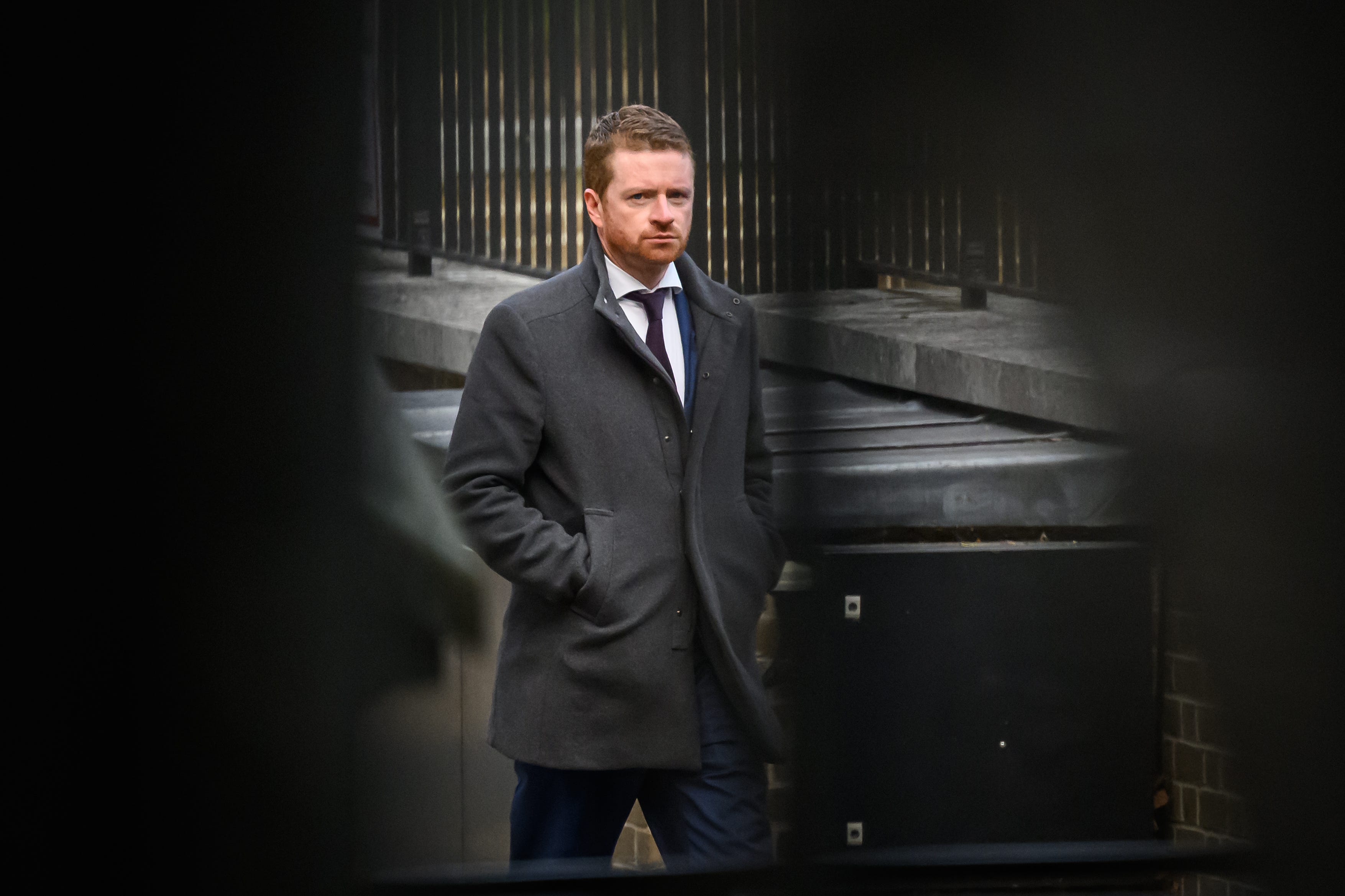
His methodology was an often-despicable campaign of dirty tricks, drawing from an arsenal of dark arts that would make his one-time mentor Mandelson proud. Its most profound intervention was to secretly and covertly inflame the so-called antisemitism crisis that would besmirch the reputation of the Labour left. Later, as Labour prepared for government, and then took power, this crisis, and McSweeney’s part in it, would play a deep and fundamental role in ensuring that Starmer’s Labour became complicit in the genocide in Gaza.
At the same time that he was undermining the left, his allies identified a pliant successor who could win over the Labour membership, eventually choosing Starmer. With vast amounts of data drawn from endless polling of the membership (and paid for with his undeclared donations), McSweeney incubated and curated Starmer’s leadership bid for the Labour Party. That leadership campaign was a brilliantly excellent exercise in premeditated misdirection, dishonesty, and bad faith. It was, in short, a well-executed fraud. Starmer pitched himself as a left-wing inheritor of the Corbynite tradition, an eco-socialist who would take on corporate power, save the environment, defend immigrants, and unite the party.
None of it was true, and the depth of the betrayal became almost immediately obvious. Starmer and McSweeney won power using the Trotskyist method of entryism, which allowed them to rule like Leninists. McSweeney immediately accrued huge personal power. His closest political allies soon dominated Starmer’s shadow cabinet and – most importantly – the party’s overpowered and repressive bureaucratic apparatus.
In October 2020, Jeremy Corbyn was booted from the party because of comments he made about the antisemitism crisis – a crisis driven in large part by McSweeney, in secret and with the help of a credulous media. Soon, the party was expelling or blocking candidates from its left-wing and even soft-left factions. McSweeney’s own tiny political faction – regressive on nearly every aspect of policy ranging from Israel to welfare to redistribution – took near total control.
In 2022, the Conservative Party’s Liz Truss replaced the oafish scandal-monger Boris Johnson as prime minister of the country. She lasted just 49 days after her libertarian-style mini-budget pushed the economy to the brink. From that moment, the Labour Party was almost guaranteed to win the next election.
A massive polling lead, favorable media coverage, and the promised glamour of a win-over-the-horizon supercharged the McSweeney project. His allies briefed the media that this moment offered a chance to fundamentally change the DNA of the Labour Party. And they did. Policy was yanked to the right. Left-wing candidates at all levels of the party were blocked and humiliated, often in insultingly stupid and vindictive ways. Long-running and locally loved candidates were excluded for liking tweets.
In one notorious case, the impressive Faiza Shaheen was blocked, after the 2024 General Election was called, for sharing a skit by comedian Jon Stewart about the tenor of debate on Israel-Gaza. In another case, a candidate was blocked for liking a tweet from Scottish leader Nicola Sturgeon. Sturgeon had tweeted that she had recovered from COVID. The candidate was told this was an act of supporting another political party.
At the time, the press cooed at how this newly recoded DNA was giving the Labour Party a dazzling glow of adult-like respectability. The party suddenly looked like it would fit in perfectly at a swanky salmon and scrambled egg business lunch in the city. Nice teeth, a good haircut, sharp suits, moisturized skin, and probably a metronomic biome. But, like all good body horrors, the short-term gain of good looks and social acceptance was bought with a long-term, systemic corruption. The party’s DNA would soon produce profound malignancies that threatened the health of the body politic.
One of those malignancies was the return of Mandelson to Labour politics.
A Party Made in Mandelson and McSweeney’s Image
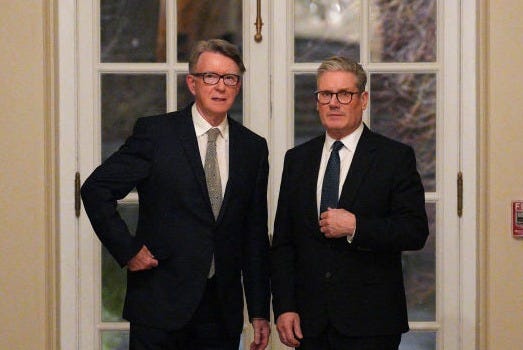
Mandelson and McSweeney had a long-running friendship, and Mandelson was famously supportive of McSweeney’s long-term political project. From at least 2021 onwards, Mandelson was increasingly brought into the fold to advise the McSweeney project, including on the minutiae of Party management. But with Mandelson comes decades of political and personal baggage, saddling the Starmer project with a deep well of gnarly scandal.
By the time of the 2024 General Election, the party had been genuinely remade in McSweeney and Mandelson’s image. The new intake of MPs was hand-picked by McSweeney and his allies. Their tiny faction, which had and has little to no popular support in the country, dominated.
By then, vast numbers of lifelong Labour Party supporters were already starting to smell a rat as the party navigated Israel’s response to the brutal October 7, 2023, attacks. Starmer famously told a radio interview that “Israel has that right” when asked if they could shut off water and electricity to Gaza – all of which would constitute war crimes. Starmer failed, for weeks, to even muster the most passing sympathy for the deaths of Palestinian civilians. Instead, Starmer backed Israel without any serious demur.
As with the Epstein revelations, Gaza has had a paradigm-shifting impact on British politics. It is striking how little the Westminster class really gets this, deep in their bones. Huge numbers of ordinary people – almost all of them long-time or natural Labour supporters – have witnessed civilians – children, grandparents, loving parents and uncles – eviscerated with our weapons. For many, it was the first time they came to understand that there was a deep well between a common, public morality, and the ideas of our political class – including the Labour Party.
But for McSweeney and his allies, this was good politics. They believed that the party needed to reach out to the ordinary Brit, the ‘hero’ floating voter, whose values were said to be incommensurate with the Labour Party’s so-called ‘activist’ base. It was, of course, a lie – there is great commonality between voting blocs that can be forged when a progressive party pursues a redistributive class politics.
By appalling the left – even by forcing out and humiliating totemic figures like the first Black female MP, Diane Abbott – the Labour Party could illustrate their transformation. ‘See,’ they could say. ‘Those lefties who love Gaza more than Britain hate us. Look at how they hold up signs decrying our racism. We must be doing something right.’
And so the Labour Party won in 2024, having barely increased their 2019 vote share. Many of its historical constituencies were already disquieted. In Holborn & St Pancras, Starmer’s own constituency in diverse North London, Starmer won a mere 18,800 votes: down from 36,600 in 2019 and 41,300 in 2017. His majority was cut by a former Labour member (and full disclosure, my very close friend and colleague), Andrew Feinstein, who ran on a pro-immigrant, anti-austerity, and pro-Gaza platform.
I was there on the night of Starmer’s victory. It was my first time watching British politics at work close-up. I loved it. There is something very special about watching hundreds of committed staff and volunteers piling up and counting votes; something both profound yet celebratory.
As Starmer took the stage, delivering a wooden speech, the results started circulating. There was a fevered, whispered discussion of just how much Starmer’s numbers had collapsed, even as his party was winning a Parliamentary landslide. Starmer explained to the assembled celebrants that he sought power to return government to an ethos of ‘service’ and to end a culture of self-entitlement. Lies!” somebody shouted from the crowd, to widespread laughter.
And it was a lie – which was soon laid bare to the public.
The Lie Revealed
Because Starmer and McSweeney had used the same dishonest methodology that they had pioneered in 2020 to win the Labour Party leadership conference. They produced a campaign and set of promises that would soon be revealed to have almost zero resemblance to how they would govern. The party’s manifesto was emblazoned with the word “Change”, as it yearned for an end to the Tory Party, its sleaze, and its austerity. What they got was more of the same.
Within weeks, Starmer was undermined by scandal because he had taken close to £100,000 in luxury freebies while Labour leader – more than every Labour leader since Tony Blair combined. At the same time, his soon-to-be-hated chancellor, Rachel Reeves, told the country they had discovered the cupboards were bare. To balance the books and fill a fiscal black hole, they cut allowances aimed at pensioners that allowed them to heat their homes in winter.
The following year, it announced huge cuts to welfare provisions. The axe was to fall particularly hard on people with disabilities. The government’s own impact assessment showed the cuts would push 250,000 into poverty, including 50,000 children. MPs who opposed this continuity of Tory austerity had the Whip removed, unable to stand as Labour MPs – their ritualized humiliation used to send a message to the bond markets and the business elite that the Labour Party would not tolerate such soft-headed emotionality that asks government to keep children, the disabled, and the elderly out of poverty.
A policy vacuum and generalized incompetence meant that Starmer increasingly sought help and assistance from the old Blairite mandarins. Mandelson was appointed US ambassador in late 2024, setting the scene for an almighty scandal a year later as the Epstein files were released. Government decisions, driven as much by lobbyists and well-heeled technocratic think-tanks as by a sense of mounting panic, pushed the government to import fresh malignancies from abroad. Soon, the US-based technology and AI company Palantir was getting government contracts.
Soon, the government was announcing stark attacks on civil liberties.
Soon, it was expanding live facial recognition systems across police forces (to be delivered, in part, by Israeli companies who did AI processing for similar systems in Gaza).
Soon, it was introducing new restrictions on the right to protest, plainly aimed at blunting the large, weekly pro-Gaza protests in London.
Soon, it was proscribing Palestine Action, which used direct action to vandalize Israeli-linked weapons factories in the UK, as a terrorist organization.
Soon, it was arresting more than 2,000 citizens, including vicars, the blind, the disabled, and the elderly, for simply holding a sign saying “I support Palestine Action.”
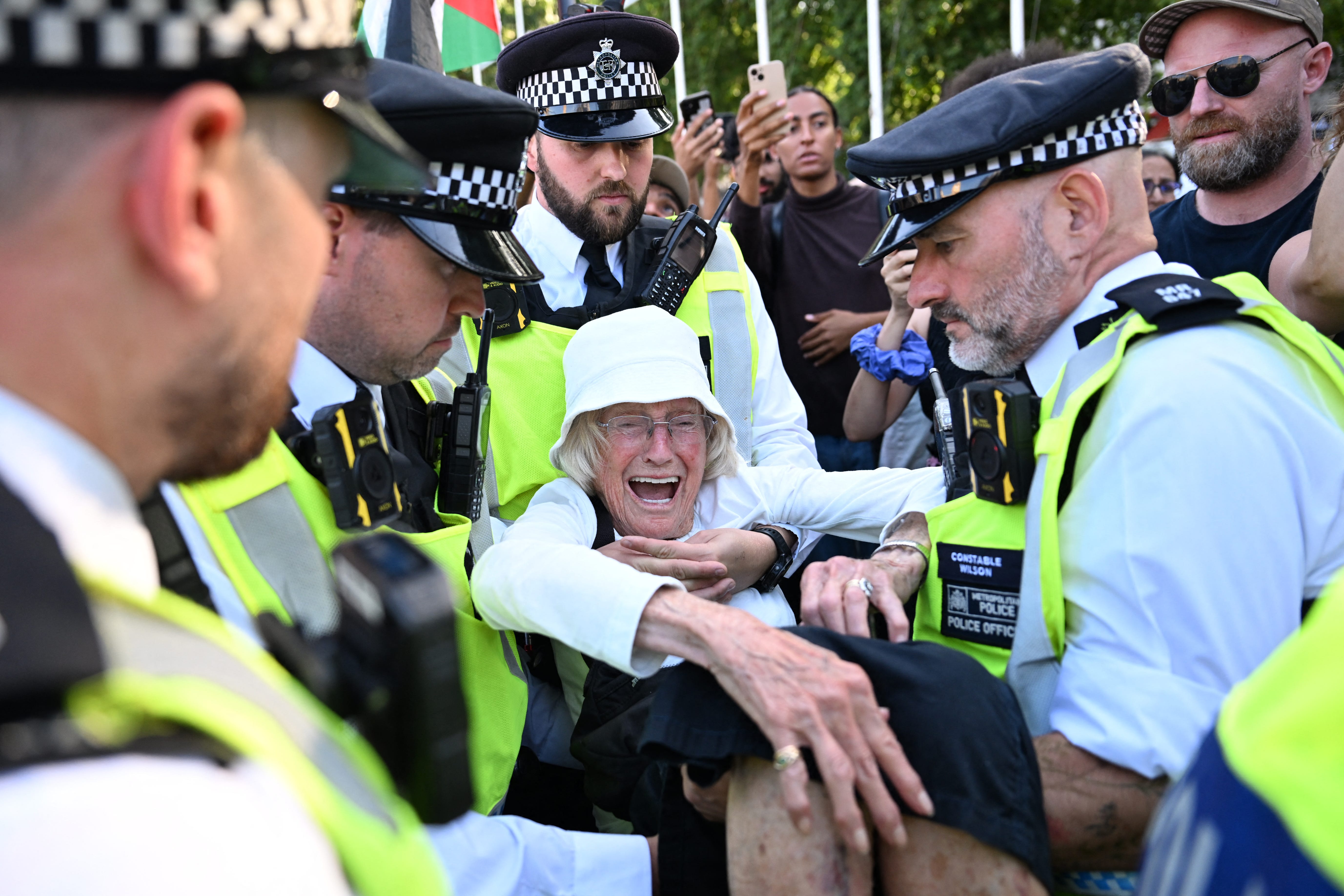
Soon, it was saying that these peaceful protesters would be charged with terrorist offences with a potential 14-year prison sentence.
Soon, the Home Secretary Shabana Mahmood, a long-time ally of McSweeney, would announce new and draconian limitations on the rights of legal migrants and asylum seekers, which included plans to deport children of asylum seekers who had been born and raised in the country if their parents lost their – newly temporary – asylum status.
Soon, David Lammy, the justice minister, would announce a plan to scrap jury trials for all but the most serious offences, attacking a fundamental and ancient constitutional right for people to be tried by their peers. Many of those jury trials had returned not-guilty verdicts for pro-Palestinian and climate activists, including those associated with Palestine Action.
Soon, Starmer would be denying that Israel was committing a genocide andhosting Isaac Herzog at Number 10, despite the Israeli president being cited by the International Court of Justice as making plausibly genocidal statements.
Soon, the UK government would approve £124 million ($164 million) in arms exports to Israel between October and December 2024 – despite saying it wanted to cut some arms sales to a state violating international law. It was, at the time, the largest volume of arms exports approved by the government for years.
Soon, the government would be announcing an ever-tightening web of tax increases on small businesses and ordinary people, even as it was, at the time, ruling out even marginal tax hikes for corporations and the rich.
Soon, their time would be up as they were overtaken by scandal and public distaste.
The catalyst was Peter Mandelson, one of the most profound malignancies of the New Labour Project. The new Epstein revelations revealed the depths of Mandelson’s long-running – and potentially illegal – relationship with the world’s most notorious pedophile. As I type, the police are probing files taken in raids from Mandelson’s properties. But the Epstein revelations simply added color and depth to what was already long-known, and which Starmer and McSweeney had chosen to ignore: Mandelson was besties with the world’s most famous nonce, to paraphrase a memorable intervention from Your Party MP Zarah Sultana.
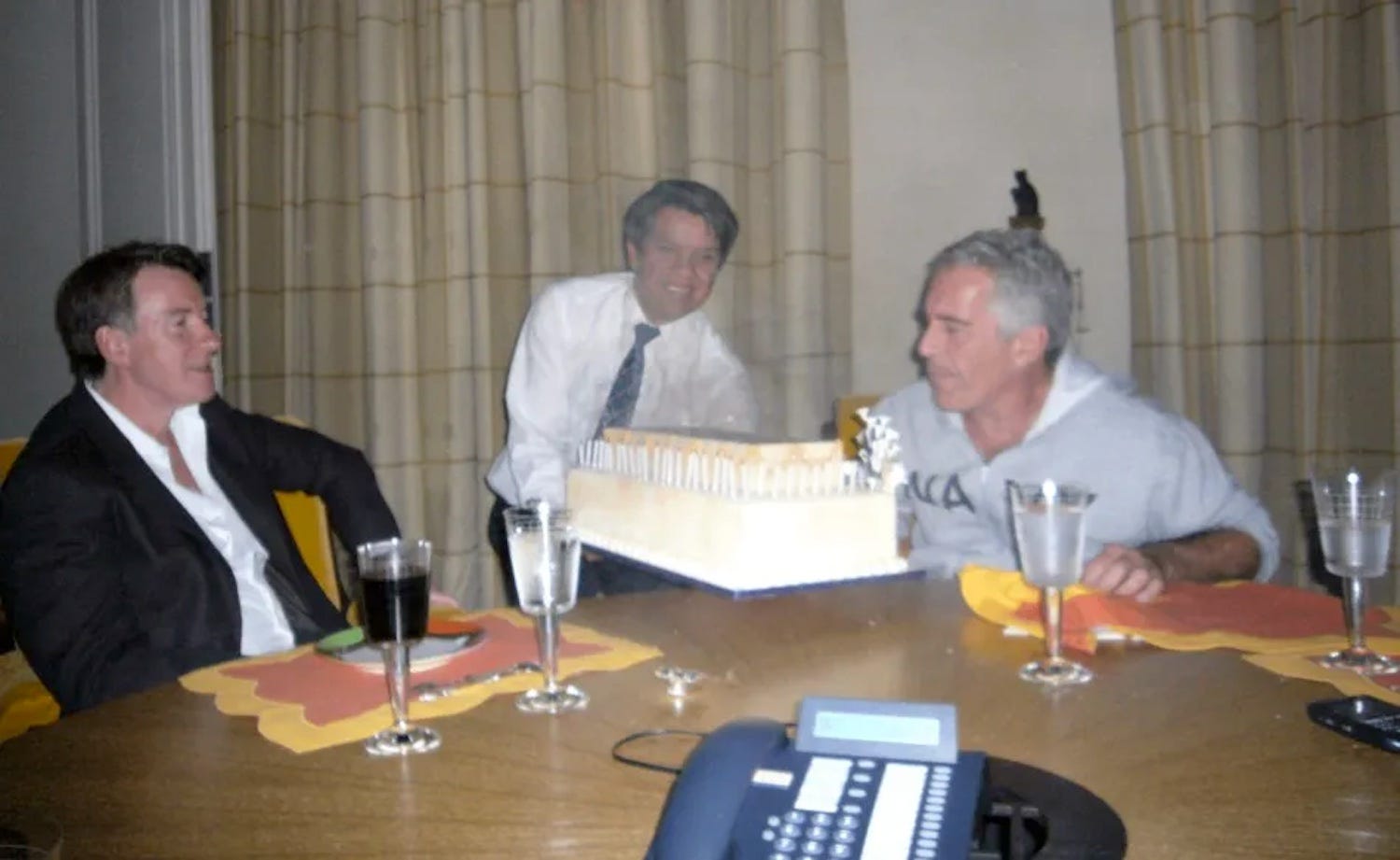
The scandal took out a range of Starmer’s closest political allies, like McSweeney. It looks to have inflicted terminal damage on a project that was already, prior to these new sordid scandals, widely loathed, disliked, and distrusted, and which had alienated vast swathes of Labour’s support base. They are now seeking representation and vindication elsewhere.
No One to Lead Labour Out of Crisis
Now, in this moment of crisis, it has been revealed that the McSweeneyite transformation has left the cupboard bare. There is no one in the cabinet with the gravitas, political standing, or basic public rapport to lead the Labour Party out of crisis. There are only the profoundly mediocre soldiers of the McSweenyite revolution, now tainted by association with him and Mandelson. Starmer, already long-understood to be little more than a coiffed figurehead for a project he never controlled and barely comprehended, casts about in panic. It is almost enough to make one feel sorry for Starmer, which is why the political pundit class now wrings its hands about how decent he really is, even if he is not very good at politics.
But it’s bullshit. There is no decency to be detected in this political project, and none to be detected in a leader who has revelled in humiliating fellow party members for minor infractions as he welcomed in the bestie of the world’s most notorious paedophile and sex trafficker.
For now, Starmer holds on. No one expects it to be for long. Who emerges to replace him is unclear. And perhaps, in the long term, it doesn’t really matter. Because the real struggle of our times – against an emerging, muscular far-right that has profited handsomely from Starmer’s disastrous leadership – will be fought outside, and probably in spite of the Labour Party.
Paul Holden is an investigative journalist focusing on grand corruption and state capture. His book, ‘The Fraud: Keir Starmer, Morgan McSweeney and the Crisis of British Democracy,’ was published in October 2024. He is director of investigations at Shadow World Investigations and a network fellow at the Safra Centre for Ethics at Harvard University.
The views expressed in this article are the author’s own and do not necessarily reflect those of Zeteo.
Check out more from Zeteo:


Fascinating review of British politics! Thank you
Thank you for providing the historical background and connecting the dots. Fascinating.