

The Great Betrayal: FIFA’s Outlandish World Cup Ticket Prices
With the cheapest ticket to the final more than $4,000, average soccer fans are being priced out – ensuring World Cup 2026 won’t be the global tournament it labels itself as.

FIFA has gravely betrayed the very fans who made it the global juggernaut it is now. The startling ticket prices for the upcoming World Cup have left soccer fans across the world not only feeling disappointed, but also finding themselves priced out entirely from the beautiful game.
Football Supporters Europe declared the prices a “monumental betrayal of the tradition of the World Cup.” Meanwhile, England’s Football Supporters Association called the astonishing costs “a laughable insult to your average fan.” These sentiments have been echoed by supporters worldwide after being unable to support their teams live at the four-yearly tournament. I, too, am one such fan. I have attended the last two World Cups and, after experiencing the global celebratory atmosphere, was hoping to attend my third. Seeing the extortionate price hikes, I’ve found myself let down by the sport I love.
The prices announced last Thursday vary depending on the stage of the World Cup and the subjective popularity of a team playing, which means England matches, for example, are more expensive than Scottish ones.
Despite this, the cheapest ticket for the World Cup final, set to take place at New Jersey’s MetLife Stadium, has been priced at an eye-watering $4,185 and, ironically, labelled the “Supporter Value Tier.” Some tickets have managed to find their way onto resale platforms and are being sold for more than $100,000.
Such high prices are in part due to the dynamic pricing policy FIFA has implemented for the first time. The policy means FIFA has not used set ticket prices, but instead it uses its own variable pricing formula to work out the maximum price it can get away with, a capitalistic strategy mirroring Adam Smith’s invisible hand. FIFA will also facilitate ticket resales on its platform with uncapped prices. Normally, these tickets are resold at face value, but this year, resellers can charge whatever they see fit, a source of glee for FIFA, as it will recoup a further 30% of these sales.
Inclusive for Whom?
The 2026 World Cup has been expanded to include 48 teams compared with 32 at the previous tournament. Defending this expansion, FIFA President Gianni Infantino explained, “Football is more than Europe and South America. Football is global.” In reality, this expansion has resulted in 40 more matches being played in 2026 than the previous World Cup in Qatar, with each of these matches reportedly averaging a 500% price hike compared to tickets in Doha, it is far more conceivable that the decision to host a larger tournament was more closely linked to a larger bottom line than accessibility for nations outside of Europe.
Haiti, for example, having qualified for this World Cup for the first time in decades, finds its opening game in Massachusetts priced at at least $180. Being one of the world’s poorest nations, the average income from the Caribbean island is approximately $214 per month. Not to mention the price of flights, accommodation, and visa fees, the expanded FIFA tournament has done little to be inclusive for the average Haitian supporter but has done wonders for increasing profits for an organization marred by corruption scandals.
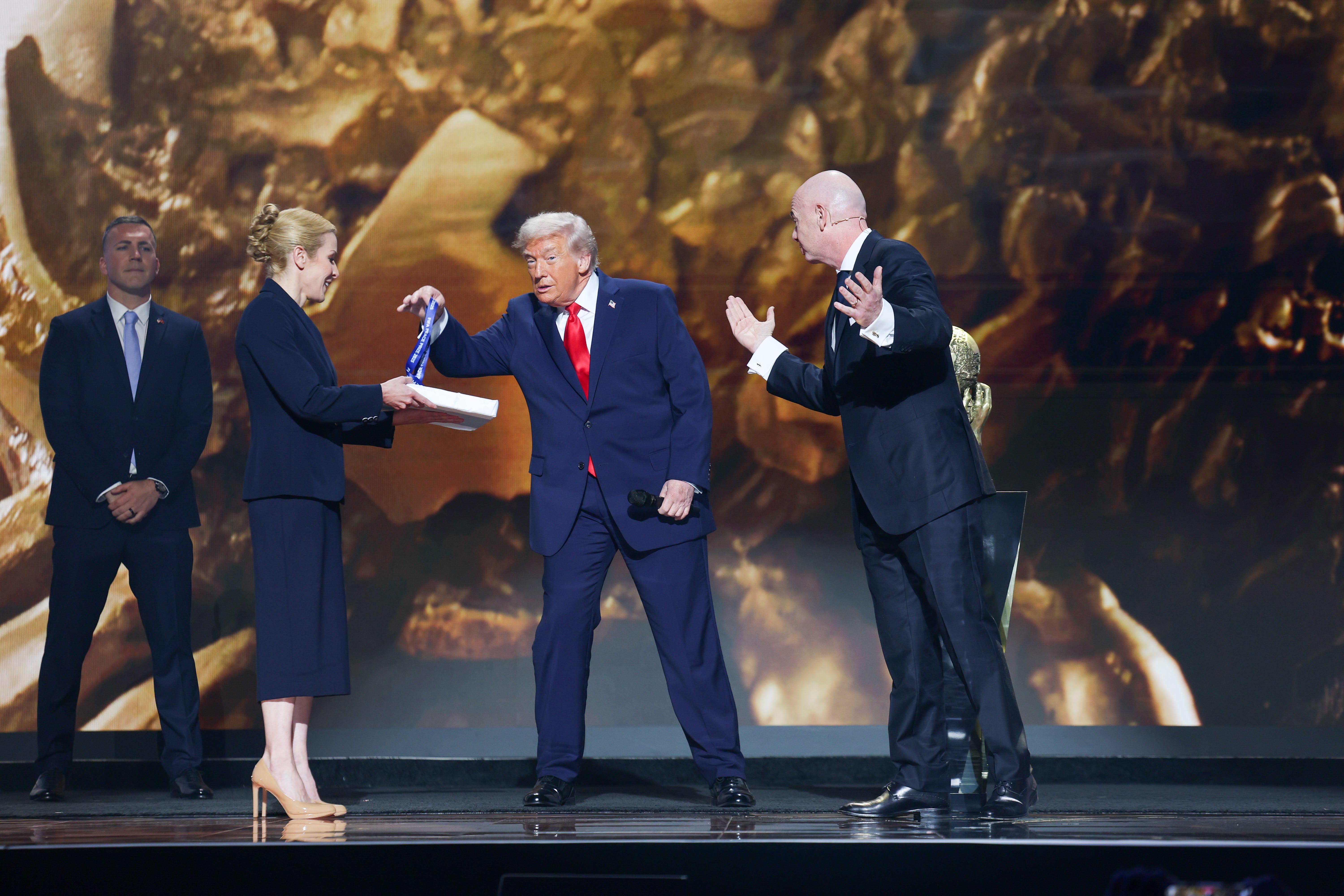
Most recently, FIFA under Infantino, who has been criticized over his close relationship with Donald Trump, created a prize unrelated to soccer, the FIFA Peace Prize, to appease a bitter US president after he missed out on the Nobel Peace Prize. FIFA officials have also faced a myriad of bribery allegations, including the late US FIFA delegate Chuck Blazer, who was found guilty of money laundering, tax evasion, and bribery in relation to FIFA duties.
To maintain a moral superiority over the other nations, including the Arab world, Western-centric media focused on corruption and human rights allegations for years in the lead-up to the Qatar World Cup. The BBC opted to boycott airing the 2022 World Cup opening ceremony, instead broadcasting a segment on migrant workers and gay rights in the Gulf nation.
Little has been mentioned of US human rights abuses, from the arrest and attempted deportation of legal residents to its support of a protracted genocide in Palestine. Similarly, it was Qatar that was scrutinized for its allegedly high ticket prices during the 2022 tournament. The narrative fit into the Western stereotype of evil Arab Sheikhs fiendishly taking over the world with money. The prices in Qatar were later found to be cheaper overall than the World Cup in Russia in 2018, and when compared with the 2026 World Cup, the prices were a bargain.
The US previously hosted a World Cup in 1994. Prices back then ranged from a humble $24 to a maximum of $475. Accounting for inflation over the 30 years, that should reflect a range of around $50 to $1,000. FIFA has instead opted to increase prices by over 400% higher than inflation, and are extravagantly higher than the $21 original price highlighted in the US, Mexico, and Canada’s bid documents for 2026.
Betraying the Magic of the Game
There is a certain magic of the World Cup that enchants even the most sports-averse individuals to be glued to the drama on their television sets, passionately supporting players they’ve never heard of, playing for countries they’ve never visited. The World Cup truly is a globally unifying occasion. FIFA has instead opted to support the growing wealth inequality and make it a sport for the rich elite. A new world where many struggle to juggle multiple jobs in a cost-of-living crisis, while others profit from their hard labor.
Football (soccer) originated in the European Middle Ages as an anti-establishment sport for the working class. Priced out of other sports like tennis and rugby, football could be played anywhere. This accessibility has made it the most popular sport in the world, with over 1.5 billion people tuning in to watch the World Cup final in Doha, compared with only 127 million watching this year’s Super Bowl. Globalized football has veered far from these working-class roots, instead embodying the worst of uncurbed capitalism.
Your average soccer fan won’t be at the stadiums after being betrayed by the outlandish price tags. The magic that makes the beautiful game, as Pelé affectionately called it, is the passion of the supporters, their chants, their celebrations, as well as their tears. Corporate ticket holders – and wealthy buyers – won’t be bringing that atmosphere with them. World Cup 2026 won’t be the global tournament it labels itself as.
Ahmed Twaij is a multimedia journalist and film director based in London. His documentary directorial debut, ‘Mighty Penguins,’ premiered at the Tribeca Film Festival and won a Grierson award, as well as being longlisted for a BAFTA. He is currently developing a number of other documentaries. He has worked in written, audio, and visual journalism, published in numerous outlets worldwide, including NBC, The Guardian, the New York Times, CNN, and more.
The views expressed in this article are the author’s own and do not necessarily reflect those of Zeteo.
Check out more from Zeteo:


To any soccer fan out there I can only say this,” do not buy a ticket to any of the games ".
FIFA can have their own rich people party and then we’ll know how many rich people there are “supporting “ the people’s sport. FIFA is its own Mafia. Then, lets have a look see how much this will inspire the players. Trust me, the players will be on our side Watch it on the tube, which will be a ripoff also but at least we can do it at home or with friends… that gives us OUR games. They can keep theirs.
Football is great, but fuck FIFA