


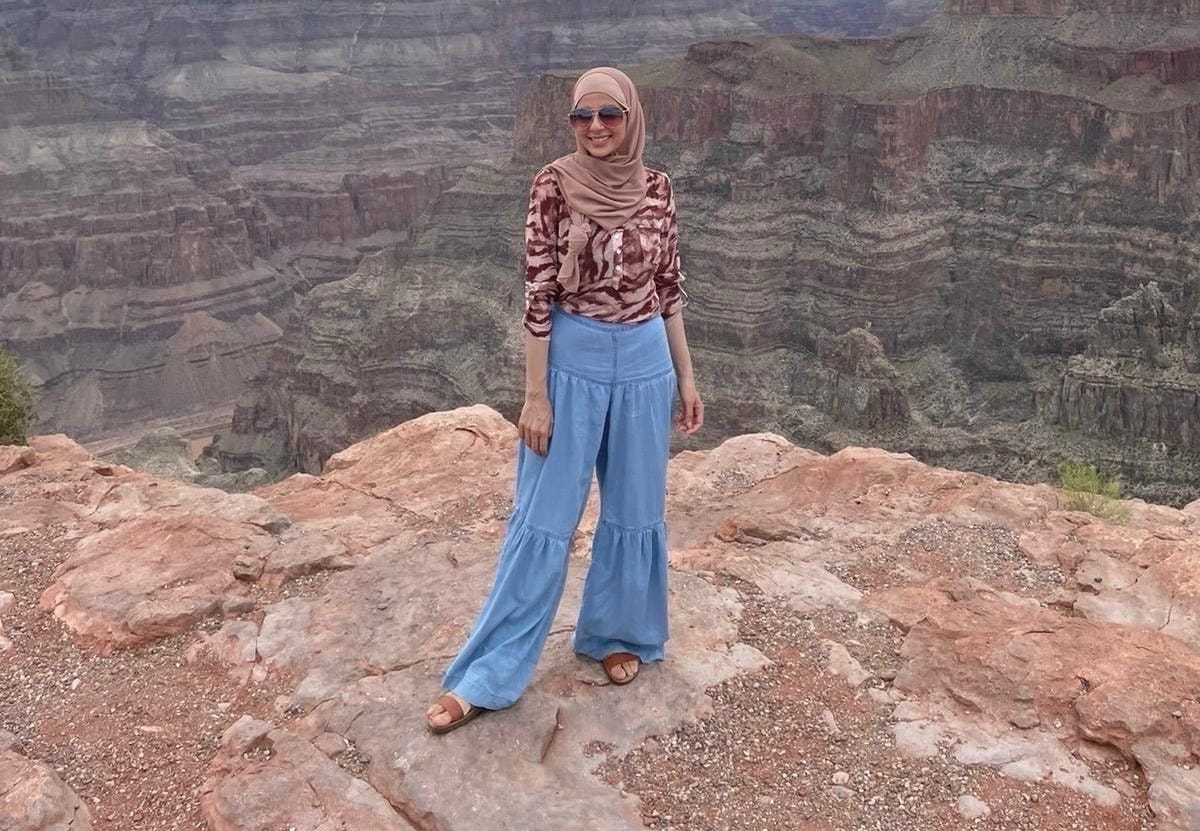
On Friday, after nearly a year in ICE detention, Leqaa Kordia woke up in a hospital.
She was sent there after reportedly fainting and having a seizure. For days, her family and legal team didn’t know where she was or her physical condition. They weren’t even informed about what exactly happened that sent her to the hospital.
“Not knowing what hospital [Leqaa] was in, what her condition was like, whether she was even alive or dead, was agonizing,” Kordia’s mother said in a statement to Zeteo provided by her team. “Like any other mother, I was worried sick.”
On Monday, Kordia was discharged from the hospital. And sent back to detention. Her friends and family who spoke to Zeteo worry that her health will only continue to deteriorate.
She is the last Columbia University protester in ICE detention.
Last year, days after the Department of Homeland Security abducted Mahmoud Khalil, they also took Kordia – during what she thought was a routine immigration check-in. She, like Khalil, had protested against Israel’s genocide of Gaza. But unlike Khalil, and others associated with the Columbia student protests, she has remained in detention.
An Ambush
Kordia, 33, is Palestinian. She was born in East Jerusalem. Her parents divorced when she was young, leaving her and her brother to stay with their father in Ramallah, while her mother moved to the US and remarried, later becoming a citizen. In 2016, Kordia came to the US to visit her mother in New Jersey. She enrolled in English language programs on an F-1 student visa. Her mother then filed a petition to get her permanent residency, which was approved in 2021. As she waited to obtain a green card, Kordia left school, telling The Barbed Wire: “I dropped out of school thinking that, ‘Now I have a lawful status in the United States.’ I thought that was enough for me to stay legally. Unfortunately, I overstayed, but not intentionally.”
Still, in the following years, Kordia lived an American life. She worked as a waitress and took care of her mom and her half-brother, who is autistic.
Then 2023 came. After Israel’s genocide of Palestine began, Kordia felt she had to stand up for her people. As of today, Israel has killed nearly 200 members of her extended family.
In April 2024, Kordia joined a demonstration outside Columbia University’s gates, in solidarity with the Columbia students who had launched an encampment protest against US universities’ complicity in Israel’s genocide. Kordia was caught up in a police sweep of the demonstration, arrested, and shuttled away to the police station. The charges against her were later dropped.
Then came 2025. On March 8, plainclothes DHS agents detained Mahmoud Khalil, a leader of the Columbia University protests.
Five days later, Kordia went to an ICE field office in Newark, New Jersey, for what she thought was a routine interview. It turned out to be an ambush. She was placed in an unmarked van and shipped over a thousand miles away, to Prairieland Detention Center in Alvarado, Texas.
“It is a privilege to be granted a visa to live and study in the United States of America,” DHS Secretary Kristi Noem said at the time. “When you advocate for violence and terrorism that privilege should be revoked, and you should not be in this country.”
The language was notable.