


They said Washington lacked the competence to run it, that the nation couldn’t afford it, that it would impoverish the working class.
A “cruel hoax,” declared the Republican Party’s leader.
That’s how opponents denounced the creation of the Social Security system, which has become the most successful government program in American history. In 90 years of operation, Social Security has cut the poverty rate among senior citizens by four-fifths. It has never failed to deliver promised benefits, though Congress has expanded eligibility and benefit levels.
The same swing-and-miss hysteria returned in full force against the creation of medical insurance for the elderly. Anti-government conservatives cast Medicare as a step toward totalitarianism that would degrade medical care and damage the economy.
Wrong again.
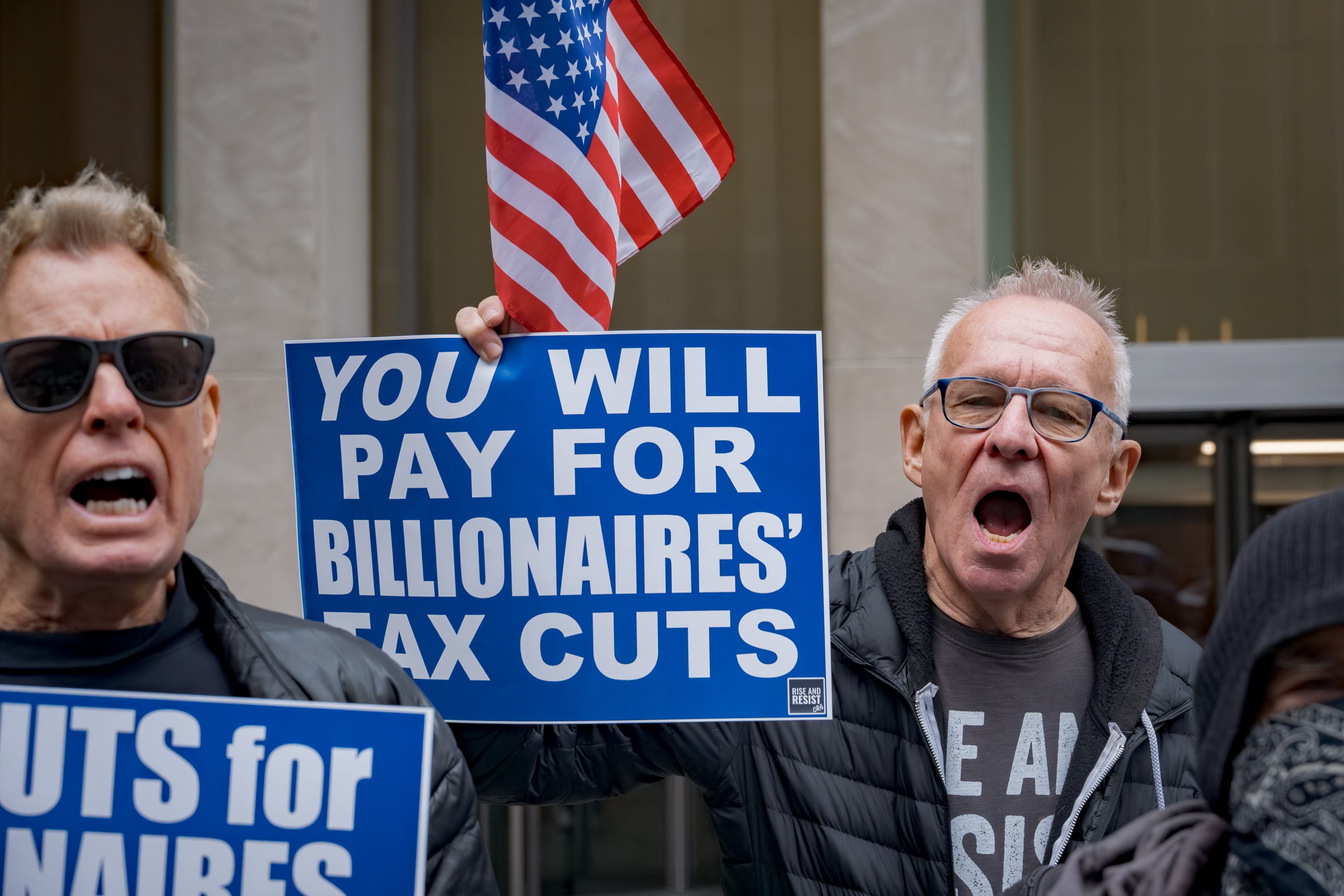
The pattern, as a recent series of analytical papers makes clear, repeats again and again. The party that loathes government decries programs to solve social problems as dangerous, costly, and futile. Which leaves cutting taxes as its prescription for any ailment – a prescription that consistently fails to deliver.
The papers come from Co-Equal, an organization that seeks to fill a gaping hole in Washington policy discussions: rigorous assessment of how actual results of government policy compare to earlier political predictions. From Social Security to the Affordable Care Act, from the Reagan tax cuts to the Trump tax cuts, their conclusions were consistent: doomsaying about major new programs, and cheerleading about reducing tax rates, did not pan out.
Co-Equal is a non-partisan organization created by Democratic veterans of Congress and presidential administrations, who see government programs as tools for helping people. They’ve sought GOP participation. But modern Republicans see programs as pointless expenses, which is why party leaders will neither read nor learn from these analyses.
Social Security and Medicare have become so embedded in American life that neither needs defending. Even the most dogmatic of anti-government conservatives have lost hope of eliminating them.
But the 21st-century Affordable Care Act received the same treatment. Despite a hailstorm of Chicken Little warnings, Obamacare did not bankrupt the country, kill jobs, destroy employer-provided health insurance, or “collapse upon itself.” Congressional Republicans tried to repeal it at Donald Trump’s behest, they flinched; it was helping too many people.
At the same time, Republicans put on their fright wigs about Wall Street regulation, too. Despite the financial crisis that triggered the worst downturn since the Great Depression, Republicans claimed tougher oversight would harm the economy, increase market volatility, inhibit borrowing, institutionalize bailouts, and create a “super-bureaucracy” in the guise of helping consumers.
So what followed the passage of the Democratic bill known as Dodd-Frank?
The longest streak of monthly job growth in American history, expanded small business lending and consumer credit, and reduced bank failures. The Consumer Financial Protection Bureau (CFPB) obtained $21 billion in compensation for 200 million Americans preyed upon by financial firms.
A rare major Republican initiative also proved its worth. The President’s Emergency Plan for AIDS Relief – George W. Bush’s push to diminish suffering and death in sub-Saharan Africa – did exactly that. Passed by large bipartisan majorities in Congress, PEPFAR has saved an estimated 25 million lives, prevented millions of HIV infections, and assisted millions of children orphaned by AIDS.
“It transformed HIV from a death sentence into a manageable chronic condition across much of Africa,” the Co-Equal analysis concluded.
Such successes have not tempered the increasing zealotry of Trump 2.0. Before bipartisan opposition intervened, Elon Musk’s reckless “Department of Government Efficiency” sought to slash PEPFAR funding. It crippled the CFPB, which assisted so many in the GOP’s working-class base. At a Cabinet meeting this week, Agriculture Secretary Brooke Rollins declared she feels “gratitude and joy” from cutting food stamp benefits.
The modern GOP, relentlessly, seeks to reduce the tax burden on the most affluent Americans. They, not the working-class, control Republican policy-making.
Because describing it that way doesn’t win votes, Republicans use better-sounding pitches. Tax cuts will lift average families, create well-paying jobs, and boost economic growth - enough to increase, rather than decrease, government revenues.
Their free-lunch claims have fallen flat. Republicans’ tax cuts have expanded income inequality and federal borrowing. The strongest sustained growth of recent decades occurred in the late 1990s after Democratic President Bill Clinton raised taxes.
Earlier tax hikes by former President George H.W. Bush had begun the hard work of reducing budget deficits. For that, anti-tax fanatics made him a Republican pariah.
Job creation under recent Democratic administrations has far outpaced that of Republican counterparts. For the last half-century, every Democratic president left office with a lower deficit than he inherited as a share of the economy; every Republican president departed with a higher deficit.
These facts don’t move Republicans now in power. Their patrons are too demanding, their ideology too calcified, their MAGA faithful too compliant, their information sources too detached from reality.
But reality can shove them out of power.
Americans outside the MAGA bubble know that Trump, while enriching himself in office, has not reduced the prices they pay. They know that jobs have grown less plentiful. They know his deportation thugs keep brutalizing peaceable immigrants because they see the videos. They know he isn’t focused on them.
How many know?
In a Gallup Poll published last week, 60% disapproved of Trump’s performance as president. Numbers like that can teach a political party a lesson, even if it doesn’t want to learn.
John Harwood is the former chief Washington correspondent for CNBC and White House correspondent for CNN. He has interviewed every president from George H.W. Bush to Joe Biden. Sign up for ‘The Stakes with John Harwood’ to get all of his columns in your inbox.
The views expressed in this article are the author’s own and do not necessarily reflect those of Zeteo.
Check out more from Zeteo:


I commonly ask the following question, online and IRL...
Can you name any legislation...
1) Either proposed or supported by the GOP,
2) For the purpose of assisting working-class, middle Americans,
3) Anytime in the past 75 years?
No one can (with one exception), but MAGA simple does not care, as long as Black and brown people are being brutalized. And they make that clear.
(The two I'm aware of are the ADA (Americans with Disabilities Act), which the GOP clearly could not possibly be less concerned about now, and Earned Income Tax Credit. (EITC). And this ignores the reality that DEMS have pages of such legislation, and the GOP actively fought against almost every single one including electrical power for rural Americans, and mail delivery for the same huge GOP demographic.)
Repugncans consider “greed is good” an understatement. Greed is god.