


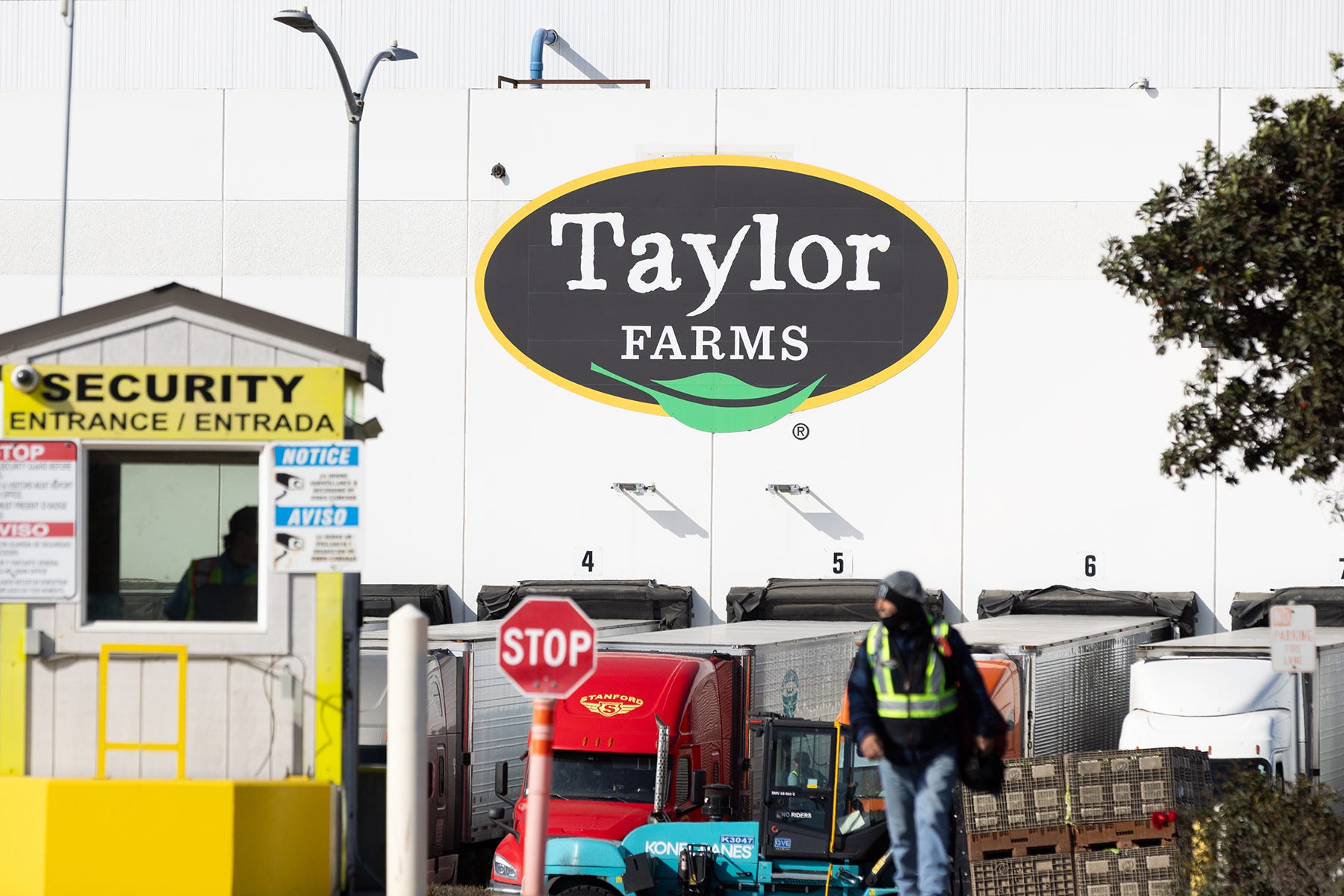
Taylor Farms – the produce giant whose lettuce has been recalled in connection with the “explosive diarrhea” outbreak sweeping the United States – and its lobbying groups have for years worked to end or delay programs meant to help the government better test for foodborne diseases and prevent their spread, according to records reviewed by Zeteo.
Over a decade ago, Taylor Farms and big agricultural industry groups successfully lobbied to defund a significant foodborne illness testing program that was responsible for some 80% of U.S. public produce pathogen testing.
More recently, under Donald Trump’s second administration, a lobbying group that Taylor Farms belongs to successfully pushed to delay a rule that would have helped the government more quickly trace contaminations back to specific locations – which could have helped prevent the illness at hand, cyclosporiasis, from proliferating into thousands of cases nationwide.
The Trump administration moved to delay the tracing rule last year. Several days later, Taylor Farms donated $1 million to a pro-Trump super PAC. That summer, Taylor Farms contributed another $1 million to House Republicans’ super PAC, and a few months later, Republicans in Congress enshrined the rule delay as part of a funding bill.
Separately, legal complaints and employee accounts suggest that Taylor Farms’s facilities have been host to unsanitary workplace conditions, with staff working long hours and receiving sparse breaks – conditions that experts say could foster the spread of foodborne illnesses.