


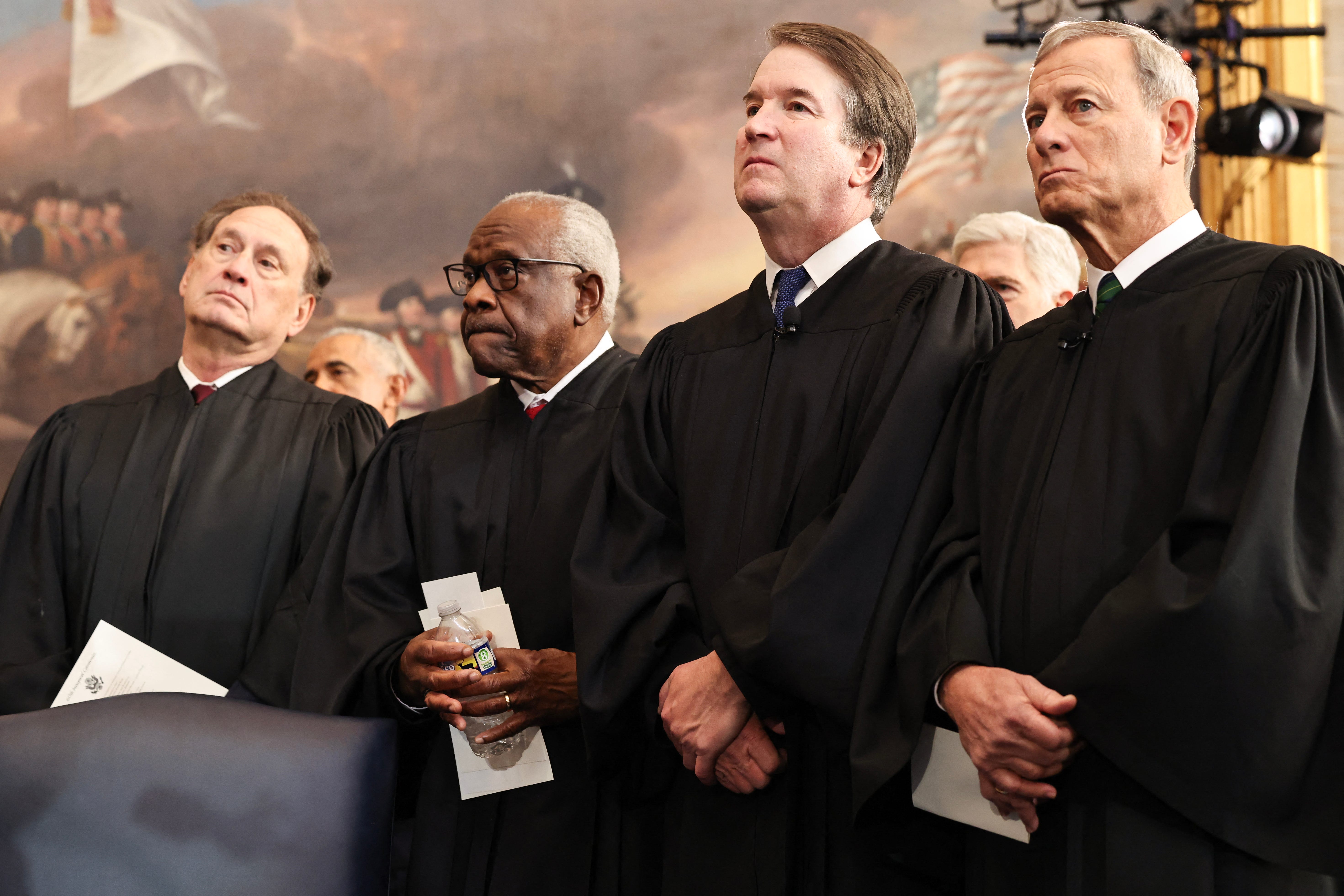
The US Supreme Court gutted a key provision of the Voting Rights Act in a landmark ruling Wednesday, paving the way for Republicans to redraw maps in their favor and weaken the political power of Black and brown communities across the US.
In the 6-3 decision, the court effectively weakened Section 2 in the Voting Rights Act, which bars racial discrimination in voting. The 1965 law, a fixture of civil rights doctrine, has helped enforce the 15th Amendment, which prohibits the government from denying citizens their right to vote on the basis of race.
On Wednesday, the Supreme Court rolled back the clock.
“Today’s decision renders Section 2 all but a dead letter,” Justice Elena Kagan wrote in her dissenting opinion, joined by Justices Ketanji Brown Jackson and Sonia Sotomayor, warning that the consequences of the ruling will likely be “far-reaching and grave.”
The ruling stems from a yearslong tug-of-war over Louisiana’s congressional map. In 2022, civil rights groups sued the state over the lack of representation. Only one of six congressional districts at the time was Black-majority, even though Black residents made up about one-third of Louisiana. The state then adopted new maps that included two Black-majority districts – while still protecting the seats of powerful Republican incumbents, including Speaker Mike Johnson. White voters then challenged the new map in a lawsuit, arguing that it was unconstitutional to draw districts based on race. A three-judge panel sided with the white voters.
Justice Samuel Alito called the new map with two Black-majority districts an “unconstitutional racial gerrymander” in Wednesday’s opinion.
The ruling’s impact will stretch beyond Louisiana, after the Supreme Court effectively expanded the case to include a broader challenge to parts of the Voting Rights Act itself when it heard arguments last year.
Kagan said the opinion will “effectively insulate any practice, including any districting scheme, said by a State to have any race-neutral justification. That justification can sound in traditional districting criteria, or else can sound in politics and partisanship. As to the latter, the State need do nothing more than announce a partisan gerrymander.”
She warned that if other states follow Louisiana’s lead, Black and brown Americans there “will no longer have an equal opportunity to elect candidates of their choice,” and minority representation in government “will sharply decline.”
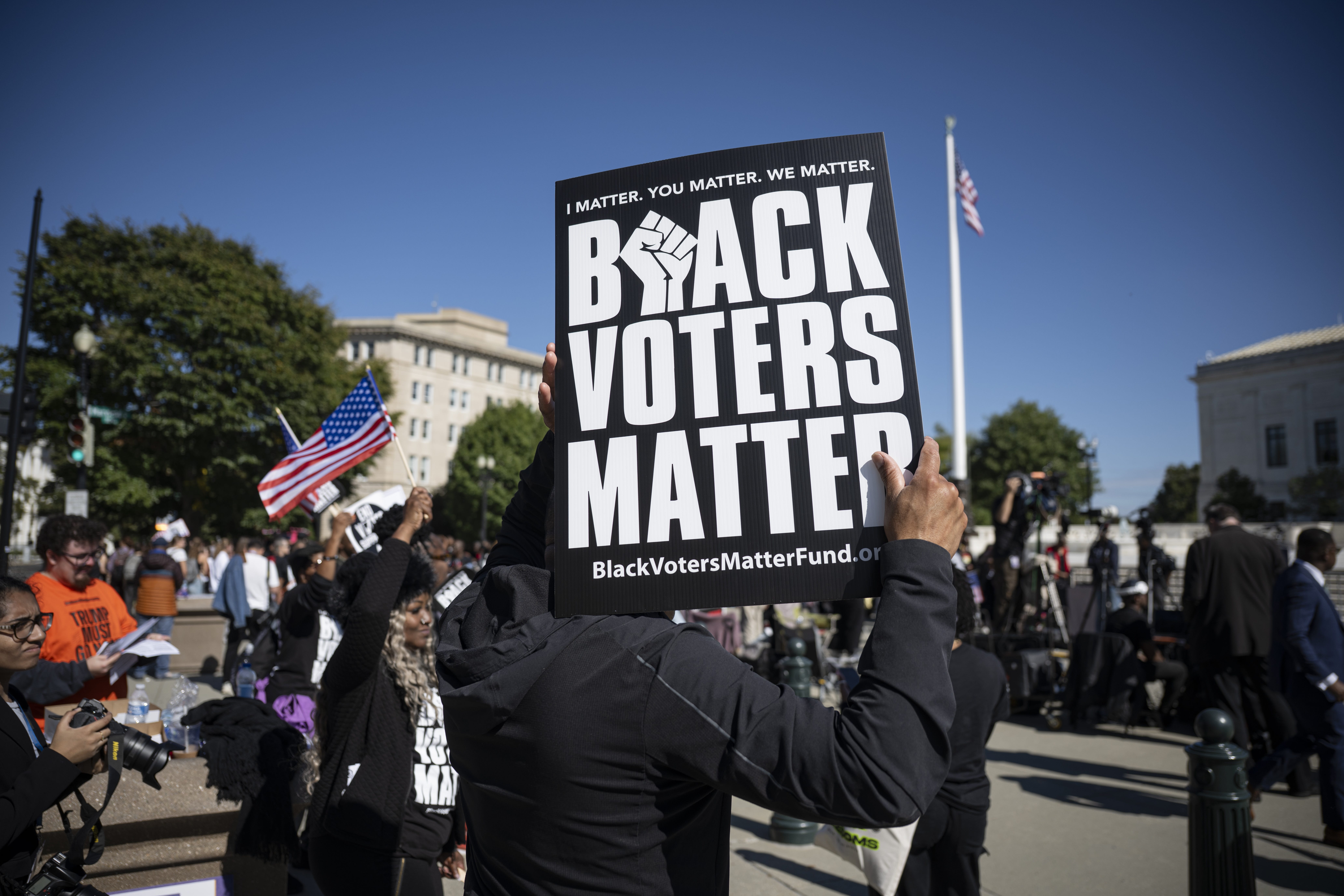
NAACP Legal Defense and Educational Fund assistant counsel Sara Rohani, who has been involved in the Louisiana case since 2022, told Zeteo ahead of the ruling that if the Supreme Court weakened Section 2 protections, the results “will potentially be catastrophic.”
Rohani noted that virtually all of the representation that Black voters and Black candidates have had in recent years has come from districts created under the Voting Rights Act. And Rohani warned that representation at every level of government will be impacted, from the US Senate to local school boards and city hall.
On the congressional level, an analysis by the Black Voters Matter Fund last year found that gutting Section 2 could help Republicans secure an additional 19 House seats.
“The risk to our multiracial democracy would be very, very stark if the court were to significantly erode Section 2 of the Voting Rights Act,” Rohani said before Wednesday’s ruling.
It’s unclear how the ruling will impact this year’s midterms, given the short timetable. But some Republicans are already preparing to cash in – Florida’s Republican-controlled legislature is pushing forward a new map to give them four more seats.
Wednesday’s case is part of a broader anti-democratic effort to stifle voting rights, especially as control of Congress hangs in the balance.
The Supreme Court has also taken up a challenge to mail-in ballot grace periods, and the decision is expected this summer. The anticipated ruling could ban states from accepting mail-in ballots that arrive after Election Day. Democracy Docket reported that 14 states and Washington DC currently accept ballots that are postmarked on Election Day and arrive within a few days. Election officials have warned that the effect of such a ruling could be “akin to a natural disaster.”
Have a tip for Minnah? Reach out on Signal at minnahfarshad.94.
Check out more from Zeteo:


It seems like this is what John Robert’s has been working towards since his beginning. 🤮
SCOTUS: you can gerrymander as much as you want (unless it helps the Dems).