


Editor’s note: This is the second part of a three-part series unpacking the real death toll in Gaza. To read part one, which examines the historical context of Israel’s decades of assaults on Gaza, click here.
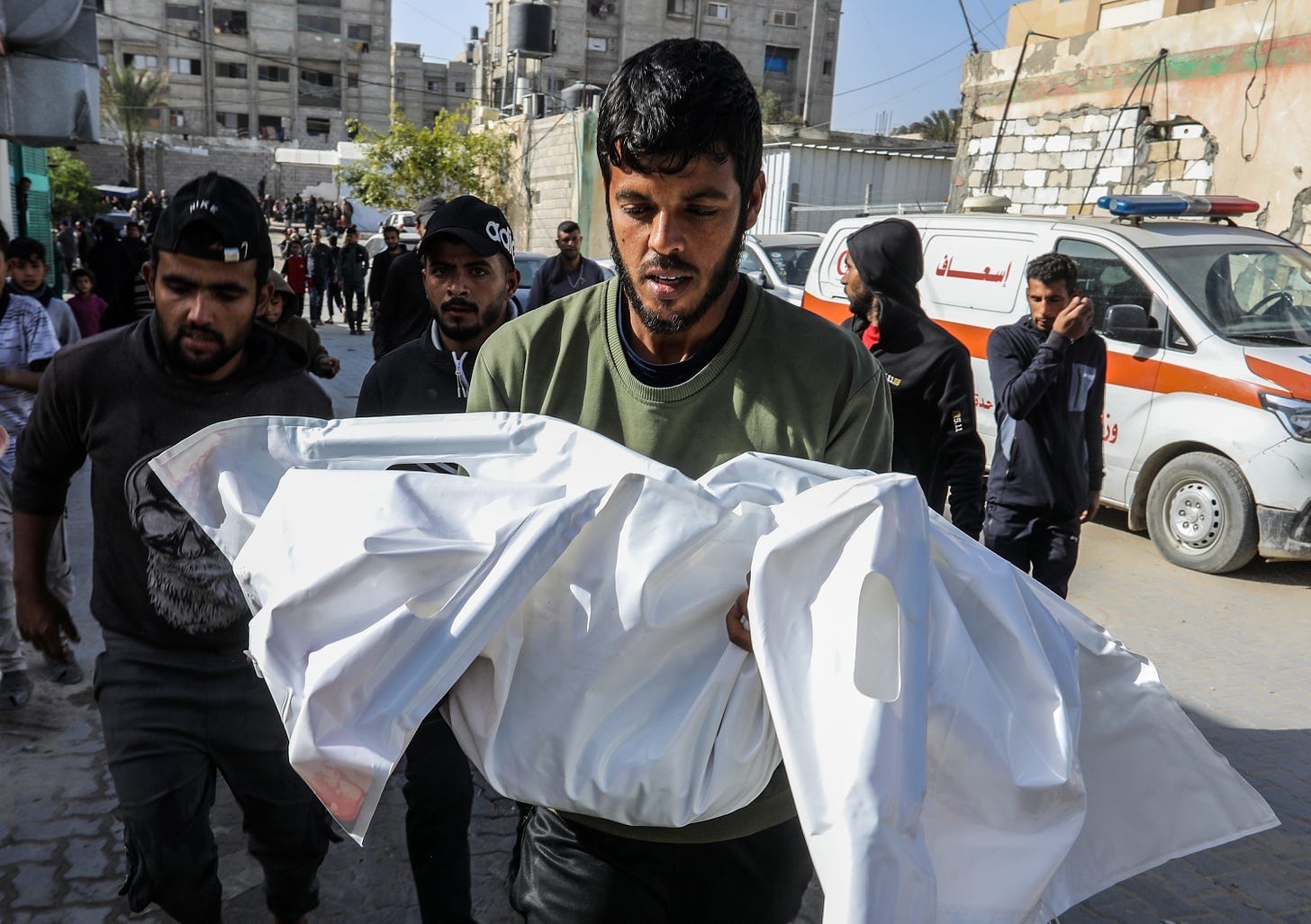
“Their names will be forgotten soon. At least they should be counted. That’s really the minimum we owe them, it seems to me, to remember that they existed.”
-Patrick Ball, a statistician at the Human Rights Data Analysis Group
The death toll in Gaza, according to the Palestinian Ministry of Health (MoH), currently stands at more than 71,800. Virtually all Western English-language media cite the MoH as context in reporting on Gaza, typically noting it does not “distinguish between combatants and civilians.” Such media also frequently and incorrectly claim the MoH is “run by Hamas” or identify it as the “Hamas-run Ministry of Health.” Bizarrely, this is often directly adjacent to reporting that on Oct. 7, 2023, Hamas-led militants “killed 1,200 Israelis” or often even “killed 1,200 Israeli civilians,” making no attempt to distinguish combatants from civilians even though these categories are known down to the individual person – 695 civilians, including 36 children, 373 security forces, and 71 non-Israeli civilians, for a death toll of 1,139 – and without noting that the source of this information, Israel’s national insurance agency Bituah Leumi, is “run by Likud,” the political party in power in Israel.
These warnings about the MoH death toll prompt skepticism about the ministry’s trustworthiness, but it is universally understood that the MoH’s data is reliable.
In Part 2 of my three-part series looking at what we actually know about Gaza’s dead, I’ll examine the data from the MoH, and then look at the scientific studies conducted by public health researchers. (If you missed part 1, which examined the historical context of US-backed Israeli attacks on Gaza since 2004, read it here.)
The Ministry of Health
Prior to October 2023, the US State Department cited the MoH’s data without qualification. In November 2023, the assistant secretary of state for Near Eastern affairs told the House Foreign Affairs Committee that the true number of dead in Gaza is “very high, frankly, and it could be that they’re even higher than are being cited.” In February 2024, then-Secretary of Defense Lloyd Austin likewise cited the MoH numbers without qualification before the House Armed Services Committee. Israeli military intelligence, the Israeli military itself, the Washington Post, and Haaretz (Israel’s most important newspaper) have all found the data to be reliable through their own investigations. Former Israeli military chief of staff Herzi Halevi has cited casualty figures similar to those from the MoH without identifying his source. Public health researchers reported that by 2021, the MoH “had achieved good accuracy in mortality documentation, with under-reporting estimated at 13%” (my emphasis). They further noted that the MoH’s death toll from Operation Protective Edge in 2014 was “considered reliable, coming within 4% of the UN’s and 8% of the Israeli military’s estimates.”
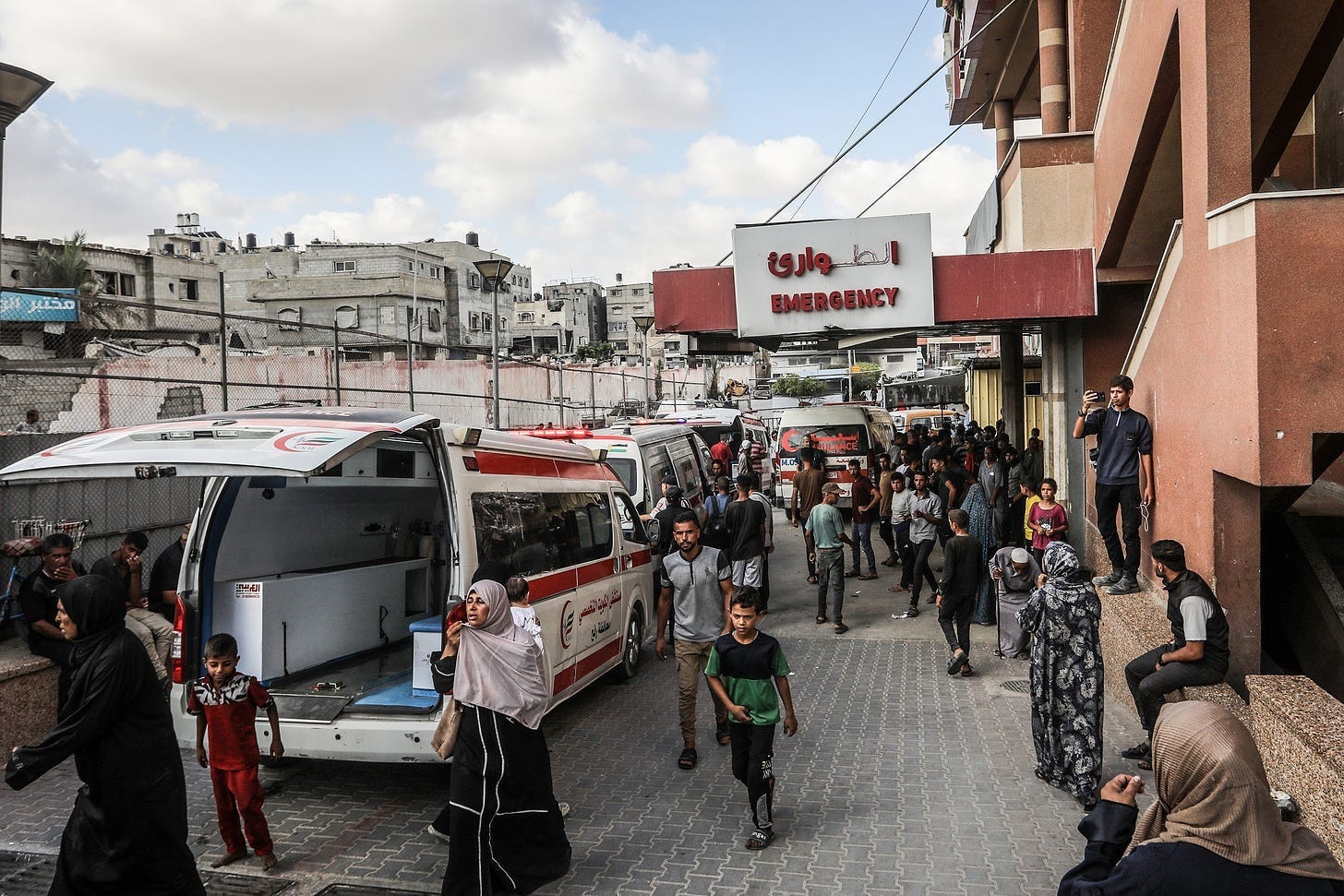
This broad agreement on the MoH’s reliability isn’t surprising considering how the data is collected: hospitals and the morgues attached to them use an electronic patient registration system called e-Hospital. Patients injured in conflict-related violence are assigned context “7” if they survived to discharge and context “63” if they died. Field hospitals – temporary hospitals run by NGOs or foreign governments – don’t use e-Hospital, so they send the MoH a spreadsheet of conflict-related injuries and deaths. In addition, families can report deceased relatives to the Ministry of Health, triggering an investigation to determine whether a person died, and under what circumstances. As Dr. Zaher al-Wahaidi, the Ministry of Health’s information director, explained to Drop Site:
“[The MoH] present[s] a list of reported martyrs to a judicial committee composed of three judges from the Supreme Court, the Public Prosecution, and forensic evidence, including medical investigations and the Ministry of Health. We send a message to everyone who reported a martyr to appear before the committee to testify, along with two witnesses who are not first-degree relatives. The judge listens to their testimonies individually, and the prosecution investigates the incident, the family, the date, time, and location to ascertain whether the event actually occurred and whether the individual was martyred or not.”
In other words, the MoH doesn’t estimate violent deaths in Gaza. It counts people injured by US-Israeli violence and then declared dead by a physician in a hospital or morgue, as well as people whose deaths and manner of death were confirmed through investigation. This simple fact is regularly misreported in the American media, for example, even in this otherwise informative New York Times piece’s headline. In the most recently released list of dead (released Aug. 4, 2025) from the MoH, 58,271 people were declared dead in a hospital morgue, while 9,954 were declared dead after an investigation.
This data is published regularly on the MoH’s Telegram page. It is also transmitted to the UN Office for the Coordination of Humanitarian Affairs and published in periodic updates on its website.
Furthermore, two peer-reviewed investigations by public health researchers have found the MoH count to be reliable during this specific attack. One team of researchers at the Johns Hopkins School of Public Health published a study in January 2024 comparing the MoH data to a separately maintained database of deaths among UNRWA employees in Gaza, from Oct. 7 to Nov. 10, 2023. They found that the MoH’s death toll was not exaggerated and was more likely an undercount. The investigators noted that even with the MoH’s likely undercount, the 11,078 Palestinians killed in the first 35 days of the assault were astonishing compared to an average of 4,884 deaths in Gaza from all causes annually. “Efforts to dispute mortality reporting”, they declared, “should not distract from the humanitarian imperative to save civilian lives by ensuring appropriate medical supplies, food, water, and fuel are provided immediately.” This simple truism was ignored.
A second team of researchers from the London School of Hygiene & Tropical Medicine and Nagasaki University’s School of Tropical Medicine and Global Health tested the MoH’s data using a different method. Palestinian identification numbers – used like American social security numbers – are issued sequentially based on order of birth, but were once assigned in a non-sequential fashion. There were also two “catch-up registrations” after periods when the registration system was disrupted. The investigators found that the ID numbers and ages of the dead in the MoH database matched these prior times and numbering conventions accurately. “We consider it implausible”, they concluded, “that these patterns would arise from data fabrication.”
And I can personally attest to the MoH’s reliability. I was volunteering at Nasser Medical Complex when Israel resumed the widespread bombing of Gaza on March 18, 2025. The next morning, the MoH released a factsheet covering only that day’s attack, citing 436 dead across Gaza and noting that 22% (96) were declared dead at Nasser. I personally reviewed every electronic patient record from March 18 in Nasser’s system, and found 92 patients who arrived dead or died in the emergency department. The small difference is most likely due to a lack of decimal places in the fact sheet, not data fabrication.
Since Oct. 2023, the MoH has also issued corrections to its records. These corrections have inexplicably been seized on as proof that the MoH is an unreliable source of information. Remember that in the immediate aftermath of the Oct. 7 attacks, Israel claimed 1,400 dead, which was then revised downward. This isn’t proof that Israeli reporting is unreliable; it’s precisely the opposite: Israeli reporting is indeed reliable precisely because those compiling the list of dead corrected errors when they were discovered. Uncertainty about the exact death toll from the 9-11 attacks persisted for years, but this never raised questions about the reliability of New York’s medical examiner’s office.
US-backed Israeli attacks on Gaza’s hospitals, morgues, and communication systems led the MoH to temporarily include deaths reported by the Gaza Media Office, especially in late 2023 and early 2024. As hospital-based reporting was restored, the MoH reviewed every fatality reported by the Media Office. All deaths that could not be fully verified were deleted. Between Aug. 2024 and March 2025, the MoH deleted more than 3,000 fatalities from its list.
One might assume this means that these 3,000 people were found alive, but that was hardly the case. These people were removed from the list of dead because the MoH lacked the information its protocols require to fully verify deaths. Action on Armed Violence, a UK-based non-governmental research firm, investigated the 1,079 children whose recorded deaths were deleted. Using open-source methods, they confirmed that 655 (61%) of these children were certainly dead, 219 (20%) were likely dead, and 172 (16%) records couldn’t be confirmed one way or another. Only 33 (3%) of the 1,079 children removed from the list were certainly alive.
In other words, the MoH removed the names of 655 children who were dead and another 219 who were likely dead to correct the records of 33 children who had not been killed and 172 whose status was unclear. “The decision”, noted the author of the analysis, “reflects not weakness but a form of institutional integrity. In a conflict where the digital realm is weaponized…even casualty lists become acts of political communication. By erring on the side of caution, the MoH appears to be resisting the temptations of propaganda, offering numbers that can withstand forensic scrutiny rather than numbers that might serve rhetorical aims.”
This question should be settled: the Palestinian Ministry of Health in Gaza issues reliable counts of the dead. Any list of over 71,800 names will contain a few errors, but these were not introduced deliberately or systematically. The MoH’s numbers are reliable, meaning those listed were real people who were, in fact, killed by US-Israeli military violence.
But another question remains: is the MoH’s data an accurate count of the dead in Gaza? The answer is clear to a scientific degree of certainty: no.