


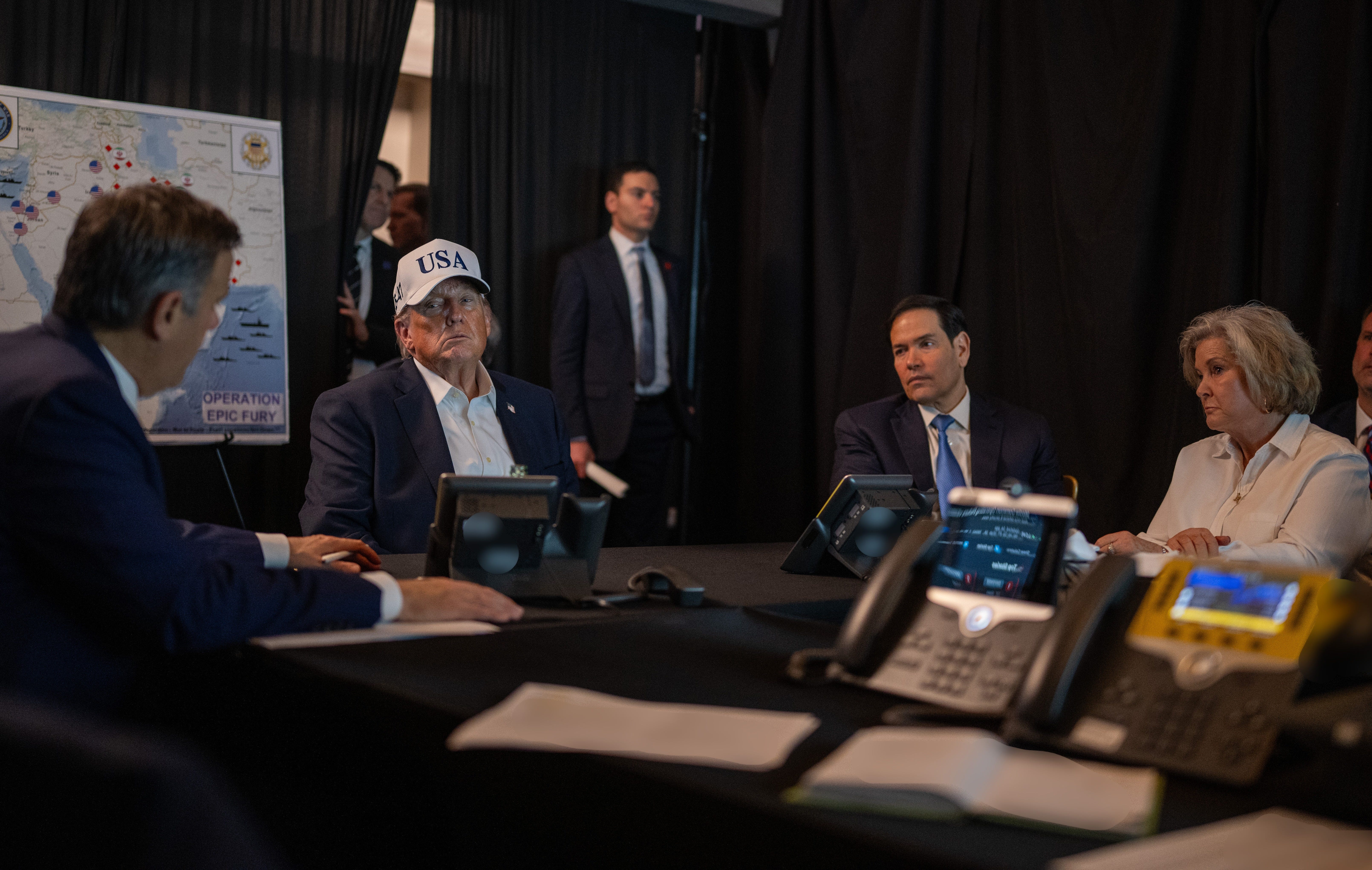
Donald Trump is far from the only U.S. president to lose a pointless war in the Middle East. But because of his insistence on continuously redefining the terms of victory, he may be the first president to lose the same war three times – and in just six months, no less. The initial regime change operation in Iran was doomed from the start – no amount of bombing and assassinations was ever going to produce an Iranian Delcy Rodríguez who could hand Trump the keys to the country. When regime change faltered in the first week of the war, Washington and Tel Aviv appeared to pursue the more realistic and even more horrifying objective of regime collapse, bombing infrastructure and fomenting unrest to turn Iran into a chaotic failed state. Israel’s Benjamin Netanyahu was more enthusiastic about this approach than Trump, who seemed to abandon it after failing to persuade Iranian Kurdish groups to launch a likely-suicidal uprising, though the language of regime collapse has resurfaced to explain the administration’s sporadic, quixotic attempts at economic warfare. The April ceasefire would signal Trump’s tacit admission that bombing could neither replace nor destroy the Iranian state.
But for most of the past six months, Trump has been fighting to force open the Strait of Hormuz. This is the war to lower gas prices, the war to undo the consequences of the war, or, to be more precise about the president’s objectives, the war to forget about Iran as quickly as possible with minimal embarrassment. This war was also definitively lost months ago, when the initial, intense February-April “40-day war” failed to prevent the Iranian government from attacking regional shipping. After another four months of Trump threats, half-hearted bombing runs, and not one but two U.S. blockades of Iran, Tehran’s military exercises formal authority over at least a third of the ships transiting the Strait. Plus, it now regularly shoots at “unauthorized” ships with impunity.
The consequences of attacking Iran were, to a certain extent, well-understood within the administration: now-fired Director of National Intelligence Tulsi Gabbard cautioned that regime change was unrealistic, and that Tehran would close the Strait of Hormuz and retaliate against America’s Gulf partners. And Chairman of the Joint Chiefs of Staff General Dan Caine warned about limited air defense munitions and the risk of U.S. casualties.
But Trump was never warned about a development that apparently surprised his Cabinet and certainly surprised me.