


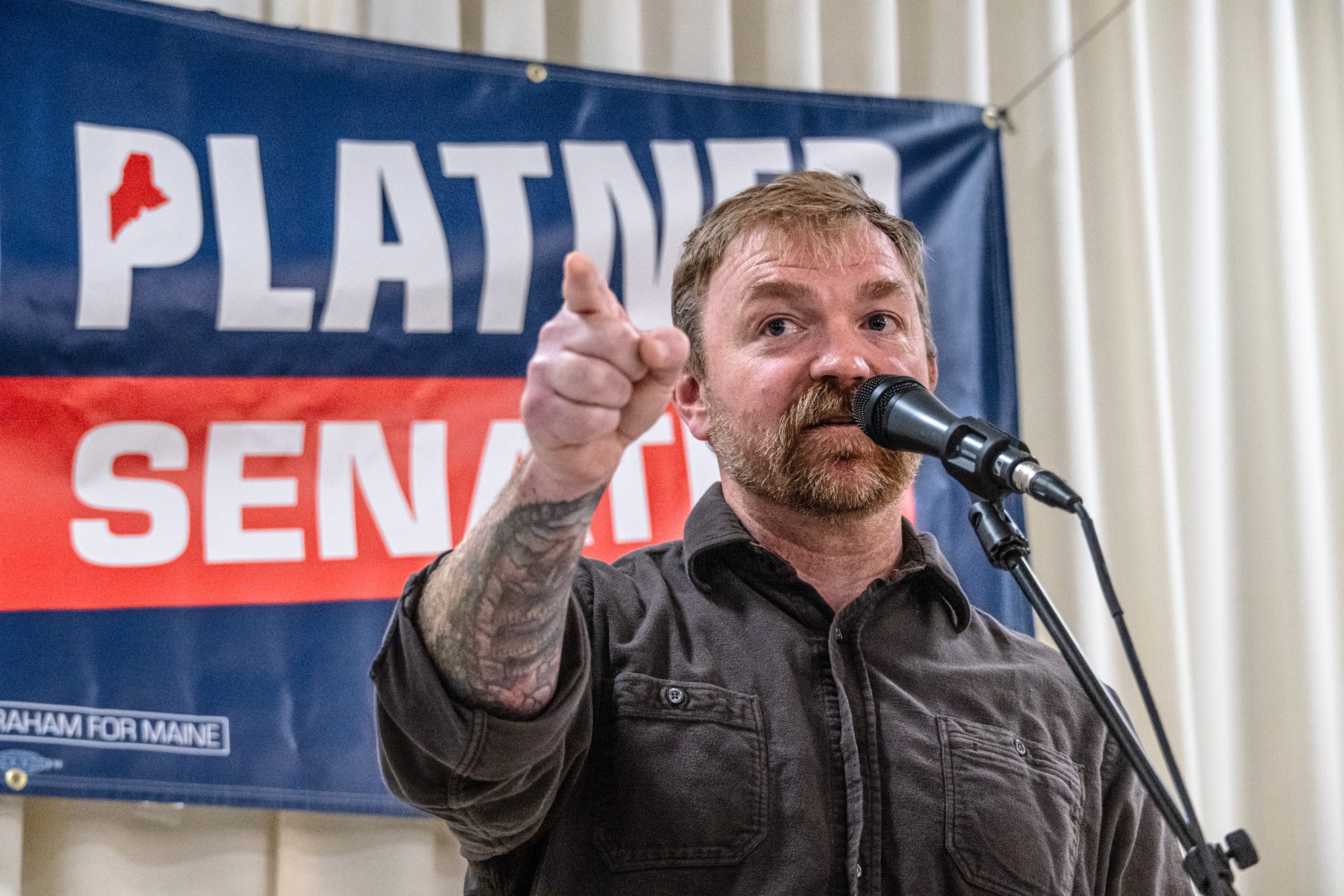
PORTLAND, Maine – Tuesday is primary day for Graham Platner, the populist Marine combat veteran and oysterman, whom Maine is expected to nominate for Senate over the objections of the U.S. political establishment, the far-right, and the corporate media class. If he wins, he will face five-term Republican Senator Susan Collins in the fall.
More than any other election in the U.S. this year, the Maine Senate race has become a test of what people think should matter: policy goals (in Platner’s case, an expressed desire to fight corporate power, end wars, and stop Donald Trump’s authoritarian blitz), or the narratives that political operatives and journalists concoct together about politics and discuss in place of any of the many problems people experience as a result of policy decisions made in Washington, DC.
The outside observers keyed in on Platner would have voters believe the race is about morality – as if there is any to be found in the candidate’s most prominent critics, some of whom are committed genocide deniers and unrepentant war propagandists, or in a political consensus that distributes death and despair outward, and ever-more wealth upward.
The question that’s actually on the ballot in Maine is more fundamental. It is a question that politicos and journalists avoid engaging with in a serious way: “Which side are you on?”