


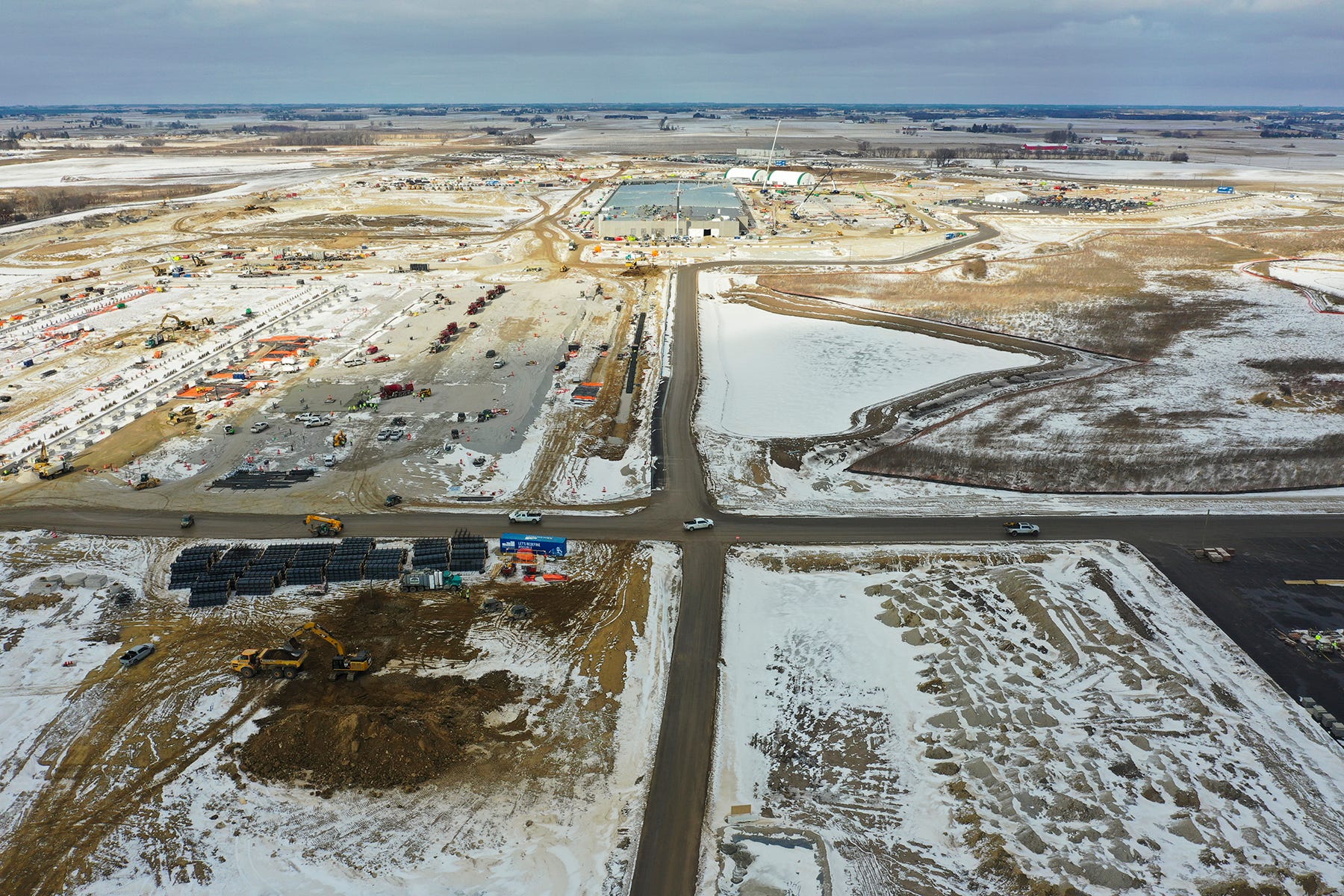
There are now more than 3,000 data centers operational in the United States and more than 1,500 on the way, and the rate at which they’re being built isn’t stopping anytime soon. Data centers now make up 2.3% of total U.S. construction spending, and as artificial intelligence companies race to build even more warehouses for the servers that power large language models, Americans have noticed, and they’re not particularly happy. A Gallup poll released in May found that 7 in 10 Americans oppose a data center being built near them, with nearly half strongly opposed. These complaints aren’t partisan, with a plurality of Democrats, independents, and Republicans alike opposed to their local construction.
Companies like Amazon, Microsoft, Google, Meta, and Oracle – plus the Blackstone Group, which calls itself the largest investor in AI infrastructure in the world – pitch new jobs and tax revenue to communities that instead end up getting higher electric bills, drained water, lost farmland, and a grating mechanical hum. And last summer, President Donald Trump signed an executive order to fast-track permitting, pushing agencies to ease the very rules built to protect them.
Here are seven things to know about who pays for the data-center buildout – and who’s profiting: