


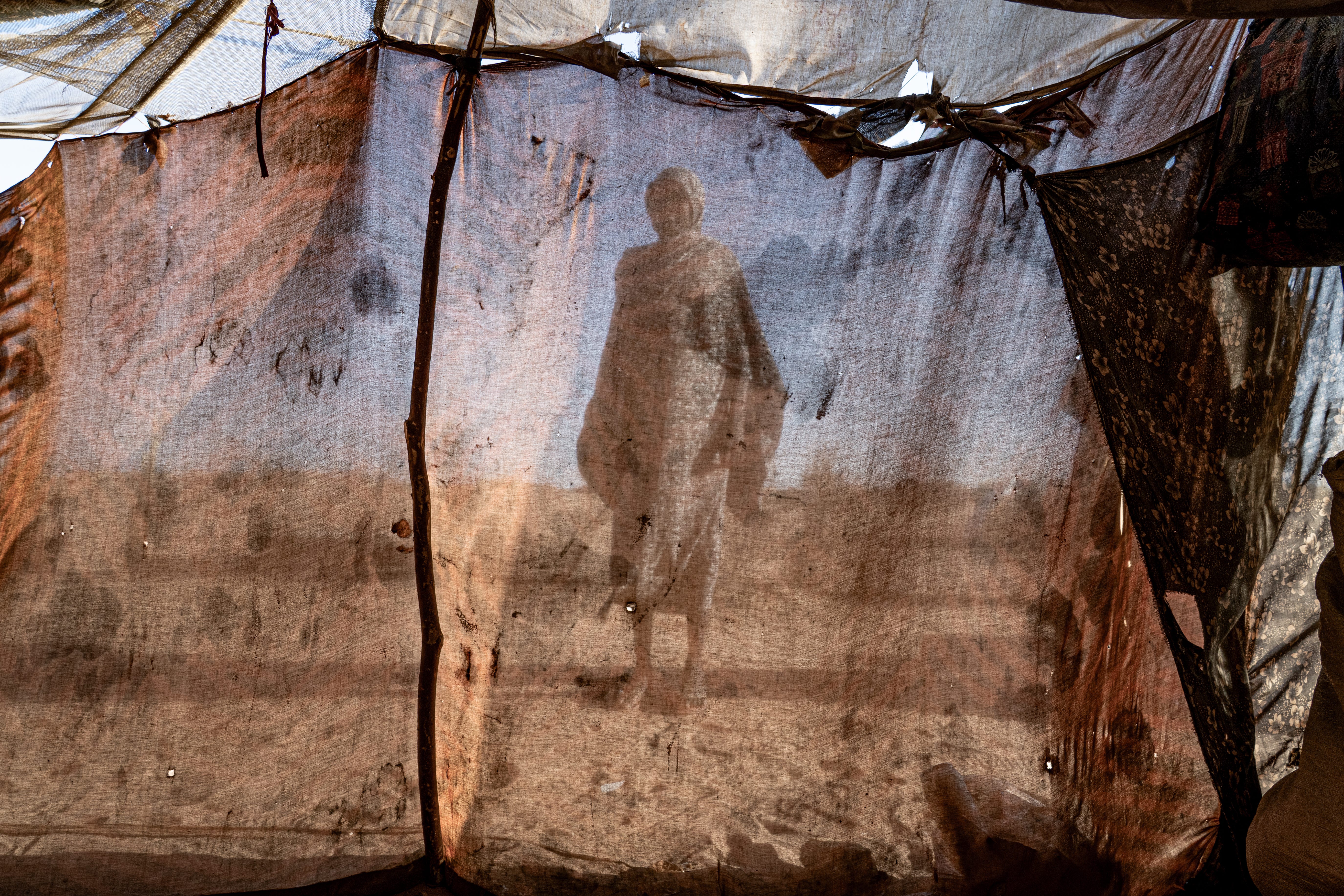
Mohammed Salman’s three children still call out for their father. They are 3, 5, and 7, and they believe he has only gone out on a work trip – that he will come home the way he always did after traveling for his metalworking shop outside El Fasher, the capital of Sudan’s North Darfur.
“The children ask constantly about their father,” their aunt, Moshira Salman, tells me. “They think he went somewhere and he’ll come back, like he used to.”
He won’t. In September 2025, 41-year-old Mohammed and four of his brothers – Omar, Munadil, al-Khair, and Ali – met at the family home in El Fasher’s Tambasi neighborhood to plan how to leave the city. Drone strikes and artillery shelling by the Rapid Support Forces (RSF), which had besieged the city, were escalating. Then a shell hit the house, killing all five of them.
The neighbors buried them in a hurry, in the garden in front of the house.
“Losing five brothers at once left a wound in our family that hasn’t healed to this day,” says Salman. “The war took their lives, their work, and our home.”
Salman’s brothers were killed in the final weeks of an 18-month siege by the RSF, which has been locked in a brutal battle with the Sudanese army since April 2023. A year ago, on Oct. 26, 2025, El Fasher fell to the group. What followed, according to an independent UN fact-finding mission, were mass killings, widespread rape and other forms of sexual violence, torture, arbitrary detention, and enforced disappearances, aimed above all at the city’s non-Arab communities, the Zaghawa and the Fur. Thousands were killed in the massacre.
The mission found that during the siege the RSF had deliberately imposed conditions of life calculated to destroy those communities, and assessed the killings during the takeover as “indicators of a genocidal path.”
A year later, families are still searching for the missing; those who return find a city emptied of its people, and no one has been held to account.
“A year has passed since the massacre the RSF committed in El Fasher and the perpetrators are still free,” says Dirar Adam Dirar, chief executive of the Human Rights and Advocacy Network for Democracy, a Sudanese rights group.
‘A Voice Somewhere in the World Tells Me He’s Alive’
Suhair Jumaa has not seen her husband since the day El Fasher fell.