


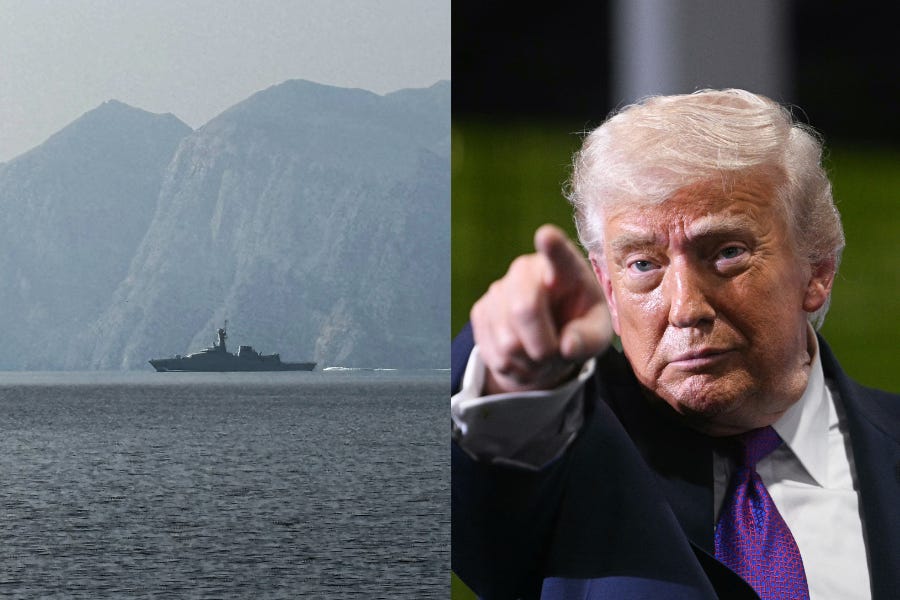
Donald Trump is digging himself deeper and deeper into a war he seems to know nothing about. So when Iran shut down the Strait of Hormuz – a threat the US has known about for years – Trump was, of course, unprepared. But it was a predictable move to the officials who briefed him… or to anyone who has looked at history, or at a map, ever.
Now, the tiny waterway is at the very center of this war, has spiked oil and gas prices globally, and is sending both developed and developing worlds into an economic crisis.
So, here are 7 things you should know about the Strait of Hormuz (that Trump probably didn’t!)...
1. Where it is on a map…
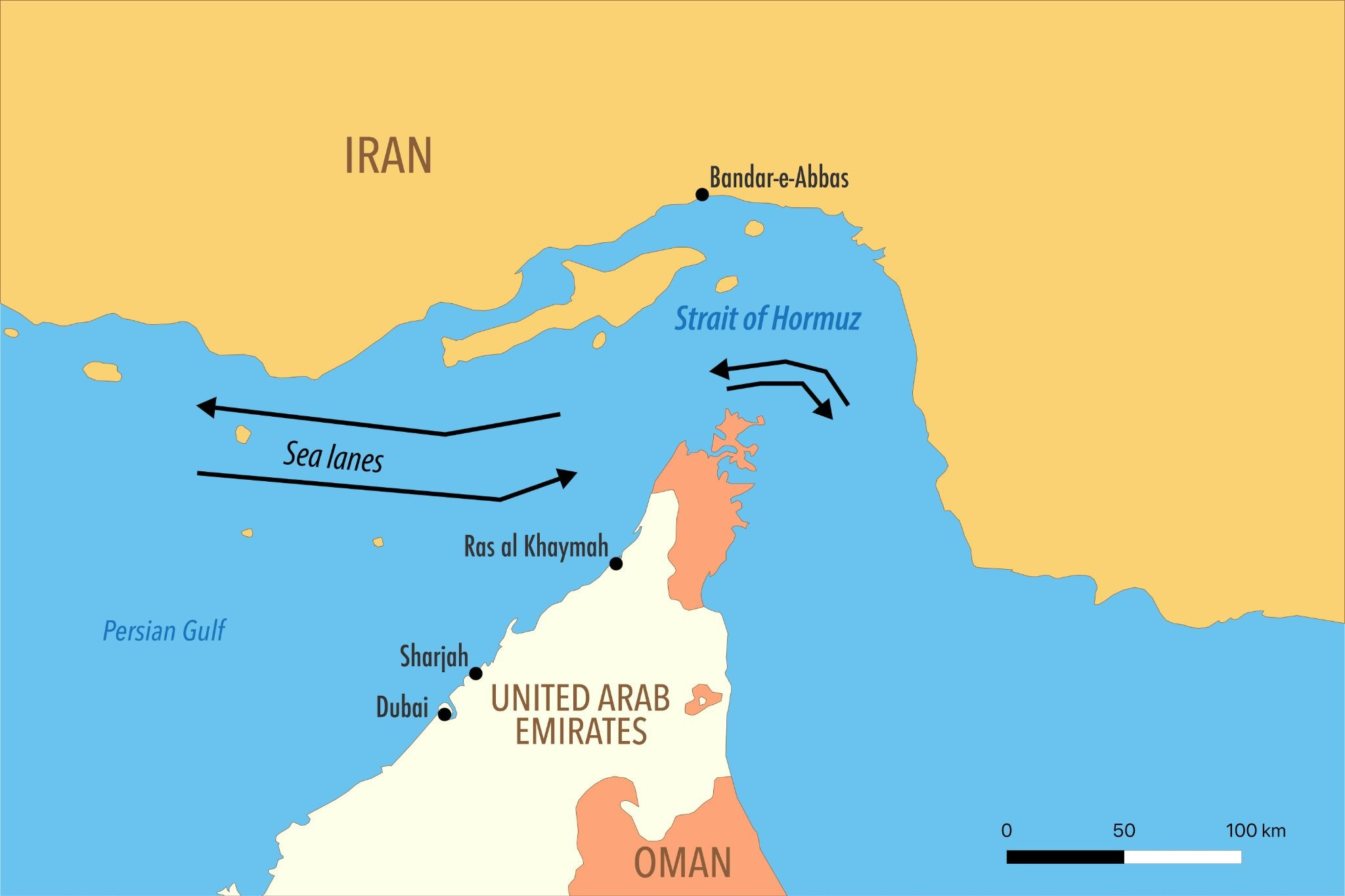
Bordered by Iran to the north and Oman and the UAE to the south, the Strait of Hormuz connects the oil-rich Persian Gulf to the Gulf of Oman and the Arabian Sea. It’s only 24 miles wide at its narrowest point. Shipping is restricted to a pair of two-mile-wide lanes: one outgoing, one incoming. It’s the only passage out of the Gulf to the rest of the ocean.
2. It’s the world’s most important waterway
The strait facilitates over one fifth of the world’s oil shipments. In fact, this war is causing the world’s largest oil supply disruption in history. Thanks to geography and political tension, there’s no real alternative to the strait. Try as they might, Saudi and UAE pipelines can only carry a small fraction of the energy, and even then, are vulnerable to attacks from insurgent groups like the Yemeni Houthis.
Besides the US, China, India, and Japan also heavily depend on the oil that passes through the strait. Even if this block on oil tankers is only temporary, it will raise global energy prices, spike shipping costs, cause major supply delays, and could even lead to a worldwide food shortage – Hormuz is a crucial shipping route for fertilizers needed now for planting season.