


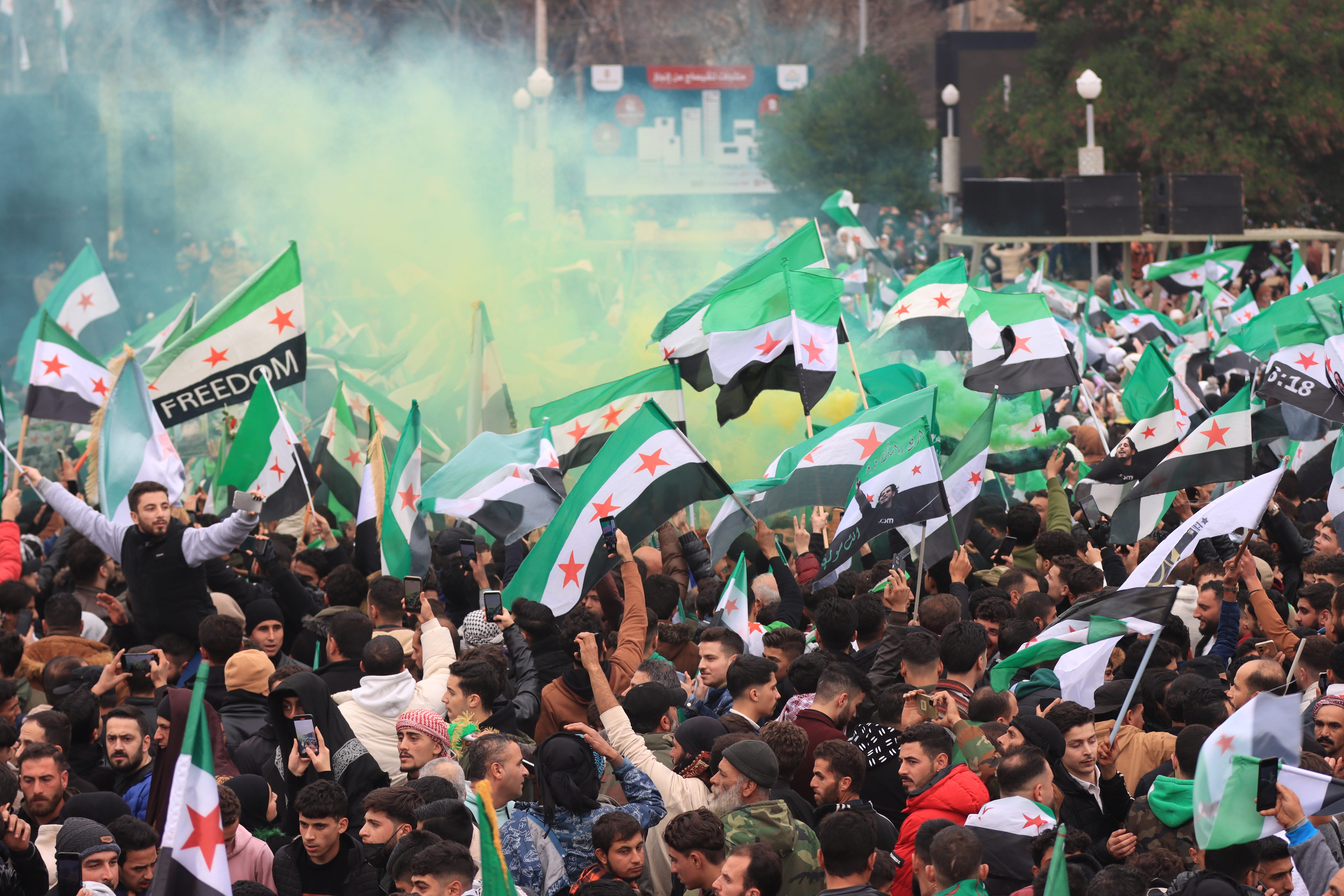
DAMASCUS, Syria – The streets of Damascus were packed today with people waving Syrian flags, holding banners, and chanting patriotic slogans with vigour. A year ago, the sight would have been unimaginable in the city, then under the brutal grip of Bashar al-Assad and his Ba’ath party.
But one year after an 11-day offensive ended the Assad dynasty’s 53-year repressive rule, Syrians came out in droves in a sign of resistance and hope for a country that would emerge from its ashes.
“It’s a feeling I can’t describe,” says Ahmed al-Zaiter, who attended one of the many victory rallies in Damascus with his wife and son.
“For so many years, celebrations like these were forbidden.”
Monday’s celebrations echoed those seen after the fall of Assad. Music blared. Syrians danced and sang in the streets. Today, paragliders soared over the crowds. In the Yarmouk Palestinian camp, people cheered the end of Assad’s rule, waving Syrian flags with one hand, and Palestinian flags with the other. In Damascus, billboards read “One country, one people.”
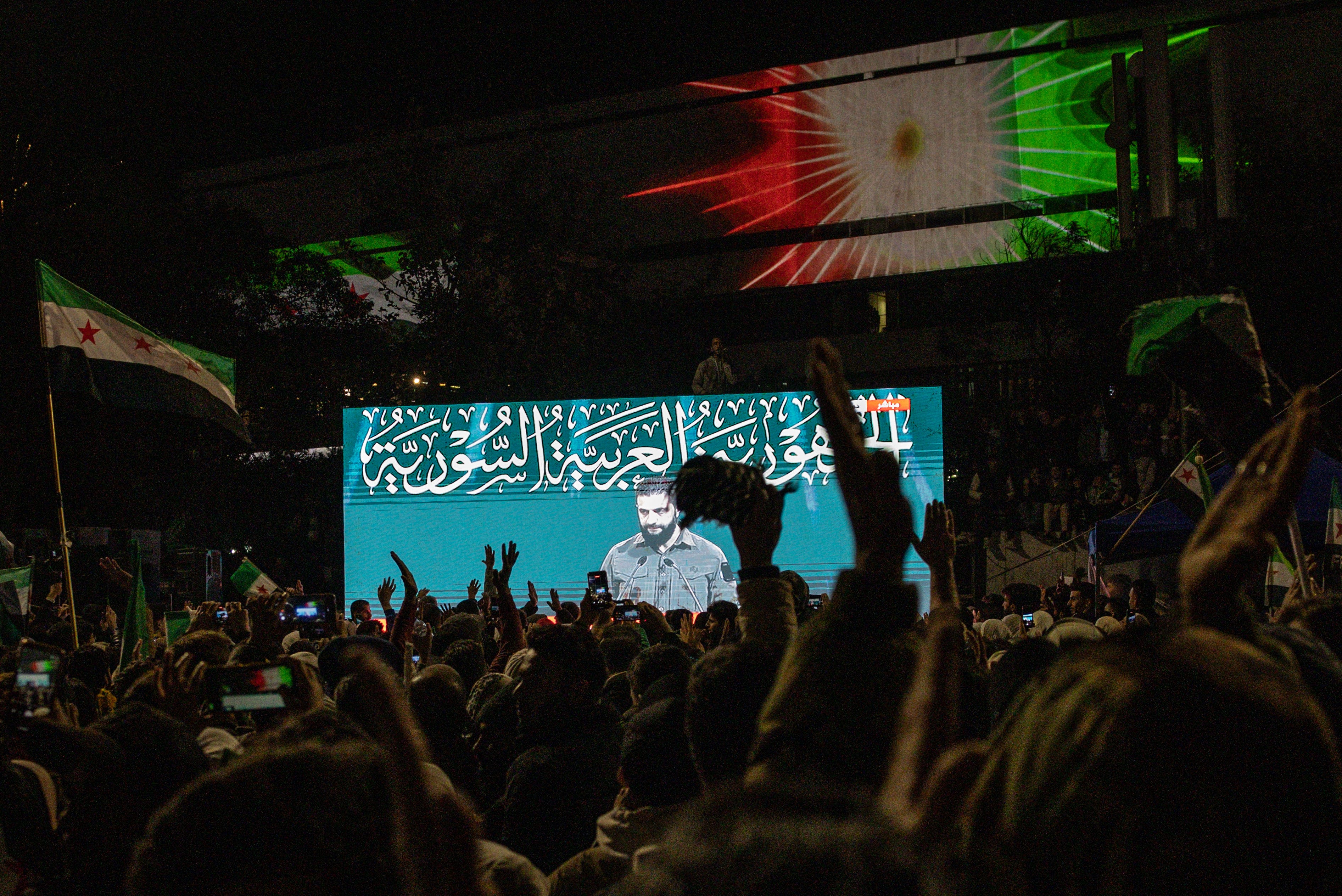
“Today we mark one year of liberating Syria from the shackles of tyranny and dictatorship, restoring the country once again to greatness,” President Ahmed al-Sharaa said from Damascus, in a speech that was met with loud cheers as it was livestreamed at the Umayyad Square.
“We declare a complete break from [Assad’s] legacy, an end to that era, and the beginning of a new chapter – the chapter of building the nation,” added Sharaa, who, despite his past as the leader of al-Qaeda offshoot Jabhat al-Nusra, has largely been able to gain international legitimacy. Over the last year, he became the first Syrian head of state to visit the White House since the country’s independence, he spoke at the UN General Assembly, and hosted the British foreign minister in Damascus.
Despite the joyous mood on Monday, the last year has been difficult for a country still reeling from a 13-year civil war that killed nearly 600,000, displaced millions, and left many cities and villages in ruins.