


The Washington Post editorial board dedicated its Thanksgiving Sunday column to congratulating the people of Switzerland for voting against a proposed tax on inheritances and gifts in excess of 50 million Swiss francs, or about $62 million.
Taxing giant inheritances and gifts, or otherwise taxing the ultra-rich for that matter, the Post writers contended, would wreak havoc on the Swiss economy by causing the rich to flee, and would be “complicated and inefficient.” Because placing a value on exotic assets (the Post’s words) would be so terribly difficult, property taxes and consumption taxes are “far fairer.” Yes, better to tax teachers on their clothing purchases than to ding a billionaire on the gift of a Picasso painting to her kid.
The real point of the editorial, though, was its closing paragraph. There, the Post writers implied, rather blatantly, that US voters should reject any 2028 presidential candidate (the Democratic candidate, obviously) who would reduce the whopping exemption from federal estate and gift taxes ($30 million for a married couple) so as to “make a political point of taxing the rich” rather than “prioritizing healthy public finances.”
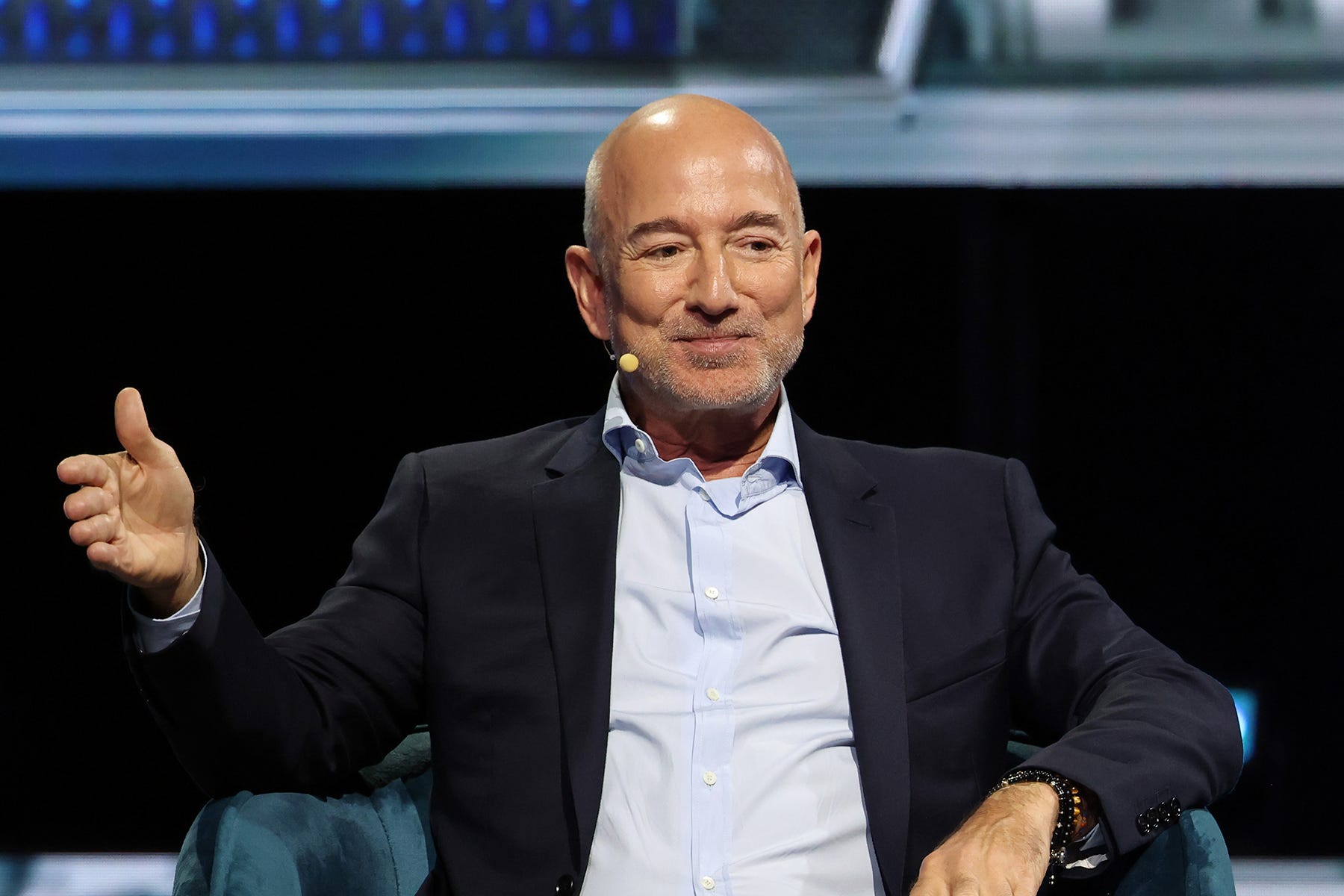
At no point did the Post editorial board mention that the paper’s owner, Amazon founder and quarter-trillionaire Jeff Bezos, is the planet’s fourth-wealthiest human – nor did the authors mention that Bezos stands to benefit more from their tax policy prescriptions than nearly anyone else.
It’s merely the latest example of the Post editorial board aligning itself with Bezos’s interests and causes without disclosing any potential conflict of interest to readers. In October, its writers stood up for Donald Trump’s glitzy ballroom construction project, without initially mentioning that Amazon has helped fund it. The editorial board also called out the Washington, DC, government for “stalling on self-driving cars,” without disclosing that Amazon’s autonomous driving company, Zoox, had announced plans to test its cars in the District of Columbia.
As of this writing, Forbes’s Realtime Billionaires list estimates Bezos’s wealth at $245 billion. If you arrived in this hemisphere with Columbus in 1492 and increased your wealth since then by a million dollars each day while managing to live to the ripe old age of 533, you’d still be $50 billion poorer than Bezos.
The Post editorial board’s policy prescriptions seemingly were tailored to address Bezos’s particular tax situation. “Taxing work is not ideal,” the editorial declares, “but an income tax is easier for a government to maintain than claiming unrealized gains that are part of someone’s estate.”
Bezos’s wealth, you see, is almost all in the form of unrealized gains. As of a Sept. 30 SEC filing, he still held about 885 million Amazon shares, which have a total current value of over $200 billion. His original investment in those shares in 1994, no more than $200,000, has increased in value over a million-fold. That’s an annual average increase of over 50% per year.
And how much income tax has Bezos paid on his $200 billion of remaining Amazon gains? Zero. What happens to those gains if Bezos dies? Under current law, they vanish. Neither Bezos’s estate, nor anyone who inherits the Amazon shares, would pay income tax on the gains. Even when they sell the shares.
And the Post editorial board – which Bezos exerts significant control over as the paper’s owner – wants us to believe it’s better we keep it that way because it’s easier for the government to maintain the income tax on workers’ wages.
In 2021, ProPublica revealed that Bezos, with wealth already well into the billions, paid zero in federal income tax in 2007 and again in 2011. In fact, in 2011, the US Treasury cut him a check for $4,000 for the child tax credit, a benefit intended to help low- and middle-income American families.
Between 2006 and 2018, ProPublica reported, Bezos’s total tax liability was just 1.1 percent of the $127 billion increase in his wealth over that period.
In the four years following ProPublica’s expose, Bezos’s wealth has approximately doubled. Two more doublings and Bezos will be a trillionaire.
Last year, Tim Murphy of Mother Jones remarked on Bezos’s unusual honesty, upon completion of his first space flight, when he thanked Amazon’s employees and customers, who “paid for all of this.” It was extraordinary, Murphy noted, for Bezos “to point with a smile to a phallic rocket ship that goes nowhere new and assert that this is what delivery drivers peed in a water bottle for.”
“But this is the nature of oligarchy,” Murphy explained: “Your sweat is their jet fuel.”
The nature of oligarchy indeed. Also in the nature of oligarchy category: using your own newspaper to make the Orwellian suggestion to voters that a presidential candidate who would tax your soon to be trillion-dollar fortune would be failing to prioritize public finances.
Fortunately, few voters are likely to follow the Post’s advice. Readership at the Post, according to recent reports, is collapsing. Imagine that.
Bob Lord, an Institute for Policy Studies associate fellow, currently serves as senior vice president for tax policy at Patriotic Millionaires.
The views expressed in this article are the author’s own and do not necessarily reflect those of Zeteo.
Have you read our morning politics newsletter, ‘First Draft’? Currently, anyone can access it, but it will go behind the paywall starting next Monday, Dec. 8. If you’re not already a paid subscriber, upgrade today to get full access to all of Zeteo’s content, including ‘First Draft.’
Check out more from Zeteo:


Billionaires don’t seem to realize that whatever taxes are passed they will still be billionaires and never be able to spend it all.
After so much money, even greed becomes pointless.
We have known since he bought one of the most respected papers in the country that he would bend it to the protection of his political beliefs and his wallet. The damage to the paper's reputation may prove lethal.