



The U.S. and Iran traded tit-for-tat attacks over the weekend. Donald Trump made more genocidal threats. As talks to bring the war to a formal end continue, the prospect for “peace” – whatever that means in today’s world – seems unclear at best.
As in all war, there is talk – often laced with propaganda-like talking points – of winners and losers. Governments celebrate, or try to convince their respective publics they “won.” In reality, though, the “losers” are almost always those who are barely mentioned at all: the people, the individuals who likely had no choice in whether their country went to war, but those who paid the evil and ultimate price – with their lives.
Thousands have been killed in Iran, Lebanon, and across the Middle East. Yes, some were fighters or part of a military, including at least 13 U.S. service members, but hundreds, likely thousands, were not: On the first day of Trump’s war on Iran, U.S. strikes killed more than 100 children at a girls’ school in Minab. Their parents’ screams should continue to haunt us all. In April, Lebanese journalist Amal Khalil survived an initial Israeli strike near the vehicle she was traveling in, only for the building she took shelter in to be hit. There was also Theodosia Karam, killed as she returned home after taking her final university exams in Beirut. She was known for her smile. And Hussein Qassir, one of more than 130 medics killed by Israeli strikes on Lebanon. He was weeks away from his wedding. Several migrant workers, including Pakistani Murib Zaman, were killed across the Gulf and Israel from Iranian strikes or debris from intercepted missiles. Palestine was also directly hit: four Palestinian women, Mais Aazi Masalma, Sahra Razak Masalma, Amal Sabhi Abd al-Karim Matawa and Aseel Samir Masalma, were killed when missile fragments hit the hair salon they were in as they prepared for Eid. And it was indirectly affected, as the war certainly provided a distraction for Israel to escalate its genocide.
If you follow non-Western media, you may have heard of some of these stories. But there are so many more like them that haven’t been told. Zeteo asked journalists in Lebanon and Iran to speak to some of the families of those who were killed or went missing during the fighting, those who did not choose war, and those who cannot celebrate if it finally comes to an end. Here are three of their stories:
Mojtaba Sajedifard Was 3 Days Old
by Peiman Salehi
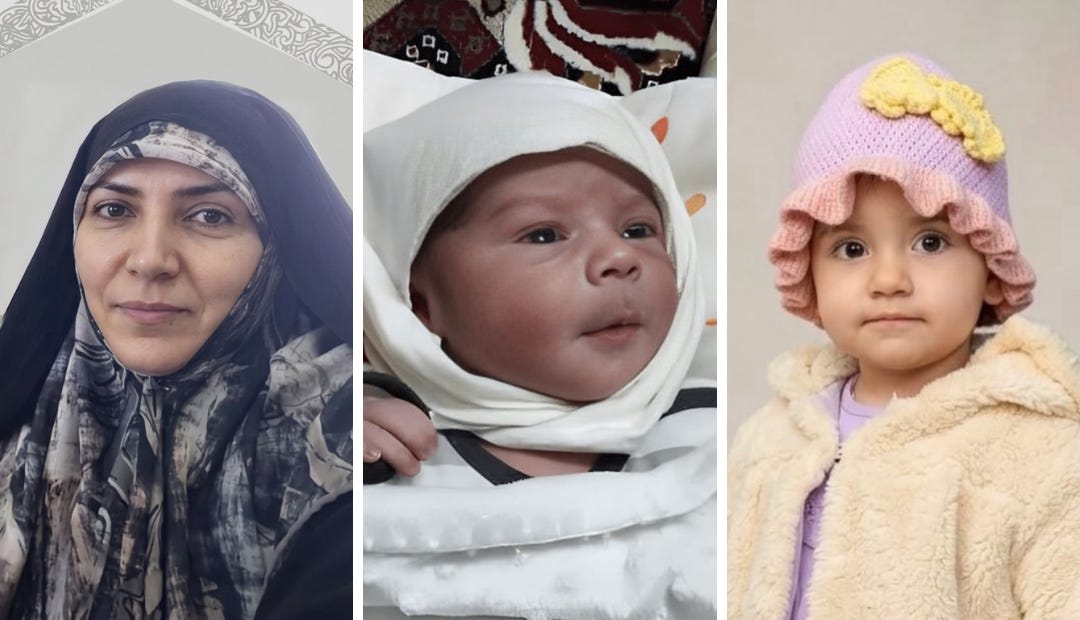
The village of Amirabad, near the central Iranian city of Arak, was unknown to most Iranians before March 14.