


The British Jewish community currently feels under siege (make no mistake, the feeling is widespread), which should make it critical for the causes to be correctly diagnosed and antidotes correctly prescribed. Getting those things wrong, let alone spectacularly wrong, can be highly consequential – the problem will be exacerbated.
At times of heightened tensions, leaders and public figures tend to reach for oversimplifications, running to extremes and eschewing the kind of serious and deep engagement most likely to generate policies that make things better rather than worse. More egregious still is for an issue like antisemitism to be instrumentalized in ways that serve agendas unconnected or even antithetical to Jewish communal well-being and social inclusion. All of those things are currently on display in the debate in the UK.
And on this occasion, the instrumentalization is so glaring that it has become a teachable moment.
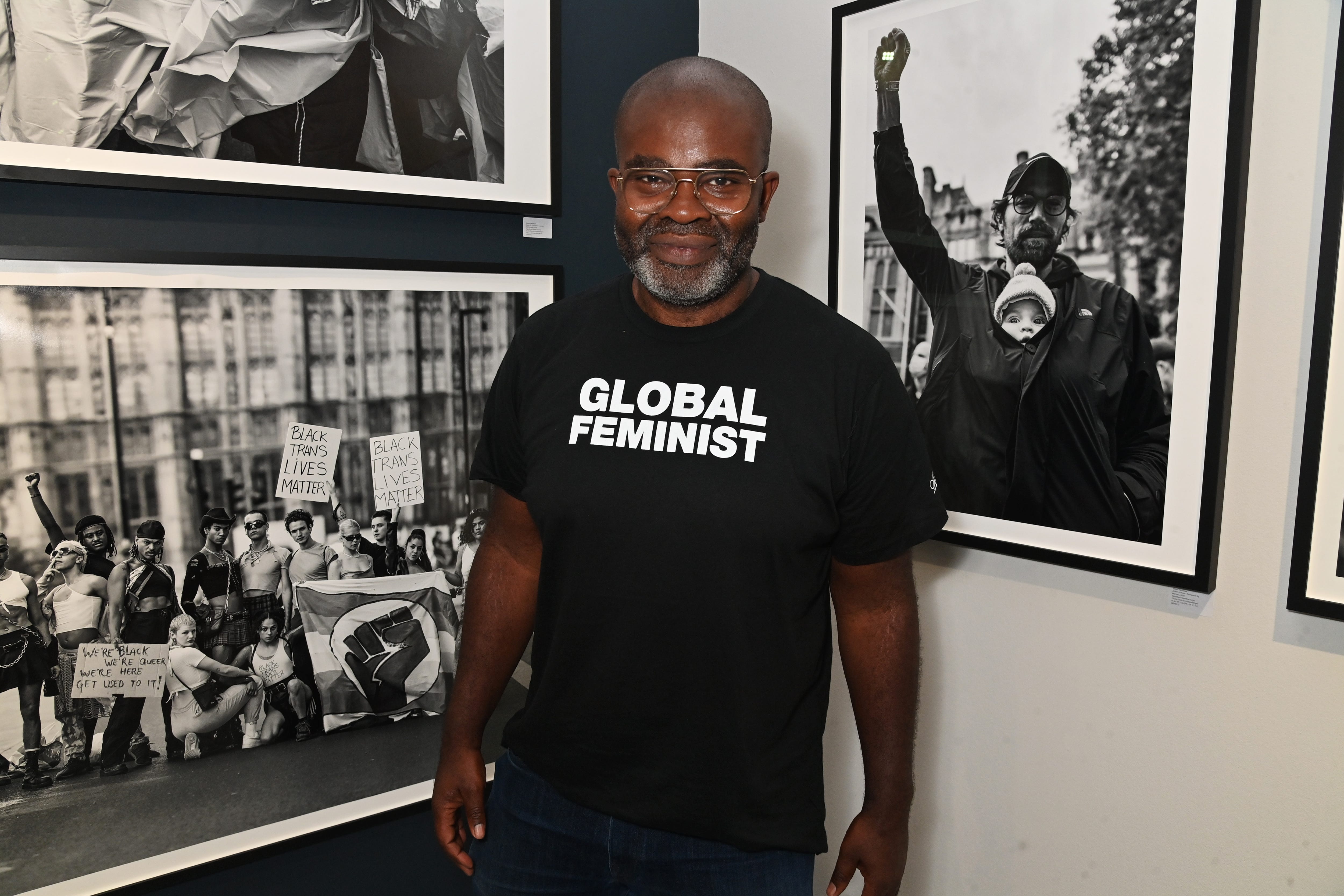
The campaign to vilify Misan Harriman, a photographer, Oscar-nominated filmmaker, and chair of London’s Southbank Centre is the case in point.
Harriman is unapologetic in his assertion that all art is political, and his reach extends to a mass social media following.
He is currently the target of an attempted hit job, centering around accusations of cheapening the Holocaust and of espousing antisemitic conspiracy theories – except he has done nothing of the kind. The art correspondent of the British Telegraph newspaper has penned two attacks on Harriman in the two weeks, with the story amplified across a predictable domestic media ecosystem, including GB News, the Daily Mail, the Daily Express, and The Jewish Chronicle.
In a thoughtful video reflecting on last week’s local council election results, Harriman quoted Jewish American writer Susan Sontag and her study of how the conditions were created that ultimately led to the Holocaust, by exploring the social, political, and media climate that can give rise to extremism. Harriman explicitly dismissed the idea that Reform voters were devils, suggesting instead that they were being exposed to certain ideas espoused by charlatans that were being insufficiently challenged.
A decontextualized and shortened clip of his comments was posted by a pro-Israel activist (wrongly claiming Harriman had compared the surge in support for Reform UK to the Holocaust), setting off a snowball effect. UK Reform Party Shadow Chancellor Robert Jenrick insisted on social media that Harriman “should be nowhere near a taxpayer-funded organisation,” while Labour MP David Taylor suggested the Southbank Centre should “consider removing” Harriman from its board. Disturbingly, the chief executive of the Holocaust Educational Trust, Karen Pollock, joined the pile-on in reposting the edited clip and describing it as “shocking.” If Pollock did that carelessly and in haste but in good faith, then an apology should be issued without further delay.
Harriman was accused by the Telegraph of other crimes, notably the spreading of a “conspiracy theory” regarding the April 29 stabbings in Golders Green by pointing out that police and media ignored or underplayed that the first victim was a Muslim, and his sharing of posts claiming Israel was trying to seize land as part of a Greater Israel project. The problem? Both happen to be true. From personal experience, having conducted two interviews unaware of that first victim, it is incontrovertibly the case that the stabbing of Ishmail Hussein in Southwark earlier on that day did not fit the narrative and was conspicuously neglected.
That matters in the broader scheme of things because it trivializes the notion of “conspiracy theories” (which can be harmful) and it helps downplay the neglect of mental healthcare policy in the UK (the attacker was known to mental health services).
Facts about Israel are also apparently irrelevant – including that the pursuit of Greater Israel is part of a formal coalition agreement of its current government, is proudly boasted of by government ministers, and is acknowledged as a reality by just about everyone. Israel’s extremism and relentless violations of international law are real, and attempts to deflect from this reality in the guise of antisemitism are embarrassing, counter-productive, and ultimately futile.
Sprinkling such blatant falsehoods and unseriousness into the debate on antisemitism carries consequences, including that people begin to throw their hands up and declare that they are sick of this nonsense. The real challenge of confronting antisemitism becomes cheapened in the eyes of the public when it is wrapped up in transparently disingenuous and ad hominem campaigns, often serving a wholly different agenda. This enhances the danger that antisemitism will be taken less seriously and increasingly dismissed by the public – with the net effect of making Jewish communities less safe.
In the attacks on Misan Harriman, it’s not even subtle; there is barely an attempt to disguise the culture war underpinning. In the same articles, the Telegraph was going after public funding of an arts institution and even managed to weave in Harriman’s “well-documented friendship with the Duke and Duchess of Essex.” Perhaps that’s his real crime?
An indication of how counterproductive such things can be is that the Independent Press Standards Organisation (IPSO), Britain’s press watchdog, has received over 85,000 complaints (so far) regarding the articles impugning Harriman – the most complaints received about press coverage in UK history. In parallel, hundreds of leading cultural figures, including Gary Lineker and Greta Thunberg, have signed a letter supporting Harriman and decrying the attacks as a “dishonest smear campaign.”
The choice of target and the underlying assumptions behind this campaign should be frustrating to anyone genuinely motivated by creating conditions for less antisemitism and racism in general.
Harriman, as one would expect, was unequivocal after the Golders Green stabbings in condemning antisemitism and sharing solidarity with the Jewish community.
Post-October 7, 2023, Harriman shared an image of 9-month-old Israeli Kfir Bibas, who was kidnapped along with his family, with the #ReleaseTheHostagesNow. Bibas, along with his mother and brother, was found to have been killed while held captive in Gaza.
It is the granularity and depth of Harriman’s engagement on the issue that make him such an interesting messenger and perhaps such a threat to those for whom the goal is a Manichean weaponization seeking to equate pro-Palestine speech with antisemitism. Ending occupation and apartheid should be a unifying struggle; it’s a goal that can be challenged by those who disagree, but it surely is not something to be silenced and criminalized.
Harriman uses his social media influence to extensively document Jewish solidarity with the Palestinian predicament, including at the London rallies. It is something that led Mark Godfrey, former curator at Tate Modern, to comment on Harriman’s Hope 93 Gallery exhibition as showing “his profound respect for Jews.” Harriman leans into examples of Israeli-Palestinian cooperation to deliver peace, including by publicizing his attendance at a rally of the Standing Together movement.
Perhaps there is a silver lining to this episode. Perhaps the absurdity of the targeting of Misan Harriman is an opportunity to insert some much-needed sanity, nuance, and clarity into debates currently raging around antisemitism in the UK and elsewhere.
Serious work needs to be done in reclaiming the anti-antisemitism agenda from the hands of extremists.
That Israeli statecraft sees benefit in positioning the state as the Jew on the international stage, thereby conflating Jewishness with Israel’s actions, does not make it true. Nor does the enthusiasm with which some diaspora Jewish organizations and individuals embrace this conflation. In reality, these are reckless, irresponsible positions, fueling and encouraging the very antisemitism they claim to oppose.
A similar critique should be applied to the de facto normalizing and mainstreaming of what is, in reality, a far-right approach to the entire issue. If combating antisemitism is embedded in a Judeo-Christian civilizational struggle against the threat of Muslims and their immigration to the UK (conveniently ignoring that centuries of antisemitism are premised on the Christian “othering” of Jews), then that invites one particular set of solutions. Likewise, the attempts to situate the problem as predominantly residing on the left of the political spectrum, as well as in universities and cultural institutions.
As Barnaby Raine notes in a piercing interview with Equator: “Proclamations of concern for Jews have become the primary vehicle for mobilizing a racist panic about Muslims…allowing the far-right to reposition themselves as the only true defenders of Jews, because they are the ones most willing to target Muslims.” That’s how one ends up with the far-right Reform deputy leader, Richard Tice, being a celebrated speaker at a Jewish “Standing Strong” rally against antisemitism in London on May 10, where he called for an end to student loans, grants, and research funding for universities. It also leads to calls for a Palestinian Nakba commemoration rally to be banned, while a march on the same day led by anti-immigrant Islamophobe Tommy Robinson goes unquestioned.
Antisemitism will not be overcome by encouraging a less tolerant, less inclusive, and more racist society in which the right to speech and protest is further squeezed, any more than it will be overcome by a preposterous ad hominem attack, spuriously attempting to cast an anti-racist British cultural icon as an enemy of the Jews.
Daniel Levy is a Zeteo contributor, political commentator, and the president of the U.S./Middle East Project. He has served as an Israeli negotiator in peace talks and is a former adviser in the Israeli Prime Minister‘s Office.
The views expressed in this article are the author’s own and do not necessarily reflect those of Zeteo.
Check out more from Zeteo:


The farright and their neverending victimhood complex and paradox arguments with no substance and logic . Hmm, music in my ears
Thank you for the article, Daniel. There seems to be a lot of confusion of what people are saying these days. I get tired of people having racist views. Our President spouts racism on television everyday. I turn the channel. Children feel these words are okay. They don’t know any better. Please subscribe to ZETEO.