


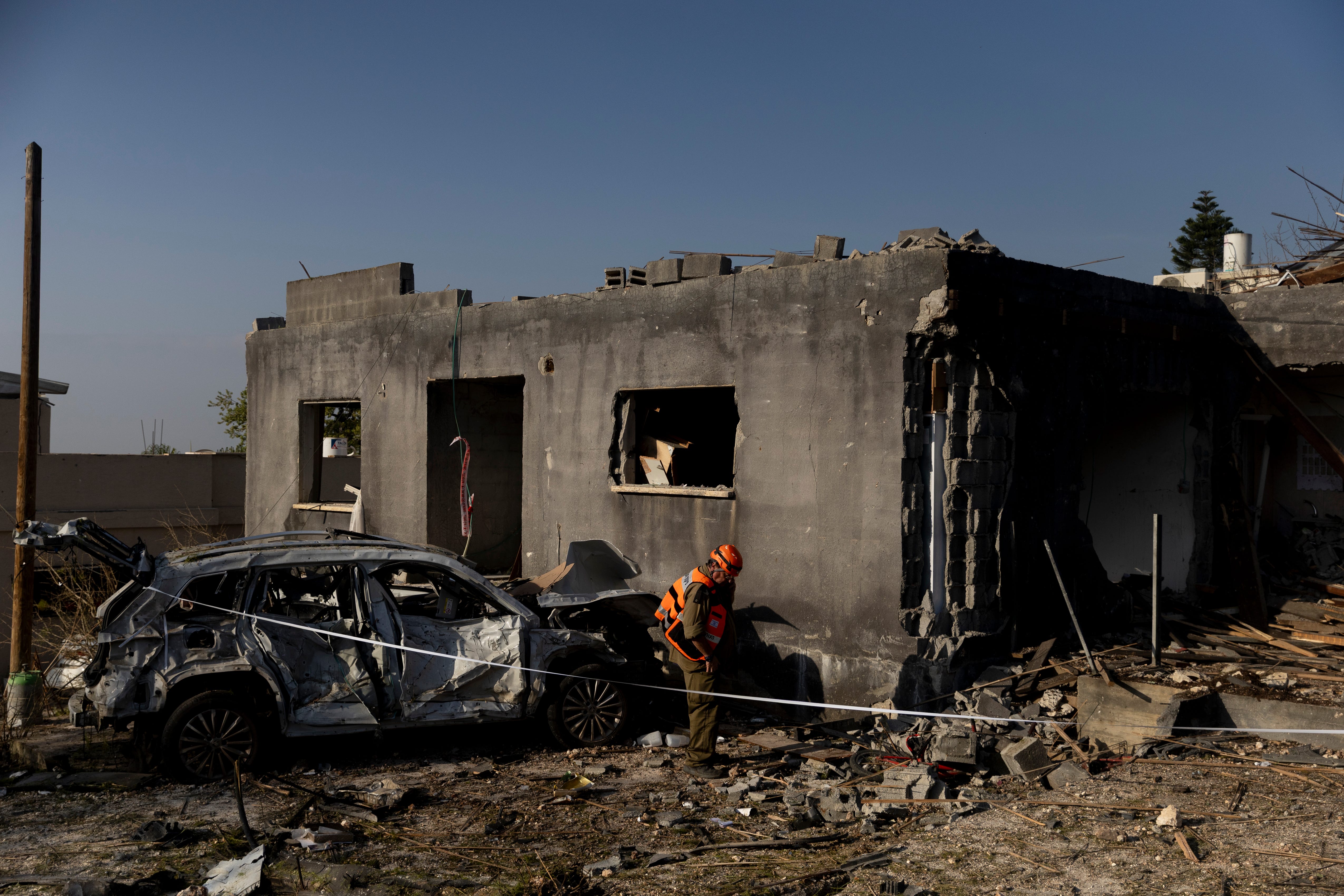
In response to Israel’s (now usual) bombing of foreign countries like Lebanon and Iran, there is usually some sort of (expected and natural) response. Two questions are immediately posed inside Israel: 1) Do you support Israel’s bombing of Country X or Y, and 2) Do you feel “safe”? It is in response to these two questions that you can see just how different Israeli and Palestinian lives are, as well as their perceptions of the world.
For Jewish Israelis, an overwhelming (and by overwhelming, I mean overwhelming) majority support Israel’s latest strikes on Iran, just as they support every Israeli attack on every country and on Palestinians, always. In a survey by the Israel Democracy Institute, a whopping 92.5% of Jewish Israelis support the attack on Iran, including 68% of those who self-identify as “left wing” in Israel. By contrast, Palestinian citizens of Israel largely do not support this or any other Israeli military attack, with roughly 25% saying they support Israel’s strikes on Iran. This same survey asked whether people in Israel feel protected from Iranian attacks: 79% of Jewish Israelis surveyed feel protected compared to 15% of Palestinian citizens of Israel.
Why the differences? Simple. Because Palestinians in Israel have never been part of Israeli society, yet we pay the price for Israel’s wars. (Incidentally, no one ever bothers to poll Palestinians in the occupied West Bank – including Jerusalem – or in the Gaza Strip, and they too pay a price for Israel’s assaults.)
Only 37 Shelters
Let’s begin by looking at the issue of “safety” and feeling “protected.”