


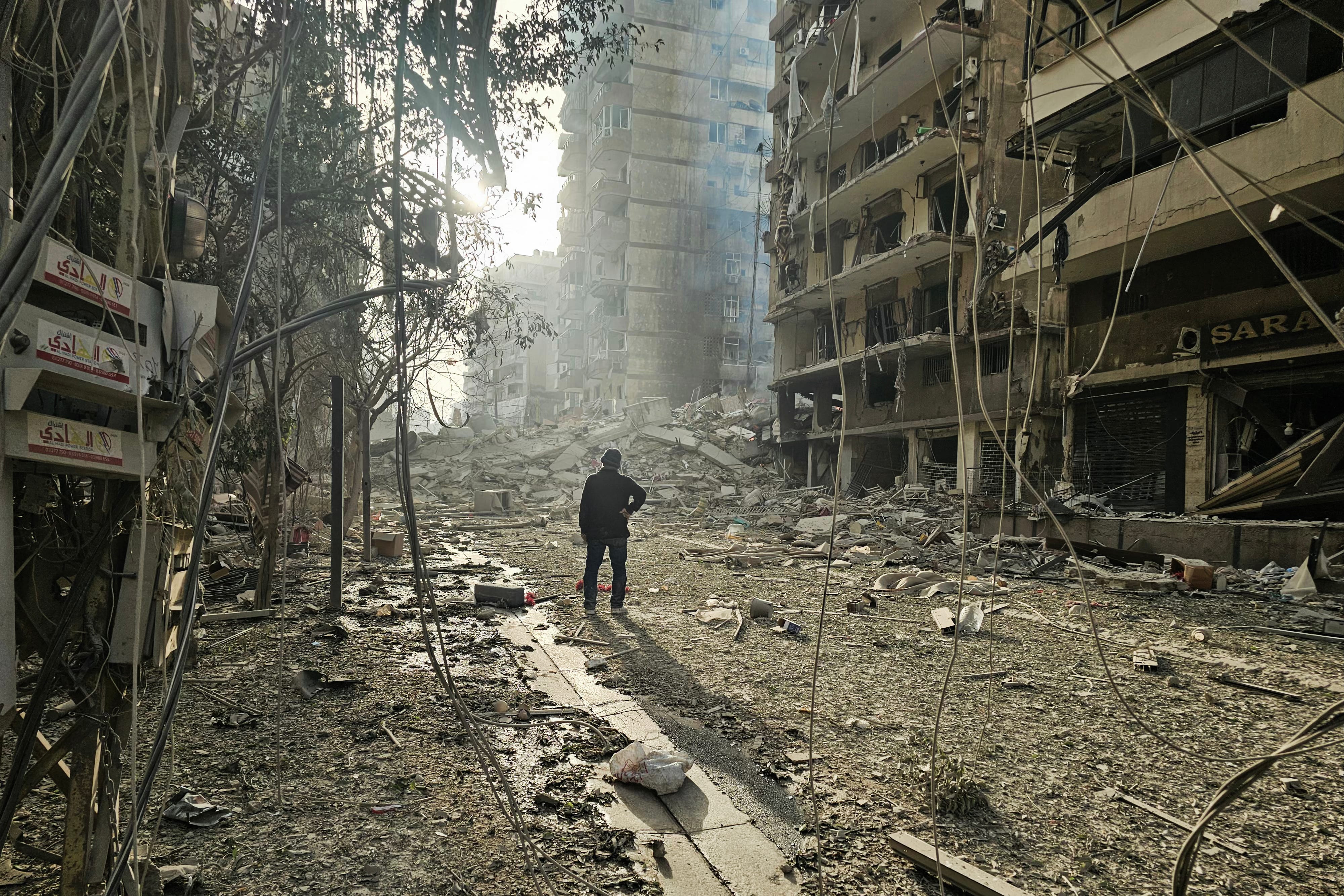
BEIRUT, Lebanon – Hajar Msheik tries to convince her 2-year-old son that the explosions are fireworks.
“He’s young, but he knows something is going on,” she tells me at a playground in the Beirut neighborhood of Hamra, where dozens of displaced families are gathered for a bit of reprieve from Israel’s relentless bombings. “When we hear bombings, he says he is scared.”
Msheik, who studied computer science and journalism, had to flee her family home in the southern suburb of Dahiyeh at 2am on the first day of the new escalation of Israel’s attacks. “Honestly, it’s the second war for me. The first time in 2024 was very hard and uncertain, but now I feel I know what to do,” she says. “But it’s sad my son only has lived war so far.”
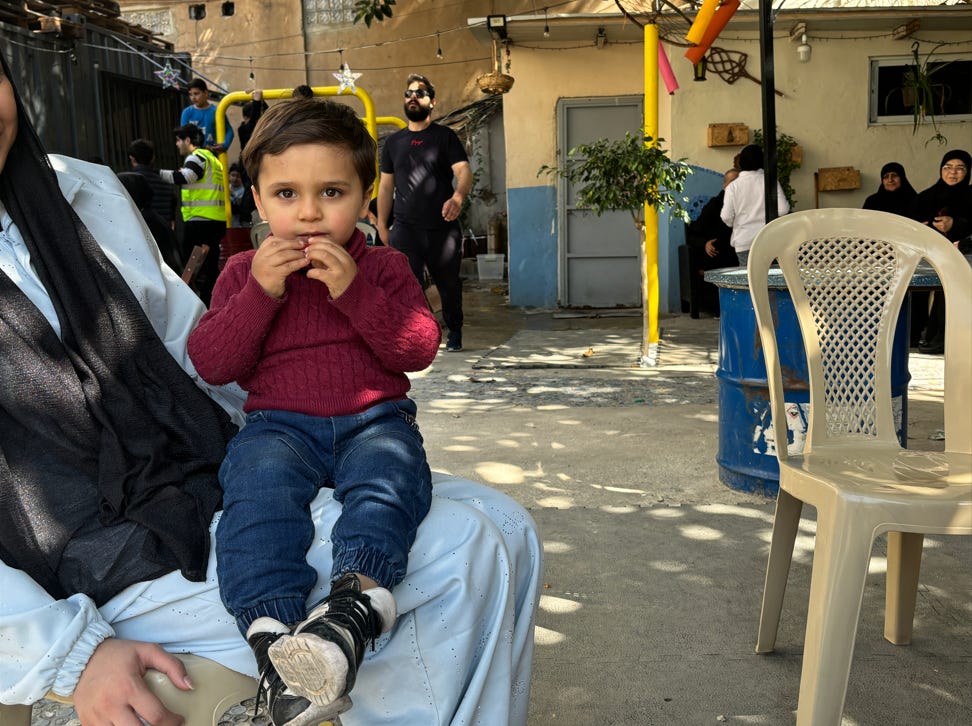
Msheik and her son are among the approximately 800,000 people who have been displaced since Israel declared the whole of southern Lebanon and entire parts of the capital’s southern suburbs “evacuation” (effectively ‘leave or risk death’) zones.
In 11 days, Israel killed at least 687 people, including 98 children, and wounded nearly 1,800 others, according to the Lebanese Ministry of Public Health.
Since Hezbollah fired rockets toward northern Israel to avenge the assassination of the Iranian Ayatollah Ali Khamenei on March 2, the Israeli army has pushed further into Lebanese territory in the southern border area.
In Beirut, Israel has escalated its bombardments and drone attacks, particularly in the southern suburbs of Dahiyeh. But with the ongoing presence of low-flying drones and fighter jets across the city, it’s become clear that no place in the capital is safe.