


A note from our Editor-in-Chief:
Prem traveled to Los Angeles to speak with and shadow Hasan Piker, one of the biggest, most controversial leftist voices in the US, who streams to hundreds of thousands of people every day on the platform Twitch. We sought to get a deeper understanding of the man who has recently been thrust into the center of American politics.
This is an important and lengthy piece from Prem that we here at Zeteo believe reveals deeper insights into a progressive voice that the mainstream media, the Democratic establishment, and, of course, the Republican Party have relentlessly smeared and demonized. Please do subscribe to Zeteo for full access to this fascinating profile of Hasan Piker, and to help us do more independent journalism like this.
– Mehdi
At the turn of the century, 9-year-old Hasan Piker sat at his classroom desk in Ankara, Turkey, giving his teacher a headache. He was hyperactive, energetic, and disinterested in simply copying down what the teacher instructed him to. He liked to push back and argue. All of his teachers would have a field day with his mother, whenever they saw her.
“I was an annoying little shithead,” he tells me. It’s a moniker some of his opponents might say still applies more than a quarter century later.
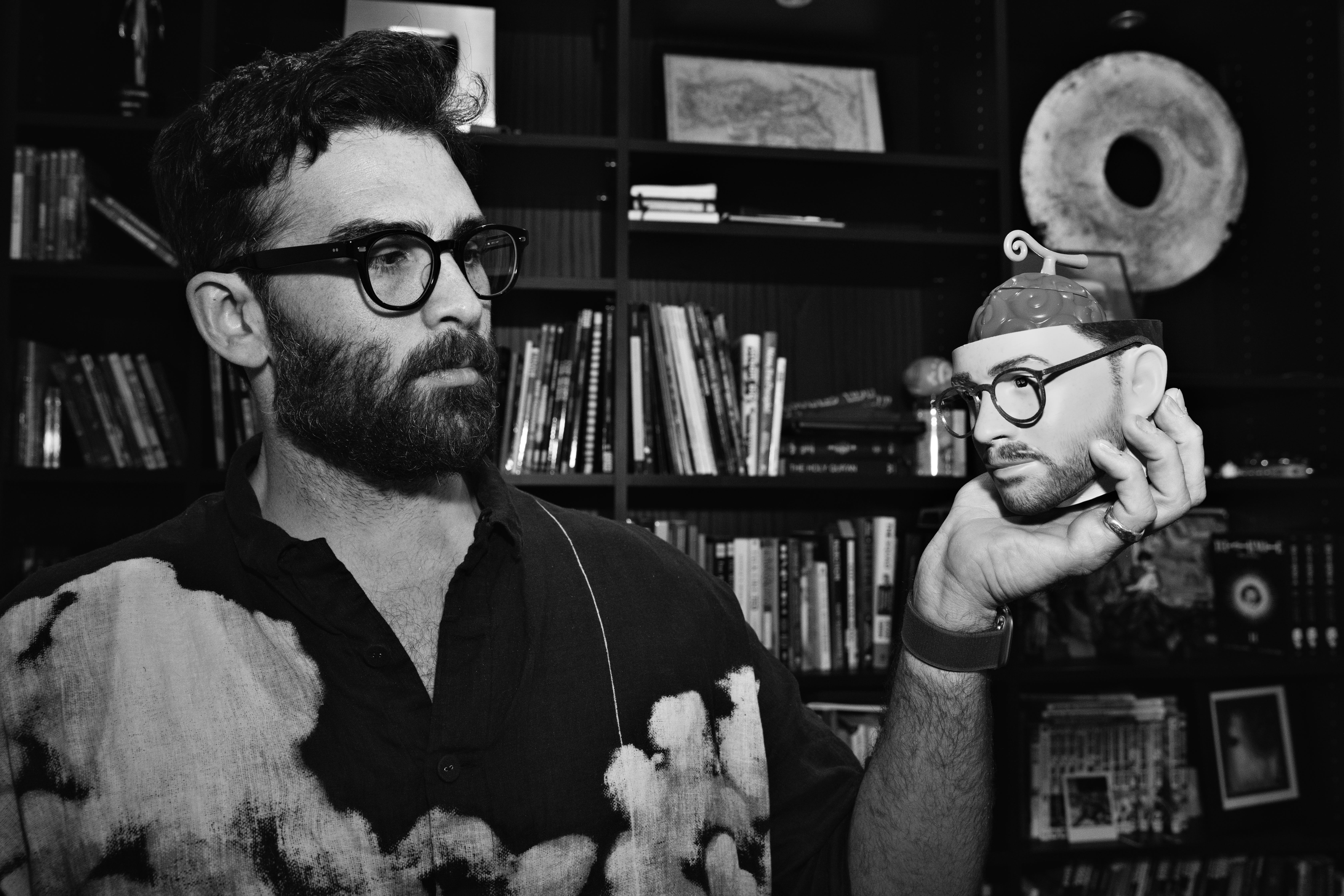
He reminisced on his childhood as we sat in his LA home studio – a lair brimming with politics and gaming and culture and graphic art, all backdropping where he streams to hundreds of thousands around the world.
Back in the third grade in Turkey, Piker recalls, his provocative nature came out during a religion class. “I remember debating my teacher,” he says. “I was like, ‘Why are we only learning about Islam, if this is religion class? Why are we not learning about any other religions?’” He bristled at what felt like “indoctrination.” And so Piker’s relationship to faith began to develop into what it is today, two decades later: “non-existent,” he says, beyond identifying as culturally Muslim.
His “contract” with a higher power, if one exists at all, is to just pursue good, he says, musing that if there is an omnipotent being, they likely won’t punish someone who tried to do their best, but also consumed pork or alcohol. Not that he’s trying to do good for rewards in the afterlife, he notes.
But Piker’s childhood streak for challenging conventions persists. So much so that the entire US political establishment is now targeting him, depicting him as a radical extremist and terrorist sympathizer.
Today, Piker is one of the most prominent leftist political commentators in the US, and streams to hundreds of thousands of people every day on the platform Twitch. He has become a lightning rod – a functional Public Enemy Number One in the eyes of both major political parties.
As US-Israeli violence ravages Palestine, Lebanon, and Iran, cable networks like CNN and Fox have dedicated copious amounts of airtime to shaming this one streamer. CNN anchor Dana Bash falsely said that he excuses sexual violence. Republican politicians have followed suit. Florida Congressman Randy Fine called Piker a “jihadist.” Vice President JD Vance compared him to cannibal serial killer Jeffrey Dahmer. Florida Senator Rick Scott has said Piker “hates America” and “glorifies terrorism.” Democrats aren’t far behind. Illinois Congressman Brad Schneider called Piker an “unapologetic antisemite” while Michigan Democratic Senate candidate Mallory McMorrow compared Piker to the white supremacist, Holocaust-denying commentator Nick Fuentes.
Piker calls the comparison to Fuentes “totally indecent.” It’s among the more common smears he said he’s received: “being compared to an avowed neo-Nazi, white supremacist, whose worldview I find to be morally repugnant, whose opinions I have spent my entire life combating – opinions just like that.”
In many ways, the cancellation campaign against Piker isn’t about what he believes, what he’s said, or what he’s meant. It’s about marginalizing the left, and stymying the spread of growing anti-Israel sentiment. That doesn’t make the personal smears less painful, or the ensuing death threats less real.
None of that, though, is stopping him.