


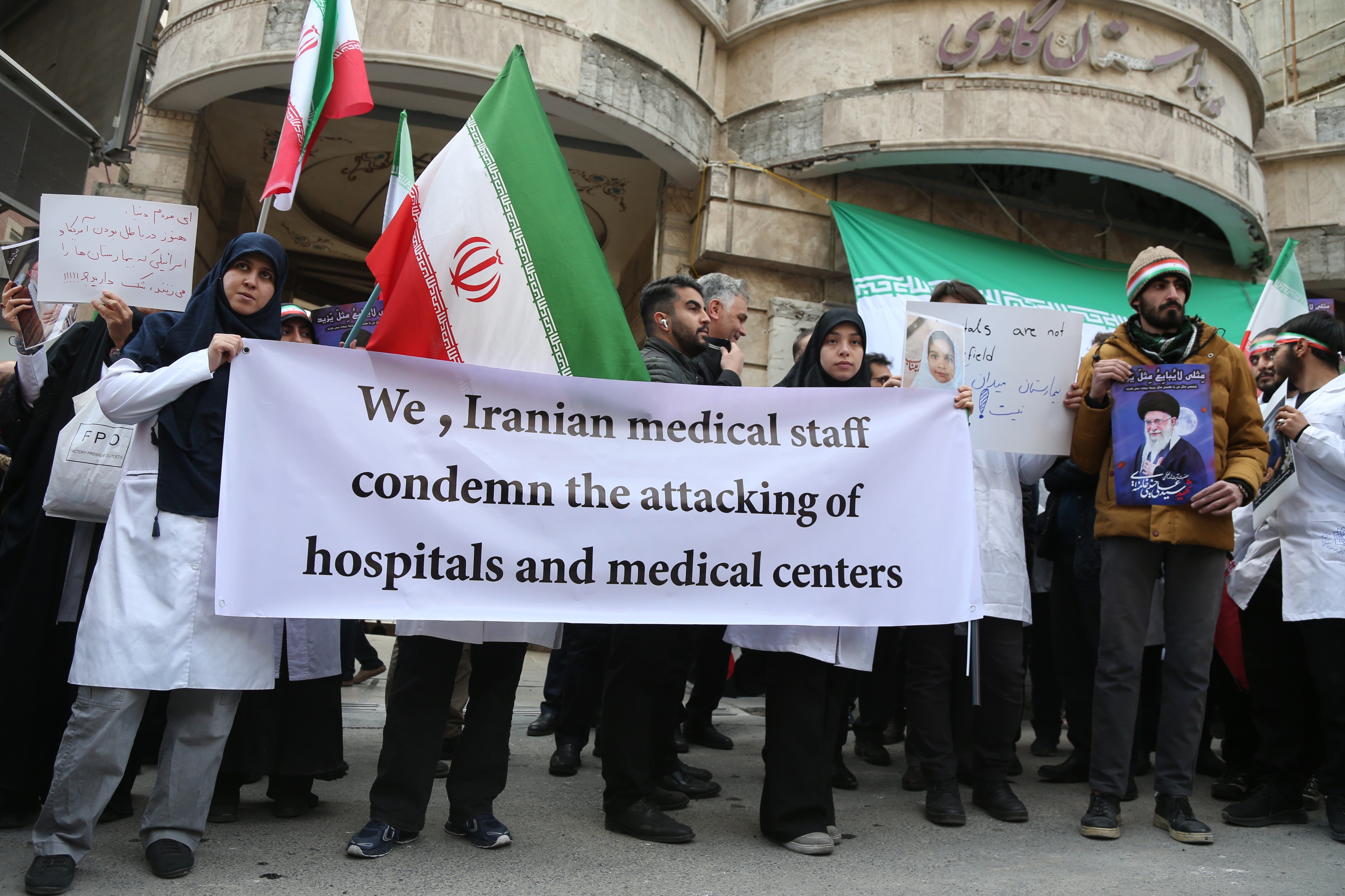
TEHRAN, Iran – More than 750 schools. Over 300 healthcare centers. And 90,000-plus homes.
The US and Israel have destroyed or damaged more than 115,000 civilian structures, Iran’s Red Crescent Society says – leaving behind a system of chaos, with hospitals, schools, water plants, and civilian roadways turned to dust or rendered useless.
But the toll goes far beyond the loss of structures: The chaos has put enormous pressure on the country’s healthcare workers and first responders, disrupted education for students at every level, and displaced hundreds of thousands, inflicting both physical and psychological trauma that will take many years to recover from, if Iranians can at all.
“Destruction here is not simply material loss,” Tehran’s municipal spokesperson, Abdulmutahhar Mohammad Khani, tells me. “It means disrupting the lives of citizens and inflicting profound psychological and social harm.”
I spoke to doctors, teachers, officials, and other civilians here in Tehran and across the country to get a sense of the human toll the US and Israel’s assault on civilian infrastructure is taking. What they told me paints a picture of a systematic destruction that no military objective can justify and of a population left to absorb a catastrophe that the world is still debating.
‘After A Shift Ends, I Find Myself Crying’
Even as a growing number of Iranians require emergency treatment – the US-Israeli strikes have killed more than 3,400, including over 1,500 civilians, and injured tens of thousands of others – the country’s medical infrastructure is buckling under the pressure of an unprecedented inflow of patients.
“Since the bombardment began, the hospital has been in a permanent state of emergency,” says Dr. Amir Karimi, a general practitioner at Imam Reza Hospital in Mashhad, a city in northeast Iran. He has worked at the hospital for 20 years and says he’s never seen the medical system in such a deep state of crisis.
“Every minute, new cases arrive – blast injuries, burns, psychological trauma. We work without stopping,” Karimi tells Zeteo.
Making matters worse, doctors face a shortage of medical supplies, a result of years-long sanctions that have hampered the country’s ability to import critical materials.
After treating two children wounded in the bombing of a nearby school – one suffering multiple fractures and burns, the other in severe shock – Karimi and his colleagues had to improvise.